
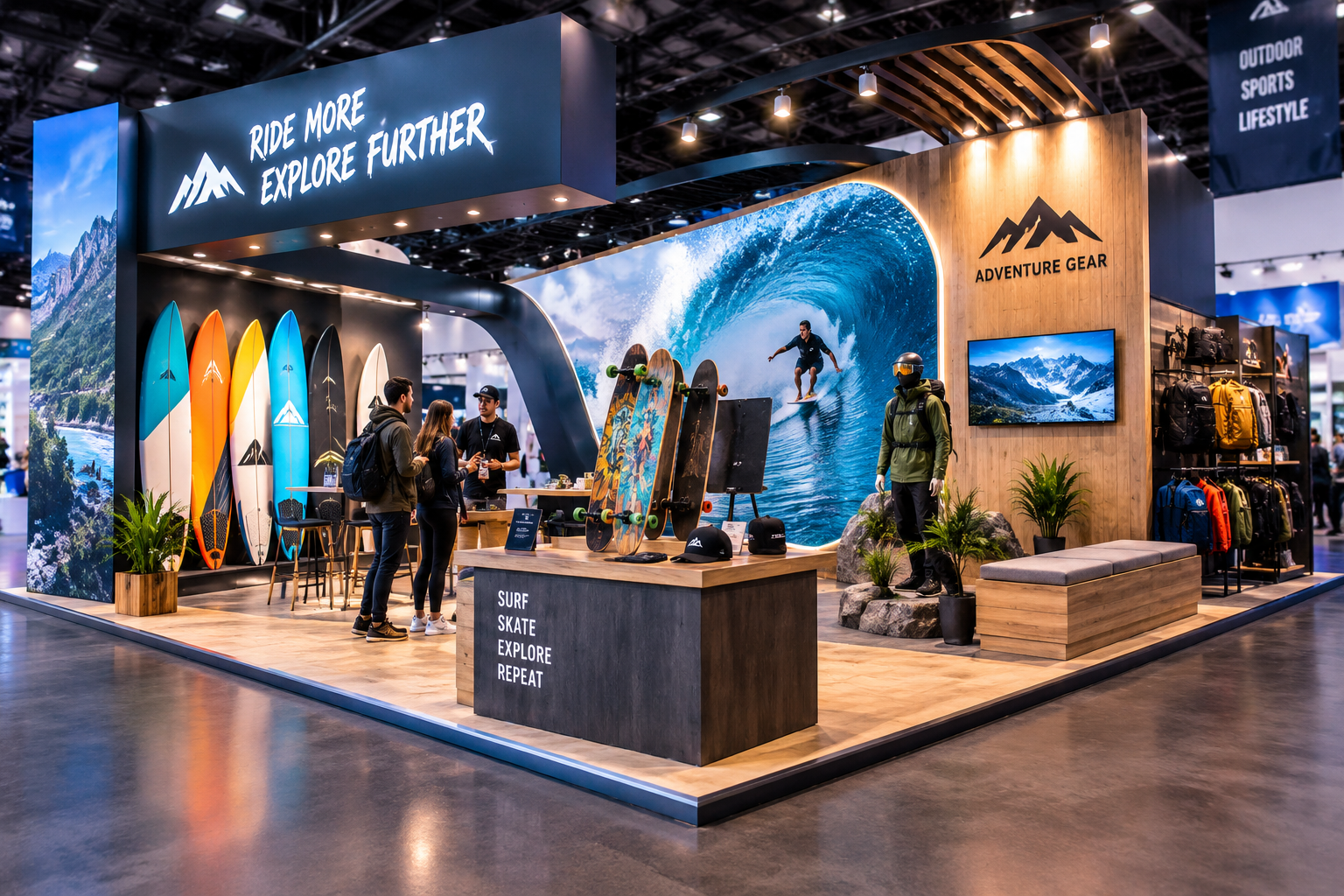
How Action Sports Display Booths Help Brands Stand Out at Trade Shows

Trade shows are highly competitive environments where brands have only a short amount of time to attract attention and create a memorable impression. For companies in the surfing, skateboarding, BMX, outdoor recreation, and other action sports industries, an ordinary exhibition stand may not effectively communicate the energy and excitement associated with their products. This is where Action sports display booths can make a significant difference. A well-designed booth can transform a basic exhibition space into an engaging brand experience that captures attention, encourages interaction, and helps visitors remember the company long after the event.
Why Trade Show Visibility Matters for Action Sports Brands
Trade shows bring together manufacturers, retailers, distributors, athletes, media professionals, influencers, and consumers in one location. With dozens or even hundreds of exhibitors competing for attention, simply having a booth is not enough.
Visitors often walk through exhibition halls quickly, scanning displays for something that catches their eye. A visually appealing and strategically designed booth can encourage them to stop, explore products, ask questions, and engage with representatives.
For action sports companies, visibility is especially important because the industry is strongly connected with lifestyle, adventure, performance, and visual experiences. A booth should reflect these qualities rather than simply displaying products on shelves.
A successful exhibition presence should communicate the brand's personality within seconds. Bold graphics, dynamic product presentations, interactive technology, creative lighting, and carefully planned layouts can all contribute to this goal.
What Makes Action Sports Display Booths Different?
Action sports brands have a unique opportunity to create exhibition environments that feel energetic and immersive. Unlike industries where products may require extensive technical explanations, action sports products can often be presented through experiences and visual storytelling.
For example, a surfing brand can incorporate wave-inspired graphics, surfboards, lifestyle photography, product demonstrations, and video content. A skateboarding company might create a display inspired by skate parks, urban environments, or street culture.
The booth does not necessarily need to become a literal recreation of an action sports environment. Instead, the design should capture the emotions and lifestyle associated with the brand.
This approach helps exhibitors move beyond traditional product displays and create spaces that visitors want to explore.
Creating an Eye-Catching First Impression
The first few seconds can determine whether a visitor walks past a booth or decides to enter. That makes the visual impact of the exhibition stand extremely important.
One of the most effective ways to create a strong first impression is through a distinctive architectural design. Unusual structures, elevated signage, curved walls, large product displays, and open layouts can help a booth stand out from neighboring exhibitors.
Branding should also be immediately visible. A company logo should not be hidden behind products, furniture, or promotional materials. Instead, it should be positioned strategically so visitors can recognize the brand from multiple angles.
Color selection is another important consideration. Brands should use colors that align with their existing identity while also ensuring sufficient contrast to attract attention.
Large-format graphics can reinforce the message by showcasing athletes, products, destinations, or action-oriented imagery.
Using Product Displays to Tell a Story
Product placement is more than simply deciding where to put merchandise. The way products are displayed can influence how visitors perceive their quality, purpose, and value.
An action sports booth can organize products according to categories, activities, collections, or customer needs. For example, a surf brand could separate boards, accessories, apparel, and technical equipment while creating a visual connection between each category.
Hero products should receive special attention. Rather than placing every product at the same visual level, exhibitors can identify their most important launches or best-selling items and make them focal points.
Elevated platforms, illuminated displays, transparent cases, custom shelving, and suspended structures can help highlight important products.
The goal is to make the booth easy to understand while maintaining an exciting visual presentation.
Incorporating Interactive Experiences
One of the strongest ways to increase booth engagement is to give visitors something to do.
Interactive experiences can turn passive visitors into active participants. Depending on the brand and available space, this could include product demonstrations, virtual reality experiences, interactive screens, games, photo opportunities, or digital competitions.
For example, a surfing equipment manufacturer could use an interactive screen to show how different boards perform under various conditions. A protective gear company could demonstrate product features through an interactive display.
Technology should serve a purpose rather than being included simply because it looks impressive. The best interactive features help visitors understand the product or connect with the brand.
When visitors actively participate in an experience, they are more likely to remember the company afterward.
Building an Immersive Brand Environment
A memorable booth should feel like an extension of the brand rather than a temporary sales counter.
Action sports companies can create immersive environments by combining multiple design elements. Graphics, lighting, sound, materials, furniture, product displays, and digital content should work together to create a consistent atmosphere.
A surf-focused company might use natural textures, ocean-inspired imagery, and bright open spaces. A skateboarding brand could use industrial materials, bold typography, and urban-inspired graphics.
The important factor is consistency.
Every element should reinforce the same brand story. When visitors enter the booth, they should immediately understand what the company represents.
Making the Booth Easy to Navigate
A visually impressive booth can still fail if visitors cannot navigate it comfortably.
Exhibitors should consider how people naturally move through the space. The entrance should remain inviting and unobstructed. Product categories should be easy to identify, and important information should be positioned where visitors can access it without feeling overwhelmed.
An open floor plan can make a booth appear larger while encouraging visitors to enter. Overcrowding the space with furniture, displays, and promotional materials can have the opposite effect.
Different areas can be assigned specific functions. For example, one section can showcase new products, another can support demonstrations, and a separate area can be used for meetings with retailers or distributors.
Good space planning allows the booth to accommodate both casual visitors and serious business conversations.
Creating Space for Business Meetings
Trade shows are not only about attracting attention. They are also important opportunities to build partnerships and generate sales.
Action sports brands often use exhibitions to meet retailers, distributors, buyers, media representatives, and potential business partners. A successful booth should therefore include an area where meaningful conversations can take place.
Meeting areas do not need to be large. A few comfortable chairs and a small table may be enough for informal discussions. Larger brands may benefit from private meeting rooms or semi-enclosed spaces.
The key is to create a balance between openness and privacy.
A booth that is completely closed may discourage casual visitors, while a completely open booth may not provide enough privacy for important business discussions.
Using Lighting to Increase Visual Impact
Lighting can dramatically change the appearance of an exhibition booth.
Strategically positioned lighting can highlight products, signage, architectural elements, and graphics. Spotlights can draw attention to hero products, while backlighting can make logos and graphics more visible.
Dynamic lighting may also contribute to the energy of an action sports environment, although it should be used carefully. Excessive or distracting lighting can make a booth uncomfortable and reduce the clarity of product displays.
The lighting strategy should support the brand identity and exhibition objectives.
For premium brands, controlled accent lighting can create a sophisticated atmosphere. More energetic brands may use brighter lighting to create an active and youthful environment.
Integrating Digital Content
Digital content can make a booth more dynamic without requiring excessive physical displays.
Large screens can showcase product videos, athlete stories, event highlights, behind-the-scenes footage, or customer testimonials. Touchscreens can allow visitors to explore product specifications, compare models, or browse collections.
Video is particularly useful for action sports because it can communicate movement and performance more effectively than static images.
A short video showing a product being used in a real-world environment may have more impact than several paragraphs of technical information.
However, digital content should remain simple and accessible. Visitors should be able to understand the message quickly rather than waiting through lengthy presentations.
Encouraging Social Media Engagement
Trade show booths can also become valuable social media marketing tools.
An attractive booth can encourage attendees to take photographs, create videos, and share their experiences online. Brands can support this behavior by creating visually interesting areas specifically designed for photographs.
Branded backdrops, athlete images, product installations, interactive displays, and creative architectural features can become natural photo opportunities.
Companies can also create social media contests or encourage visitors to use event-specific hashtags.
The advantage is that the booth's reach can extend beyond the exhibition hall. A single visitor's social media post may introduce the brand to hundreds or thousands of additional people.
Highlighting Athletes and Brand Ambassadors
Athletes are closely connected to action sports culture, making them powerful elements of exhibition marketing.
Brands can feature professional athletes through large-scale photography, video content, product stories, or live appearances.
If an athlete is available at the event, scheduled meet-and-greet sessions can generate significant booth traffic. Visitors may come specifically to see the athlete but can then discover products and engage with brand representatives.
Even when athletes are not physically present, their stories and achievements can become part of the booth's visual narrative.
The important thing is to ensure that athlete content supports the brand rather than overwhelming the actual products.
Designing for Product Launches
Trade shows are often chosen as launch platforms for new products. A booth should therefore have the flexibility to create excitement around new releases.
A dedicated launch area can help distinguish new products from existing collections. Special lighting, large graphics, product information screens, and demonstration areas can make the launch feel like an event within the larger exhibition.
Brands can also use countdowns, scheduled demonstrations, or presentations to generate anticipation.
When visitors feel that they are seeing something new or exclusive, they are more likely to spend additional time at the booth.
Choosing the Right Booth Builder
Creating a high-impact exhibition environment requires more than a good concept. The booth must be engineered, produced, transported, installed, and dismantled properly.
Choosing an experienced booth builder can help turn a creative concept into a practical exhibition structure.
When comparing booth builders, brands should consider their experience with trade shows, portfolio quality, production capabilities, materials, project management, installation services, and understanding of the action sports industry.
Communication is also essential. The builder should understand the company's objectives, target audience, product requirements, budget, and event regulations.
A strong partnership between the brand and booth builder can prevent last-minute issues and ensure the final result reflects the original concept.
Measuring the Success of an Action Sports Booth
A visually impressive booth is valuable, but exhibitors should also measure its business performance.
Useful metrics can include the number of booth visitors, qualified leads, product demonstrations, meetings conducted, sales opportunities, social media mentions, and post-event inquiries.
Brands can also ask visitors how they discovered the booth and which elements attracted their attention.
These insights can help companies improve their exhibition strategy for future events.
The objective should not simply be to build the most impressive booth in the exhibition hall. Instead, the booth should contribute to measurable marketing and business goals.
The Future of Action Sports Exhibition Displays
Exhibition design continues to evolve as brands adopt new technologies and more experience-focused marketing strategies.
Future booths are likely to place even greater emphasis on personalization, interactive content, sustainable materials, immersive experiences, and flexible modular designs.
Sustainability is becoming particularly important for brands and consumers who care about environmental responsibility. Reusable structures, recyclable materials, energy-efficient lighting, and modular components can help reduce waste associated with temporary exhibitions.
Technology will also continue to create new opportunities for engagement. Augmented reality, virtual product demonstrations, interactive displays, and personalized digital experiences can make booths more memorable.
However, technology should always support the brand story rather than replace it.
Conclusion
Standing out at a crowded trade show requires more than placing products inside an exhibition space. Action sports brands need displays that communicate their personality, showcase their products effectively, encourage interaction, and create memorable experiences for visitors.
From bold architecture and strategic lighting to interactive technology and athlete-focused storytelling, every element of the booth can contribute to stronger brand recognition and better visitor engagement. Careful planning can also help companies create spaces that support both marketing activities and valuable business conversations.
Ultimately, the most successful exhibition presence is one that combines creativity with strategy. A thoughtfully designed booth can attract attention from across the exhibition floor, encourage visitors to stop and interact, and leave a lasting impression after the event has ended. For brands preparing for an upcoming surf, skate, outdoor, or action sports exhibition, investing in the right booth concept and execution can become an important part of their overall event marketing strategy.
If your brand is preparing for an upcoming action sports trade show and wants to create a display that captures attention while supporting business goals, Action sports display booths can provide a useful starting point for exploring booth-building options.


