
The Truth Behind Caesar Salad Nutritional Info and Daily Intake

Caesar salad is often seen as a safe, healthy option. It shows up on restaurant menus, in lunch boxes, and in diet plans because it includes leafy greens and feels lighter than many meals. Yet when people take a closer look at Caesar salad nutritional info, the reality is more nuanced. This classic salad offers both benefits and drawbacks, and understanding how it fits into daily intake requires looking beyond assumptions.
This article breaks down the real nutritional profile of Caesar salad, explains how it contributes to daily calorie and nutrient intake, and clarifies when it works well in a balanced diet and when it may not.
What goes into a traditional Caesar salad
To understand Caesar salad nutritional info, it helps to start with its ingredients. A classic Caesar salad includes romaine lettuce, croutons, Parmesan cheese, and Caesar dressing. Many modern versions add grilled chicken, shrimp, or salmon.
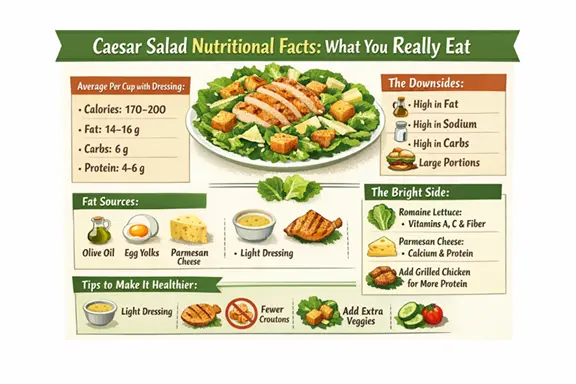
Romaine lettuce is low in calories and rich in vitamins A and K. On its own, it is a nutrient dense base that supports eye health, immune function, and bone health. The challenge begins when the dressing and toppings are added. Traditional Caesar dressing is made with oil, egg yolks, anchovies, garlic, lemon juice, and cheese. These ingredients increase fat, sodium, and calorie content significantly.
Calories and how they affect daily intake
One of the most discussed aspects of Caesar salad nutritional info is calories. Many people assume salads are low calorie meals, but Caesar salad can be surprisingly calorie dense. A standard restaurant serving can contribute a large portion of daily calorie intake, especially when portions are generous.
For someone following a 2,000 calorie daily diet, a large Caesar salad can take up a significant share of daily energy needs. This does not mean it is unhealthy, but it does mean it should be planned carefully. When a single meal uses a large calorie allowance, it leaves less flexibility for other meals and snacks throughout the day.
Fat content and its nutritional role
Fat plays an important role in the diet. It helps with nutrient absorption, supports hormone production, and adds satiety. Caesar salad nutritional info often reveals a high fat content because the dressing is oil based and includes egg yolks and cheese.
Some of this fat is beneficial, particularly when high quality oils are used. The issue lies in quantity. Restaurant Caesar salads often contain more dressing than needed, which increases total fat intake quickly. Saturated fat from cheese and egg yolks can also add up. When consumed occasionally, this is not a concern for most people. When eaten frequently, it may exceed recommended limits.
Sodium is the most overlooked factor
Sodium is one of the most commonly missed elements of Caesar salad nutritional info. Anchovies, Parmesan cheese, and commercial dressings all contain high levels of salt. When combined, they can push sodium intake close to or beyond daily recommendations.
Many people choose salads when trying to eat lighter or manage health conditions, assuming they are low in salt. Caesar salad often breaks that expectation. For individuals monitoring blood pressure or heart health, sodium intake is especially important. Eating Caesar salad regularly without adjustments may contribute more sodium than expected.
Protein and how it changes the salad
A basic Caesar salad contains modest protein from cheese and dressing, but not enough to make it a protein rich meal. Caesar salad nutritional info changes when protein is added. Grilled chicken, shrimp, or salmon increase protein levels and make the salad more filling.
Protein helps control hunger and supports muscle maintenance, which can be beneficial for daily intake balance. However, adding protein also increases calories and sometimes sodium, depending on how it is prepared. Lean, simply seasoned proteins offer the best balance.
Fiber and digestive support
Fiber is essential for digestion, blood sugar control, and heart health. Caesar salad nutritional info often shows lower fiber compared to other salads. Romaine lettuce contains some fiber, but not as much as vegetables like spinach, kale, beans, or broccoli.
Caesar salad typically lacks vegetable variety. Croutons add carbohydrates but little fiber. This means that while Caesar salad may feel filling due to fat and protein, it may not support digestive health as effectively as salads with a wider range of plant foods.
Micronutrients and hidden benefits
Despite its reputation, Caesar salad does offer nutritional benefits. Romaine lettuce provides vitamins A and K, folate, and hydration. Parmesan cheese contributes calcium, which supports bone health. Egg based dressing contains small amounts of fat soluble vitamins.
When reviewing Caesar salad nutritional info, it is clear that the salad is not nutritionally empty. The issue is balance. These benefits can be overshadowed by excess calories, fat, or sodium if portion sizes are large or ingredients are heavy.
Caesar salad and weight management
Many people include Caesar salad in weight management plans, believing it is a lighter choice. Caesar salad nutritional info challenges this belief. While it may be lighter than fried foods or pasta, it can still be calorie dense.
For weight management, portion control is key. A smaller serving with controlled dressing can fit well into a daily plan. Large restaurant portions eaten frequently can slow progress by adding hidden calories. Awareness is essential when using Caesar salad as a regular meal option.
Restaurant versus homemade Caesar salad
Where the salad is prepared makes a major difference. Restaurant Caesar salads are typically higher in calories, fat, and sodium due to generous portions and heavy dressing use. Homemade versions offer more control over ingredients and serving size.
Homemade Caesar salad nutritional info often looks much more balanced. Using less dressing, reducing cheese, skipping croutons, and adding extra vegetables can significantly improve its daily intake impact. Preparing it at home allows customization based on personal health goals.
How often should Caesar salad be eaten
The truth behind Caesar salad nutritional info is not that the salad is bad, but that it should not always be treated as a light option. It works best as an occasional meal rather than a daily default.
In a balanced diet, Caesar salad fits well when paired with lighter meals during the rest of the day. It is also better suited for active individuals who require higher calorie intake. For those with specific health goals, modifications make it more suitable for frequent consumption.
Common misconceptions about Caesar salad
One common misconception is that all salads are low calorie. Caesar salad nutritional info clearly shows that this is not always the case. Another misconception is that adding protein automatically makes a meal healthy. Protein adds value, but it does not offset excessive fat or sodium.
Understanding these misconceptions helps people make informed decisions rather than relying on labels or assumptions.
Making Caesar salad work for daily intake
Caesar salad can be adapted to better support daily intake goals. Simple changes make a meaningful difference. Using lighter dressing, reducing cheese, choosing lean protein, and increasing vegetable variety all improve balance.
These adjustments allow you to enjoy the flavor of Caesar salad without consuming excessive calories or sodium. Awareness, not restriction, is the key.
Final thoughts on Caesar salad nutritional info
The truth behind Caesar salad nutritional info lies in balance and context. The salad offers valuable nutrients and satisfying flavor, but it can also contribute more calories, fat, and sodium than many expect.
When eaten mindfully and prepared thoughtfully, Caesar salad can fit into a healthy lifestyle. Understanding its nutritional profile allows you to decide when it aligns with your daily intake goals and when a lighter option may be better. Knowledge turns Caesar salad from a guessing game into a deliberate, informed choice.


