
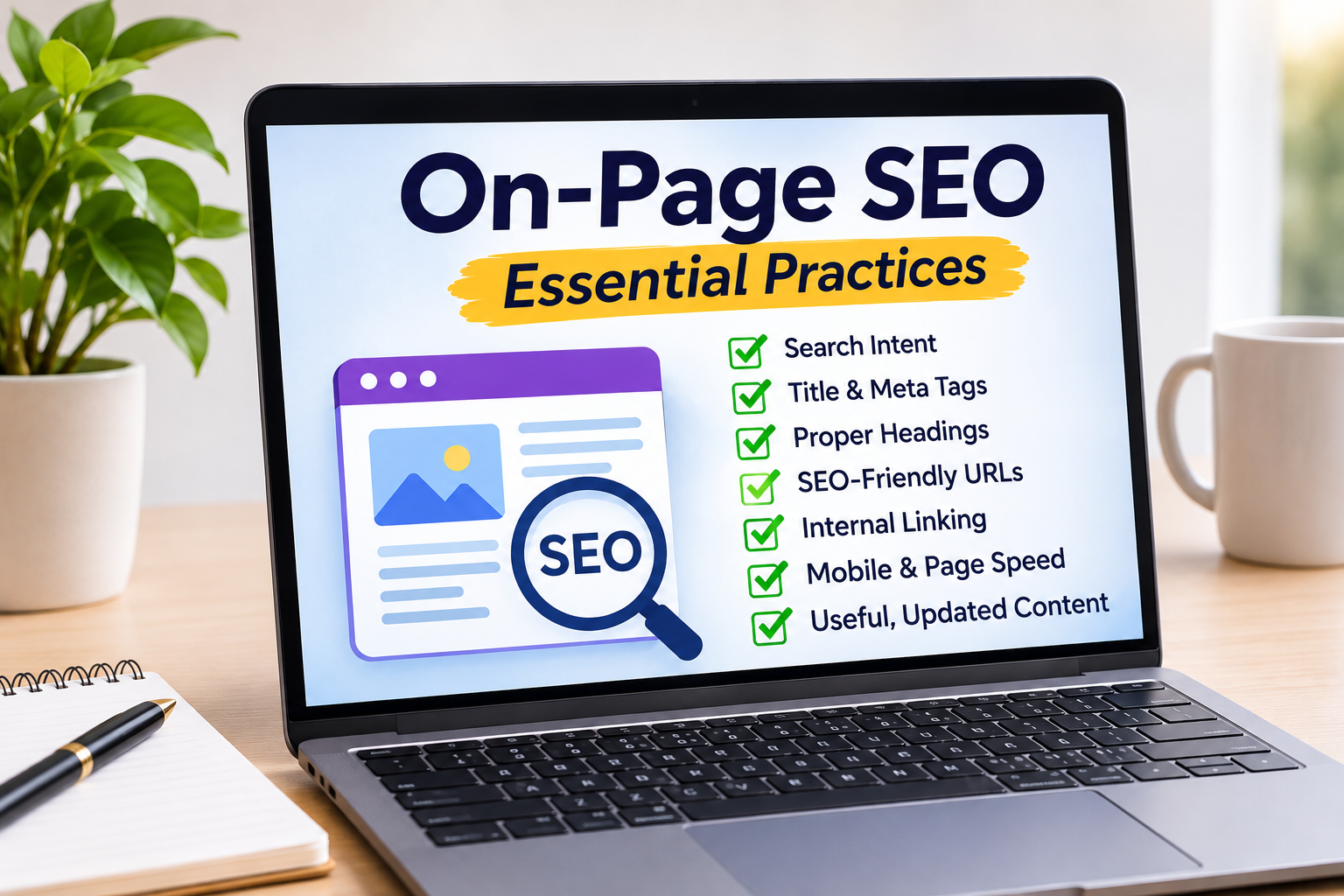

Getting your website to appear in search results requires more than publishing content and adding keywords. Every webpage needs proper optimization to help search engines understand its purpose and visitors find useful information.
On-page SEO focuses on improving individual webpages through content, HTML elements, links, and user experience. Here are seven important practices every website owner should follow.
1. Understand Search Intent Before Writing
Before creating content, understand what users expect when searching for a particular keyword.
Someone searching for "how to improve website speed" wants practical solutions, not a list of hosting providers.
Identify whether the search intent is informational, navigational, commercial, or transactional. Then structure your content around the user's actual needs.
2. Optimize Title Tags and Meta Descriptions
Your title tag helps communicate the topic of a webpage to search engines and potential visitors.
Keep titles descriptive, relevant, and unique. Include your primary keyword naturally without making the title sound forced.
Meta descriptions should summarize the page and encourage users to explore it. Although they are not a direct ranking factor, well-written descriptions can help attract clicks from search results.
3. Structure Content With Proper Headings
Organized content is easier to read and navigate.
Use one clear H1 for the main page title, H2 headings for major sections, and H3 headings for supporting topics.
Avoid writing long paragraphs without breaks. Clear headings help readers locate information quickly and make your content easier to understand.
4. Create SEO-Friendly URLs
Keep URLs short, descriptive, and relevant to the page topic.
For example:
is easier to understand than:
Use hyphens between words and avoid unnecessary numbers or parameters.
5. Improve Internal Linking and Image Optimization
Internal links connect related pages and help visitors discover more information on your website.
Use descriptive anchor text and link only to relevant resources. External links can also support your content when they point to credible sources.
Images need attention too. Compress large files, use appropriate formats such as WebP, and write meaningful alt text. These practices improve accessibility and can help website performance.
6. Focus on Mobile Experience and Page Speed
A website should work smoothly across smartphones, tablets, and desktops.
Check that text is readable, navigation is simple, and buttons are easy to use.
Page speed also matters. Review your Core Web Vitals, optimize images, reduce unnecessary scripts, and use caching where appropriate.
Google's PageSpeed Insights is a useful tool for identifying performance issues.
7. Keep Content Useful and Updated
Keyword placement alone cannot make an article valuable.
Focus on answering questions, explaining concepts clearly, and providing practical examples. Avoid unnecessary repetition and outdated information.
Regularly review important pages using Google Search Console to identify performance changes, indexing issues, and opportunities for improvement.
Make On-Page Optimization a Consistent Process
Optimizing a webpage involves several small but important tasks. Missing even a few of them can affect the overall quality of your website.
Using a structured process makes optimization easier, especially when managing multiple pages.
If you want a practical resource to guide your optimization efforts, explore this on-page SEO checklist from Wolfiedigi. It covers important optimization elements that website owners can review before publishing or updating their pages.
Final Thoughts
On-page SEO is an ongoing process, not a one-time activity. By focusing on search intent, content structure, technical elements, internal links, and user experience, website owners can create pages that serve both visitors and search engines.
The best approach is to make optimization part of your regular content workflow rather than treating it as an afterthought.