
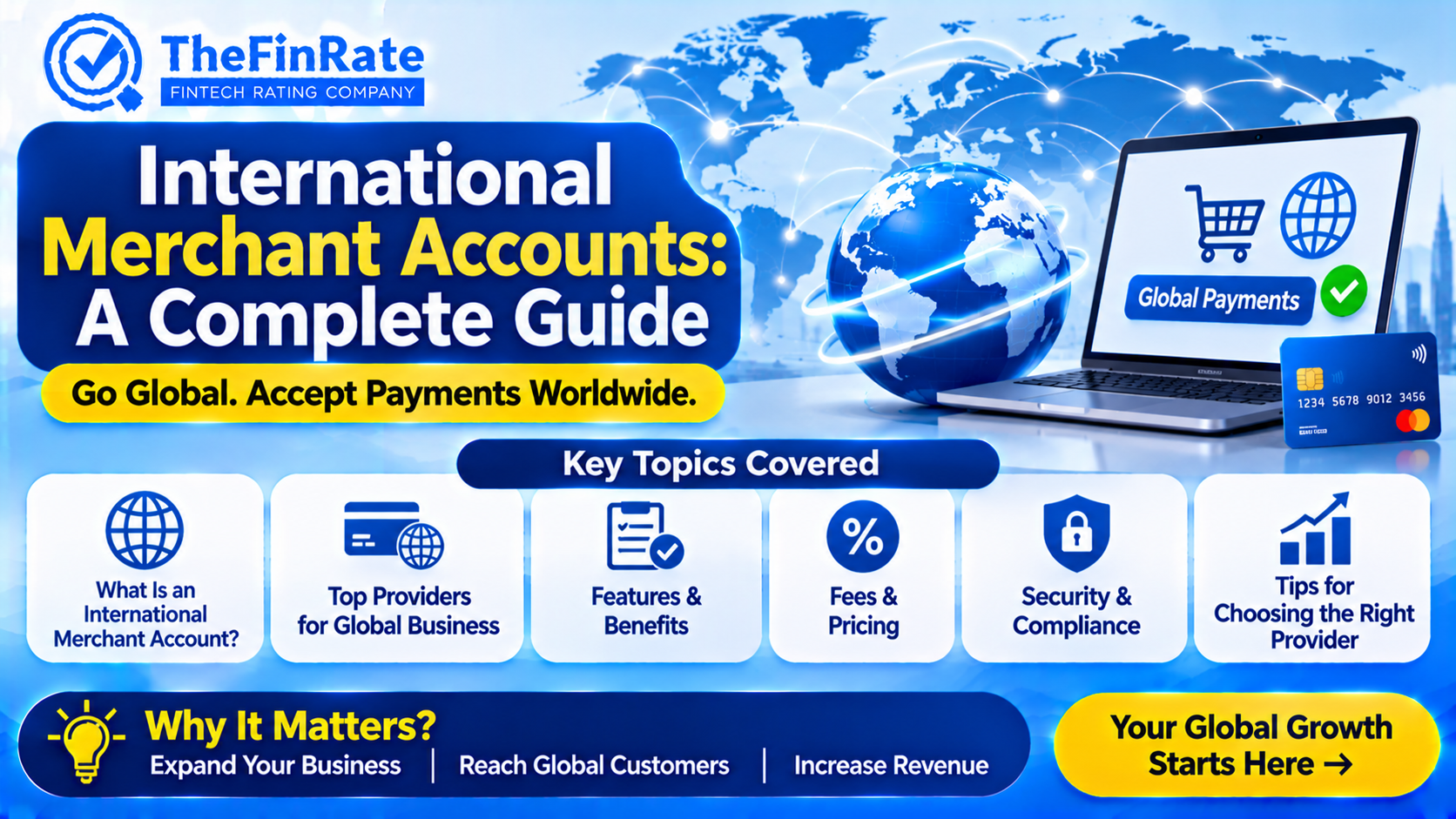

Selling to customers in other countries is one of the fastest ways to grow an online business, but cross-border payments bring new challenges. Cards issued abroad are declined more often, customers expect to pay in their own currency, settlement can be slow, and fees can add up quickly. An international merchant account is designed to solve these problems by giving businesses the infrastructure to accept and settle payments across borders.
Whether you run an eCommerce store, a SaaS company, a travel business, or a growing enterprise, choosing the right international merchant account can improve approval rates, reduce costs, and make global expansion smoother.
In this guide, we explain what international merchant accounts are, how they work, the different types available, the features to compare, typical costs, approval requirements, and how to choose the right provider for your business.
What Is an International Merchant Account?
An international merchant account is a merchant account that allows a business to accept credit and debit card payments from customers in multiple countries and, in many cases, in multiple currencies.
It works like a standard merchant account, but it is set up for cross-border commerce. Depending on the provider and the structure, an international merchant account may support:
- Multi-currency payment acceptance
- Cross-border card processing
- Settlement in one or more currencies
- Local acquiring in selected countries
- Local and alternative payment methods
- International fraud screening
- Chargeback management
- Currency conversion and reporting
- Payment gateway integration
International merchant accounts are offered by acquiring banks, payment service providers (PSPs), independent sales organizations (ISOs), and specialized payment processors.
Why Businesses Need an International Merchant Account
A domestic account can often accept foreign cards, but it may not be the best fit for a business with a meaningful international customer base. Reasons to consider an international account include:
- Higher approval rates: Transactions processed through a local or regional acquirer may be approved more often than the same transactions routed across borders.
- Customer experience: Showing prices and charging in the customer's own currency builds trust and reduces abandoned carts.
- Lower costs: Cross-border and currency conversion fees can add up, and some structures reduce them.
- Flexible settlement: Many providers allow settlement in several currencies, which can reduce conversion costs.
- Wider payment methods: Local methods such as bank transfers and wallets can improve conversion in some markets.
- Business continuity: Multiple acquiring relationships can provide backup if one route fails.
How Do International Merchant Accounts Work?
The payment flow is similar to a domestic transaction, with extra steps for currency and routing.
1. Customer Pays in Their Currency
A customer in another country pays using a local card or payment method, often shown in their own currency.
2. Gateway Transmits the Payment
The payment gateway encrypts the transaction and sends it to the processor. For a refresher, see this explanation of how a payment gateway works.
3. Routing and Risk Checks
The transaction is screened for fraud and routed to the acquirer, either locally in the customer's region or through a cross-border route.
4. Issuer Authorization
The customer's issuing bank approves or declines the request through the card network.
5. Currency Conversion
If the customer's currency differs from your settlement currency, a conversion occurs at a rate set by the provider or card network.
6. Settlement
Funds are settled to your business account according to the agreement, in the currency and schedule that your provider supports.
Types of International Merchant Accounts
Local Acquiring Accounts
A local account is held with an acquirer in a specific country or region. Processing transactions locally can improve approval rates and reduce cross-border fees, but it often requires a local legal entity or additional documentation.
Cross-Border Acquiring Accounts
These let a business in one country process payments for customers in other countries through a single acquirer. They are simpler to set up but may involve higher cross-border fees and lower approval rates in some markets.
Multi-Currency Merchant Accounts
Multi-currency accounts let you accept payments in several currencies and, depending on the provider, hold or settle balances in them. This can reduce conversion costs and simplify reconciliation.
Payment Service Provider (PSP) Accounts
PSPs bundle merchant account functionality, gateway technology, and risk tools in one platform, often with global coverage. They suit businesses that want fast onboarding and fewer providers to manage.
Offshore Merchant Accounts
Offshore accounts are held with banks or acquirers outside the merchant's home country. They are sometimes used by businesses that struggle to find domestic acquirers, but they require careful checks on licensing, regulation, and legal suitability.
High-Risk International Accounts
Merchants in industries such as iGaming, forex, travel, and subscription services may need specialized providers. Learn more about high-risk merchant account providers.
Key Features to Compare
1. Supported Countries and Currencies
Confirm that the provider supports the countries where your customers live and the currencies you want to accept and settle in.
2. Local Payment Methods
In many markets, customers prefer local methods over cards. Check whether the provider supports bank transfers, wallets, and other regional options.
3. Approval Rates and Local Acquiring
Ask whether the provider processes transactions locally in your key markets and how it manages routing and retries.
4. Settlement Currency and Speed
Understand which currencies you can settle in, the settlement schedule, and any reserves or minimum payout amounts.
5. Fraud Prevention
International transactions can carry higher fraud risk. Look for 3D Secure support, risk scoring, and customizable rules.
6. Chargeback Management
Review dispute tools, alerts, and support for responding to chargebacks from different regions.
7. Compliance and Security
Confirm PCI DSS responsibilities and how the provider handles regional rules, such as strong customer authentication requirements in some markets.
8. Integration Options
Check that the account works with your website, shopping cart, and gateway through APIs, plugins, or hosted checkout.
9. Reporting and Reconciliation
Multi-currency reporting that clearly shows conversion rates, fees, and settlements saves time in accounting.
10. Customer Support
Reliable support matters when you operate across time zones and markets.
How Much Do International Merchant Accounts Cost?
Pricing depends on the provider, your industry, volume, markets, and risk profile. Common costs include:
- Transaction Fees: Percentage-based or fixed charges on processed payments.
- Cross-Border Fees: Additional charges when the card issuer and acquirer are in different countries.
- Currency Conversion Fees: Markups applied when converting between currencies.
- Monthly Fees: Account or platform charges.
- Setup Fees: Initial onboarding costs.
- Gateway Fees: Charges for payment gateway services.
- Chargeback Fees: Fees for each disputed transaction.
- Rolling Reserves: Funds held temporarily under some agreements.
- Settlement or Payout Fees: Charges for sending funds to your bank account.
Compare the total cost, including conversion markups and reserves, instead of the headline rate alone.
What Affects Approval for an International Merchant Account?
Providers conduct underwriting before approving an account. They may review:
- Business registration documents
- Ownership and director information
- Business website and product details
- Target countries and customer base
- Expected monthly volume and average ticket size
- Processing and chargeback history
- Refund and shipping policies
- Business bank account information
- Licenses for regulated industries
Businesses in higher-risk industries or selling to higher-risk regions may face additional documentation and conditions. Approval timelines depend on the provider and the complexity of the business.
International Merchant Accounts for Different Business Types
| Business Type | Important Requirements |
|---|---|
| eCommerce | Multi-currency checkout, local payment methods, fraud tools |
| SaaS and Subscriptions | Recurring billing, retries, multi-currency pricing |
| Travel | Delayed-delivery risk handling, chargeback tools |
| Digital Goods | Fraud prevention, instant delivery safeguards |
| Marketplaces | Split payments, seller payouts, cross-border settlement |
| High-Risk Businesses | Specialized underwriting, multiple acquirers |
| Enterprises | Payment routing, scalability, detailed reporting |
How to Choose the Right International Merchant Account
1. Identify Your Target Markets
List the countries where you sell now and where you plan to expand.
2. Understand Your Transaction Profile
Estimate monthly volume, average order value, and refund rates by region.
3. Check Local Acquiring Options
Ask whether the provider processes locally in your top markets.
4. Compare Currency and Settlement Options
Look for flexible settlement and clear conversion terms.
5. Review Total Cost
Include cross-border fees, conversion markups, reserves, and payout fees.
6. Evaluate Risk Management
Check fraud tools, chargeback support, and compliance coverage.
7. Confirm Integration Support
Make sure the account works with your platform and gateway.
8. Read the Contract Carefully
Check termination conditions, reserve terms, and restrictions on processing.
9. Plan for Backup Processing
Consider more than one provider or an orchestration layer to protect revenue.
Common Mistakes to Avoid
- Choosing a provider based only on low transaction rates.
- Ignoring currency conversion markups.
- Not confirming support for key countries and payment methods.
- Overlooking reserve and termination terms.
- Relying on a single acquiring route.
- Skipping local compliance and tax requirements.
- Underestimating fraud and chargeback risk in new markets.
Frequently Asked Questions
1. What is an international merchant account?
An international merchant account lets a business accept card and other payments from customers in multiple countries, often in multiple currencies, with settlement options suited to cross-border sales.
2. Do I need an international merchant account to accept foreign cards?
Not always. Many domestic accounts accept foreign cards, but an international account may offer better approval rates, currency support, and costs for businesses with substantial international sales.
3. What is the difference between a local and a cross-border merchant account?
A local account processes transactions through an acquirer in the customer's region, while a cross-border account processes them through an acquirer in another country. Local routes can improve approvals but may require extra setup.
4. Can I accept multiple currencies?
Many providers support multi-currency payments, and some allow settlement in several currencies. Capabilities vary by provider and country.
5. How much does an international merchant account cost?
Costs vary by provider and business profile. Expect transaction fees, cross-border fees, currency conversion markups, monthly and setup fees, and possible reserves.
6. Are offshore merchant accounts safe?
They can be legitimate, but they require careful checks on licensing, regulation, and legal suitability for your business and home country.
7. Can high-risk businesses get international merchant accounts?
Yes. Some specialized providers support eligible high-risk businesses, subject to underwriting and compliance requirements.
8. How long does approval take?
Approval times depend on the provider, documentation, and underwriting complexity.
9. What documents are required?
Common requirements include business registration documents, ownership details, identification, bank statements, website details, and processing history. Additional documents may be requested.
10. Can I switch providers later?
Generally yes, subject to your contract. Review termination terms, outstanding reserves, and integration requirements first.
Conclusion
International merchant accounts help businesses sell across borders with better approval rates, local currency support, and more flexible settlement. The right choice depends on your target markets, transaction profile, industry, and growth plans.
Instead of focusing only on advertised rates, compare supported countries, currencies, local payment methods, fraud tools, settlement terms, and total costs. A provider that fits your markets today and can scale tomorrow gives your business a stronger foundation for global growth.
Explore TheFinRate's Merchant Account Providers Directory to discover, compare, and evaluate merchant account companies according to your business requirements.
Make informed payment decisions with TheFinRate and find solutions that support your business growth.
About TheFinRate
TheFinRate is a fintech information and provider discovery platform that helps businesses explore, compare, and evaluate payment gateways, merchant account providers, payment processors, acquiring services, and other financial technology solutions.
Through provider listings, industry insights, comparisons, and reviews, TheFinRate helps businesses make more informed decisions about their payment infrastructure.