
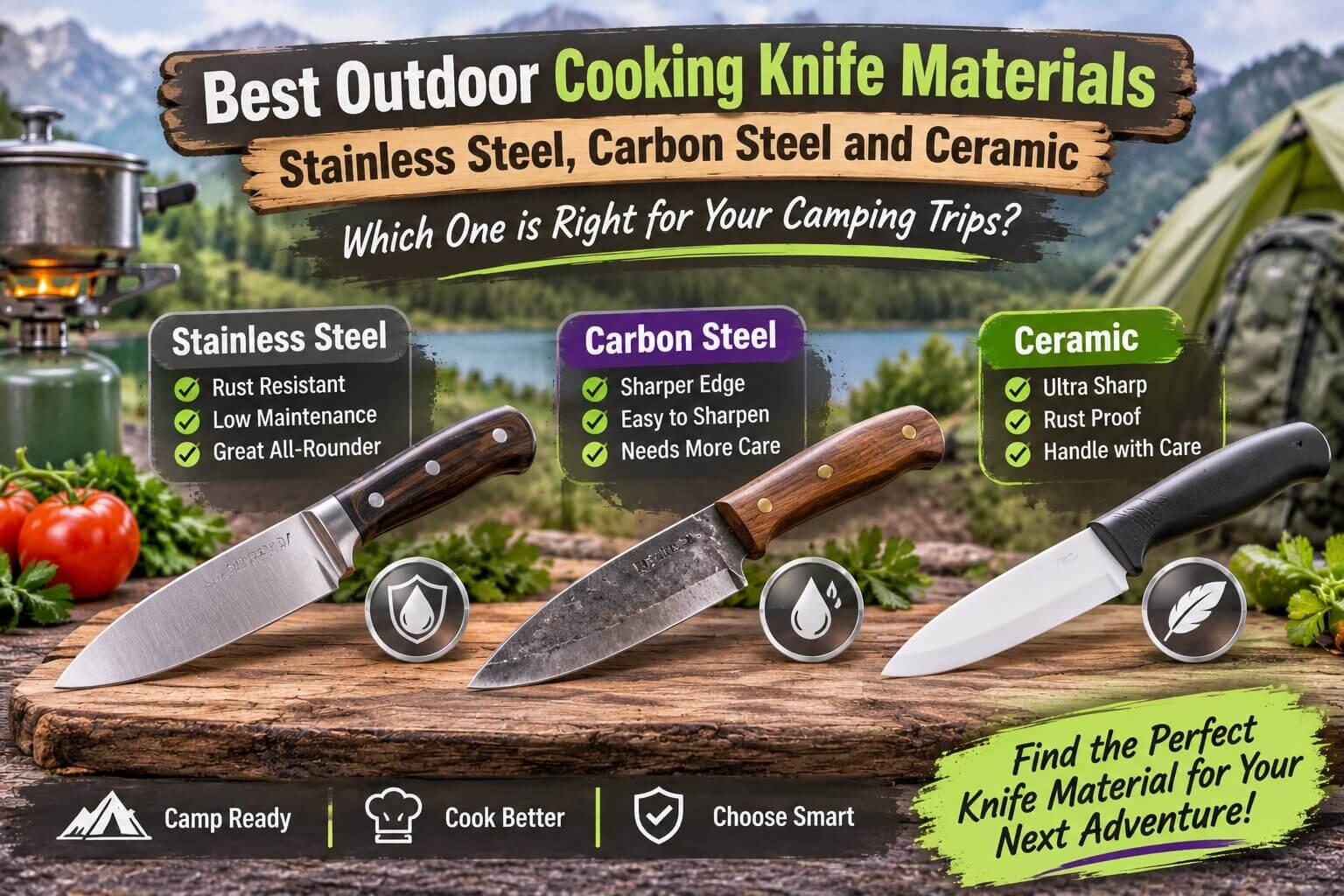
Best Outdoor Cooking Knife Materials Explained: Stainless Steel, Carbon Steel and Ceramic

For most campers, the best outdoor cooking knife is made from stainless steel, because it resists rust, survives a damp pack and holds a useful edge. Carbon steel cuts sharper and is easier to touch up, but it needs drying and oiling after every meal. Ceramic stays sharp the longest, yet it can chip if you twist it or hit a bone.
The rest of this guide explains what each material really does at the campsite, so you can match the blade to the way you cook outdoors.
Why Blade Material Matters More Than Brand
A camp kitchen is hard on a knife. It gets rained on, dropped on gravel, wiped with a damp cloth and tossed into a gear bin beside a cast iron pan. The steel has to survive all that, not just look good in a product photo.
Material decides four things you will notice quickly: how sharp the edge gets, how long it stays sharp, how easily it rusts, and how much abuse it takes before chipping. No material wins all four.
Stainless Steel: The Safe All Round Choice
What It Is
Stainless steel is steel with at least 10.5 percent chromium, which forms a thin protective layer on the surface and slows rust. It is the most common material in camping and kitchen knives.
Where It Works Best
Stainless suits humid forests, coastal trips, canoe routes and the night you forget a knife on the picnic table. Steels such as 420HC, 8Cr13MoV and VG10 appear in many camp knives, from budget blades to premium ones.
Where It Falls Short
Cheaper stainless blades dull faster than carbon steel and can take longer to sharpen. They are also rust resistant, not rustproof, so a wet knife left in a sheath for a week can still show spots.
Carbon Steel: Sharper, But Needs Attention
What It Is
Carbon steel is mostly iron and carbon, with little or no chromium. Without that protective layer it rusts quickly when left wet. High carbon steels such as 1095 are common examples.
Where It Works Best
Carbon steel takes a very fine edge and returns to sharp after a few passes on a pocket stone. That helps at camp, where you may have a small stone and five spare minutes. It is also tough, which suits trimming kindling for the stove.
The Upkeep
Dry the blade right after use and rub on a thin coat of food safe oil, such as mineral oil. A grey patina will form over time, and that is a protective layer, not damage. Orange rust is different, so scrub it off with a fine abrasive pad as soon as you spot it.
Ceramic: Light and Very Sharp, With Limits
What It Is
Ceramic knives are made from zirconium dioxide, fired and ground to an edge. They do not rust, they do not react with acidic foods like tomatoes, and they weigh very little.
Where It Works Best
For slicing fruit, cutting cheese, trimming boneless meat and prepping vegetables, ceramic is excellent. The edge stays keen long after steel would need attention. Backpackers who count every gram sometimes carry a small ceramic paring knife for this reason.
Where It Falls Short
Ceramic is hard but brittle. Twisting, prying, cutting frozen food or hitting a bone, rock or metal pan can chip the edge or snap the tip. Sharpening needs diamond abrasives, so most people simply replace a damaged blade. Treat it as a specialist helper, not your only knife.
Stainless, Carbon and Ceramic at a Glance
|
Feature |
Stainless |
Carbon |
Ceramic |
|
Rust resistance |
Good |
Poor |
Excellent |
|
Sharpness |
Good |
Excellent |
Excellent |
|
Edge retention |
Moderate |
Moderate to good |
Highest |
|
Toughness |
Good |
Very good |
Low |
|
Upkeep |
Low |
High |
Moderate |
|
Easy to sharpen |
Yes |
Easiest |
Difficult |
These are general trends. Individual steels and brands vary, so check the maker's specifications and care instructions before you buy.
How to Choose the Best Outdoor Cooking Knife for Your Trip
Car Camping With a Full Kitchen
Either stainless or carbon steel works, because you can dry and oil the blade at the picnic table. A 6 to 8 inch chef style knife handles most prep, and a small ceramic paring knife is a nice extra for fruit.
Backpacking
Pick a short stainless blade, around 3 to 4 inches, with a sheath. Low weight and low maintenance matter most when you are tired and cooking by headlamp.
Coastal, Canoe and Rainy Trips
Go with stainless. Salt air and constant damp are hard on carbon steel, and you will spend more time fighting rust than cooking.
Cooking Over a Fire
Look for a full tang knife, where the steel runs through the whole handle. Carbon steel or a tough stainless blade will cope better with food prep and light wood trimming around the fire.
Care Tips That Add Years to Any Camp Knife
-
Wash by hand and dry straight away.
-
Never store a knife wet in a leather or fabric sheath.
-
Cut on a wooden or plastic board, not on rock or a metal pan.
-
Pack a small stone or pull through sharpener for steel blades.
Frequently Asked Questions
Q1. What is the best material for an outdoor cooking knife?
Ans: Stainless steel suits most campers because it resists rust and needs little upkeep. Carbon steel is a good choice if you want a sharper edge and do not mind oiling it. Ceramic works best as a second knife for slicing.
Q2. Is carbon steel or stainless steel better for camping?
Ans: Stainless is better for wet, humid or coastal trips and for anyone who wants low maintenance. Carbon steel suits campers who like easy sharpening and a tougher blade, and who will dry it after every use.
Q3. Can you take a ceramic knife camping?
Ans: Yes, if you only use it for soft jobs like slicing fruit and vegetables. Keep it in a protective sheath and never use it to pry, chop wood or cut around bones.
Q4. How do I stop a carbon steel knife from rusting?
Ans: Dry it as soon as you finish cutting, then wipe on a thin film of food safe oil before storing it. Avoid sheaths that trap moisture. A grey patina is normal, but orange rust should be scrubbed off.
Q5. What blade length is best for cooking outdoors?
Ans: A blade of about 3 to 5 inches covers most camp tasks, from slicing onions to trimming meat. Backpackers can go shorter, while car campers may want a 6 to 8 inch chef style knife.
Q6. Do I need to sharpen a knife during a camping trip?
Ans: On a weekend trip, usually not, as long as the knife was sharp when you left. On longer trips, a small stone or pull through sharpener keeps stainless and carbon steel working well. Ceramic needs diamond abrasives, so leave that for home.
Choosing the Right Material for Your Camp Kitchen
If you want one knife that works almost everywhere, choose stainless steel. Pick carbon steel if you value a keen edge and will dry and oil it, and treat ceramic as a light slicing helper rather than a main blade. Matching the material to your trips, wet or dry, backpack or car, is the fastest way to narrow your choices.
Your next step is simple: decide which conditions you camp in most, pick a material from the chart above, then shop for the best outdoor cooking knife in that material.