
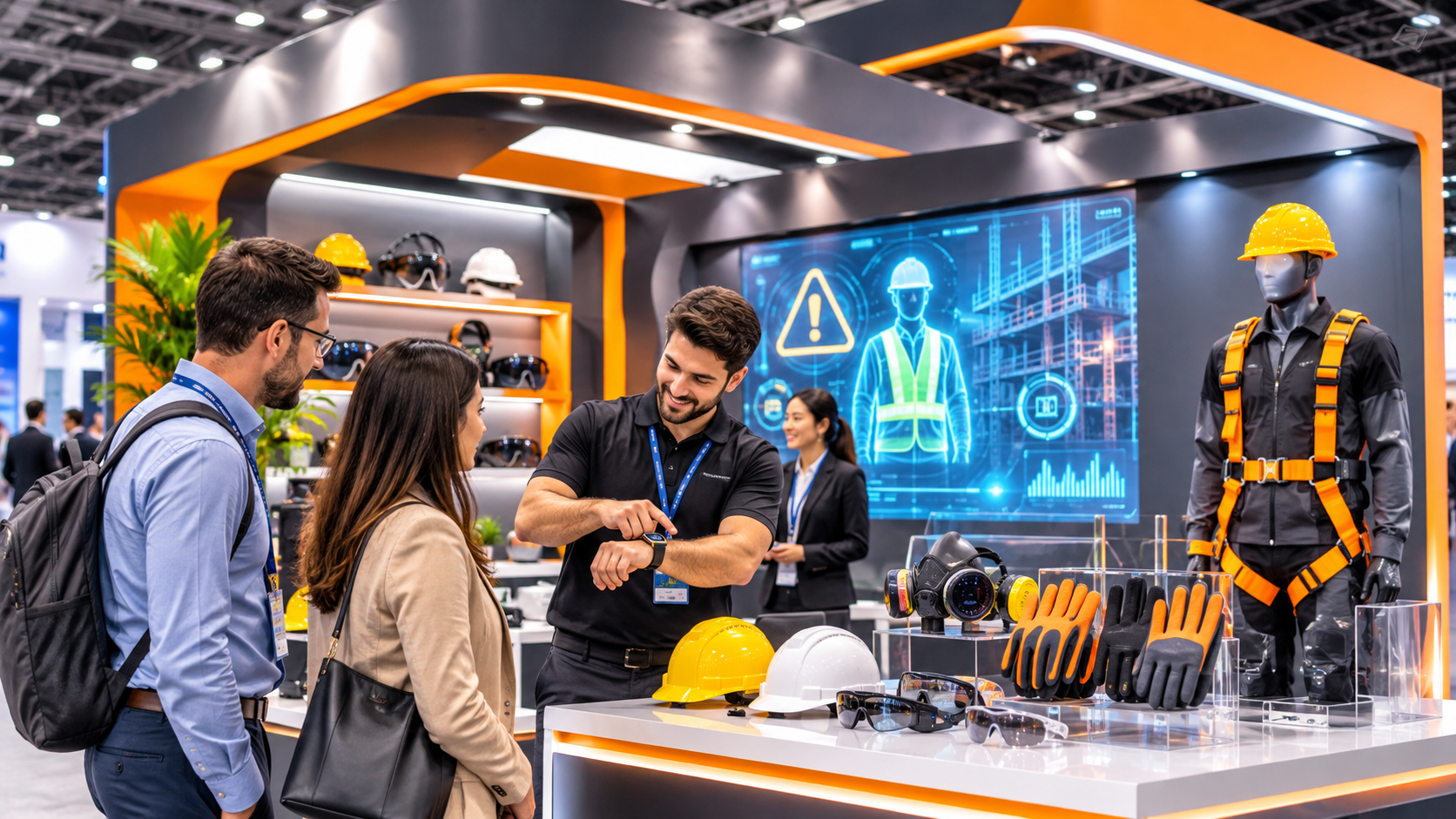
Creating High-Impact Exhibition Booths for the Occupational Safety Industry

The occupational safety industry plays a major role in protecting employees, improving workplace conditions, and helping organizations manage potential hazards. As businesses increasingly invest in advanced protective equipment and workplace safety technologies, industry exhibitions have become important platforms for presenting new solutions. Companies participating in major trade shows need more than an ordinary display space to communicate their expertise and attract industry professionals. Professionally designed Occupational safety expo exhibits help brands showcase their products, demonstrate practical applications, and create memorable experiences for visitors. At events such as the NSC Safety Congress 2026, a well-planned exhibition booth can help businesses strengthen their market presence and connect with potential customers.
Understanding the Role of Exhibition Booths in the Safety Industry
Exhibition booths are important communication spaces where companies introduce their products, services, and technical capabilities to a targeted audience. In the occupational safety sector, these displays often feature personal protective equipment, industrial monitoring systems, emergency response products, safety training solutions, and advanced workplace technologies.
Unlike traditional advertising, exhibitions allow visitors to experience products directly. They can examine equipment, ask questions, watch demonstrations, and compare different solutions.
A professionally designed booth makes these interactions easier. It provides an organized environment where businesses can explain their products and communicate the practical benefits of their solutions.
For safety companies, the exhibition space should reflect the reliability, professionalism, and technical knowledge associated with their brand.
Why High-Impact Booth Designs Matter
Trade show environments are often crowded with companies competing for visitor attention. A booth with unclear messaging or an unorganized layout may struggle to attract attendees.
High-impact booth designs combine visual appeal with practical functionality. They help visitors recognize a brand, understand its offerings, and explore products without confusion.
A strong design should communicate the company's primary message within a few seconds. Visitors should quickly understand what the business offers and how its products relate to workplace protection.
Professional graphics, appropriate lighting, organized displays, and recognizable branding can improve the overall appearance of an exhibition space.
However, attractive design should always support the company's communication objectives rather than simply focus on decoration.
Understanding the Target Audience Before Designing
Every successful exhibition begins with an understanding of its intended audience.
The occupational safety industry includes professionals from several sectors, including manufacturing, construction, healthcare, transportation, warehousing, and energy.
Each group may have different workplace challenges and product requirements.
For example, construction professionals may be interested in fall protection equipment, protective helmets, and site safety solutions. Manufacturing representatives may focus on machine guarding, industrial monitoring, and employee protection systems.
Before planning a booth, businesses should identify the visitors they want to reach.
Understanding their professional interests helps companies select appropriate products, develop relevant messaging, and organize demonstrations that address real workplace requirements.
Developing a Clear Exhibition Booth Concept
A successful booth should have a clear design concept that connects the company's identity with its products and services.
Rather than displaying unrelated products throughout the space, businesses should organize their exhibits around a central theme.
For example, a company specializing in industrial protection could develop a booth concept focused on safer manufacturing environments. Another business offering smart monitoring technology could create a display centered on connected workplace safety.
The central concept should influence the booth's graphics, product placement, lighting, demonstrations, and digital presentations.
Consistency makes the exhibition environment easier to understand and gives visitors a more memorable experience.
Creating a Functional Booth Layout
An attractive booth will not deliver the desired results if visitors cannot move comfortably through the space.
A functional layout should provide sufficient room for product exploration, demonstrations, conversations, and staff movement.
Companies should consider dividing their booth into specific zones.
Product display area: A dedicated section for presenting important equipment and solutions.
Demonstration area: A space where visitors can observe products in operation.
Information area: A location for digital presentations, product specifications, and educational materials.
Meeting area: A comfortable place for business discussions and professional networking.
Reception area: An accessible point where visitors can receive information and connect with company representatives.
These sections should work together to create a natural visitor journey.
Using Professional Branding to Increase Visibility
Branding is one of the most important elements of an exhibition booth. A recognizable visual identity helps businesses stand out and makes it easier for visitors to remember their company.
The company logo, brand colors, product messaging, and visual graphics should be presented consistently.
Large, readable signage can help visitors recognize the booth from a distance. Product-specific graphics can communicate the company's expertise without requiring lengthy explanations.
Businesses should also avoid overcrowding their walls with promotional messages.
A simple design with a strong headline and a few important supporting messages often communicates more effectively than a display filled with unnecessary information.
Showcasing Personal Protective Equipment
Personal protective equipment is a central part of many occupational safety businesses.
Companies exhibiting helmets, gloves, safety footwear, respiratory protection, protective eyewear, and high-visibility clothing should present these products in an organized and accessible way.
Dedicated product stations allow visitors to examine materials, understand product features, and compare different models.
Mannequins wearing complete protective equipment can demonstrate how products work together in specific workplace environments.
Businesses can also use product information panels to explain intended applications, maintenance requirements, and important usage considerations.
Where practical demonstrations are possible, trained representatives should explain the correct use of equipment and follow appropriate safety procedures.
Incorporating Interactive Demonstrations
Interactive demonstrations can make an exhibition booth more interesting and informative.
Visitors often prefer seeing how a product works rather than simply reading its specifications.
For example, companies offering industrial monitoring systems can demonstrate how sensors identify environmental changes. Manufacturers of protective equipment can explain product features through controlled demonstrations.
Interactive displays also create opportunities for visitors to ask questions and receive immediate answers.
Businesses should choose demonstrations that are relevant to their target audience and can be conducted safely within the available exhibition space.
A well-planned demonstration should be short, informative, and focused on a clear product benefit.
Integrating Digital Technology Into Booth Design
Digital technology provides new opportunities for presenting complex workplace safety solutions.
Touchscreen displays, large digital screens, product videos, interactive diagrams, and virtual demonstrations can help visitors understand products more quickly.
For example, a company offering workplace safety software can use a touchscreen presentation to explain its monitoring dashboard and reporting capabilities.
A manufacturer of industrial equipment can display videos showing product applications in different environments.
Virtual reality can also introduce visitors to simulated workplace conditions and explain potential hazards in an engaging way.
Technology should be selected according to the company's objectives and audience. Every digital element should provide useful information or improve the visitor experience.
Highlighting Industrial Safety Innovations
The occupational safety industry continues to develop new products and technologies to address changing workplace requirements.
Smart helmets, connected protective equipment, automated hazard detection, environmental monitoring devices, and wearable sensors are examples of innovations that companies may showcase.
Exhibition booths provide a practical environment for introducing these developments.
Companies should explain not only how their technologies operate but also what problems they are designed to address.
For example, a wearable monitoring solution may help organizations track certain workplace conditions. An environmental sensor may provide alerts when specified conditions exceed established limits.
Clear explanations help visitors understand the relevance of new technologies and evaluate their potential applications.
Designing Effective Product Demonstration Zones
A dedicated demonstration zone can make a booth more engaging and organized.
Companies should identify which products benefit most from live presentations and provide sufficient space for visitors to observe them.
The demonstration area should have appropriate lighting, clear visibility, and safe operating conditions.
Staff members should understand the product's functions and be prepared to answer common questions.
Demonstration schedules can also help exhibitors manage visitor interest throughout the event.
For companies presenting technical products, these areas can become valuable spaces for educating potential customers and explaining product advantages.
Using Visual Communication to Explain Safety Concepts
Workplace safety often involves technical information that may be difficult to communicate through text alone.
Visual communication can simplify these concepts.
Infographics, diagrams, photographs, and product illustrations can explain topics such as hazard identification, equipment selection, workplace inspections, and protective procedures.
For example, a visual presentation can demonstrate the different components of a fall protection system.
Another display could explain how industrial monitoring technology supports workplace risk management.
Businesses should prioritize accurate information and easy-to-understand visuals.
This approach helps visitors absorb important details without spending too much time reading lengthy product descriptions.
Making the Booth Comfortable and Accessible
Visitor comfort is an important part of exhibition planning.
A booth should provide clear pathways, accessible product displays, appropriate seating, and enough space for discussions.
Companies should avoid placing large equipment in locations that block entrances or create unnecessary movement restrictions.
Lighting should be bright enough to highlight important products without creating discomfort.
Digital screens and product information should also be positioned at convenient viewing heights.
An accessible and welcoming environment encourages visitors to spend more time exploring the exhibition.
Selecting the Right Booth Size and Structure
The size and structure of an exhibition booth should reflect the company's objectives, product requirements, budget, and event guidelines.
Smaller booths may work well for businesses presenting a limited range of products. Larger spaces can accommodate multiple demonstration areas, meeting zones, and interactive installations.
Modular booth structures can provide flexibility for companies participating in several exhibitions throughout the year.
Custom-built structures may be suitable for brands that require specialized product displays or distinctive architectural designs.
Before selecting a structure, companies should review the venue's technical requirements, available space, installation guidelines, and permitted display elements.
Choosing an Experienced Exhibition Booth Builder
Selecting the right booth-building partner is an important decision for companies preparing for occupational safety exhibitions.
An experienced builder can help translate a company's requirements into a functional and visually appealing exhibition environment.
Businesses should evaluate potential partners based on their portfolio, design capabilities, production quality, customization options, project coordination, and installation experience.
It is also important to discuss timelines, transportation arrangements, materials, and dismantling requirements before finalizing the project.
A professional partner should understand that a safety industry booth needs to accommodate technical products, demonstrations, and meaningful visitor interactions.
Companies preparing for the NSC Safety Congress 2026 can explore suitable partners through Exhibitorly's NSC Safety Congress booth builder directory.
Preparing Booth Staff for Better Visitor Engagement
Even an excellent booth design cannot replace knowledgeable and approachable staff.
Representatives should understand the company's products, target industries, and main exhibition objectives.
They should be prepared to explain product applications, answer technical questions, and identify visitor requirements.
Staff members should avoid overwhelming visitors with unnecessary information.
Instead, conversations should begin by understanding the visitor's interests and then introducing relevant solutions.
A professional and helpful communication style can improve the quality of interactions and create a positive impression of the company.
Generating Qualified Leads at Occupational Safety Exhibitions
Lead generation should be an important part of the exhibition strategy.
Companies can use QR codes, digital registration forms, business cards, and appointment scheduling tools to collect visitor information.
However, gathering contact details should not be the only objective.
Exhibitors should understand the visitor's industry, requirements, product interests, and potential purchasing needs.
This information helps sales teams organize follow-up activities more effectively.
After the exhibition, businesses should contact relevant visitors with useful product information, requested quotations, or opportunities for further discussion.
Timely and relevant follow-up communication can help turn exhibition conversations into potential business relationships.
Common Booth Design Mistakes Businesses Should Avoid
Several design mistakes can reduce the effectiveness of an occupational safety exhibition.
Overcrowding the booth with products can make the display confusing. Excessive promotional messaging can prevent visitors from identifying important information.
Poor lighting may reduce product visibility, while an unsuitable layout can make demonstrations difficult.
Another common mistake is focusing entirely on appearance without considering visitor interaction.
Businesses should also avoid relying on technology that does not support their exhibition objectives.
The best booth designs balance visual appeal, practical functionality, clear communication, and meaningful visitor engagement.
Preparing for the NSC Safety Congress 2026
Participating in the NSC Safety Congress 2026 requires preparation across several areas.
Companies should begin by identifying the products they want to promote and the audience they want to reach.
The next step is to develop an exhibition concept and select a booth structure that supports their requirements.
Businesses should prepare product samples, demonstration equipment, promotional materials, staff schedules, and digital presentations well before the event.
They should also coordinate design approvals, production, transportation, installation, and venue compliance.
Planning these activities in advance can reduce last-minute challenges and help companies present a professional exhibition environment.
Measuring Exhibition Performance
Evaluating exhibition performance helps businesses understand whether their participation achieved its intended objectives.
Companies can measure visitor engagement, qualified leads, product demonstrations, business meetings, inquiries, and post-event opportunities.
Feedback from visitors and staff can also highlight areas where the booth experience could improve.
For example, businesses may discover that certain product demonstrations attracted more attention than static displays.
These observations can guide future booth layouts, marketing messages, and exhibition strategies.
A consistent evaluation process helps companies make better decisions about future trade show investments.
Future Trends in Occupational Safety Exhibition Design
Exhibition design is evolving alongside changes in workplace safety technology.
Future displays may include more interactive product demonstrations, connected safety devices, digital training experiences, and immersive presentations.
Sustainable materials and reusable modular structures may also become increasingly important for businesses seeking to reduce exhibition waste.
Another growing consideration is the use of data-driven visitor engagement tools to understand product interest and improve follow-up strategies.
Companies that combine innovative display concepts with practical communication can create more valuable exhibition experiences.
Conclusion
Creating a high-impact exhibition booth requires a combination of thoughtful design, effective branding, interactive product demonstrations, and audience-focused communication. Occupational safety companies should prioritize displays that explain real workplace challenges and demonstrate how their products support safer working environments. From selecting the right booth structure to preparing knowledgeable staff, every detail contributes to the overall exhibition experience. Investing in professionally planned Occupational safety expo exhibits can help businesses showcase their innovations, attract relevant industry professionals, and establish a stronger presence at the NSC Safety Congress 2026.