
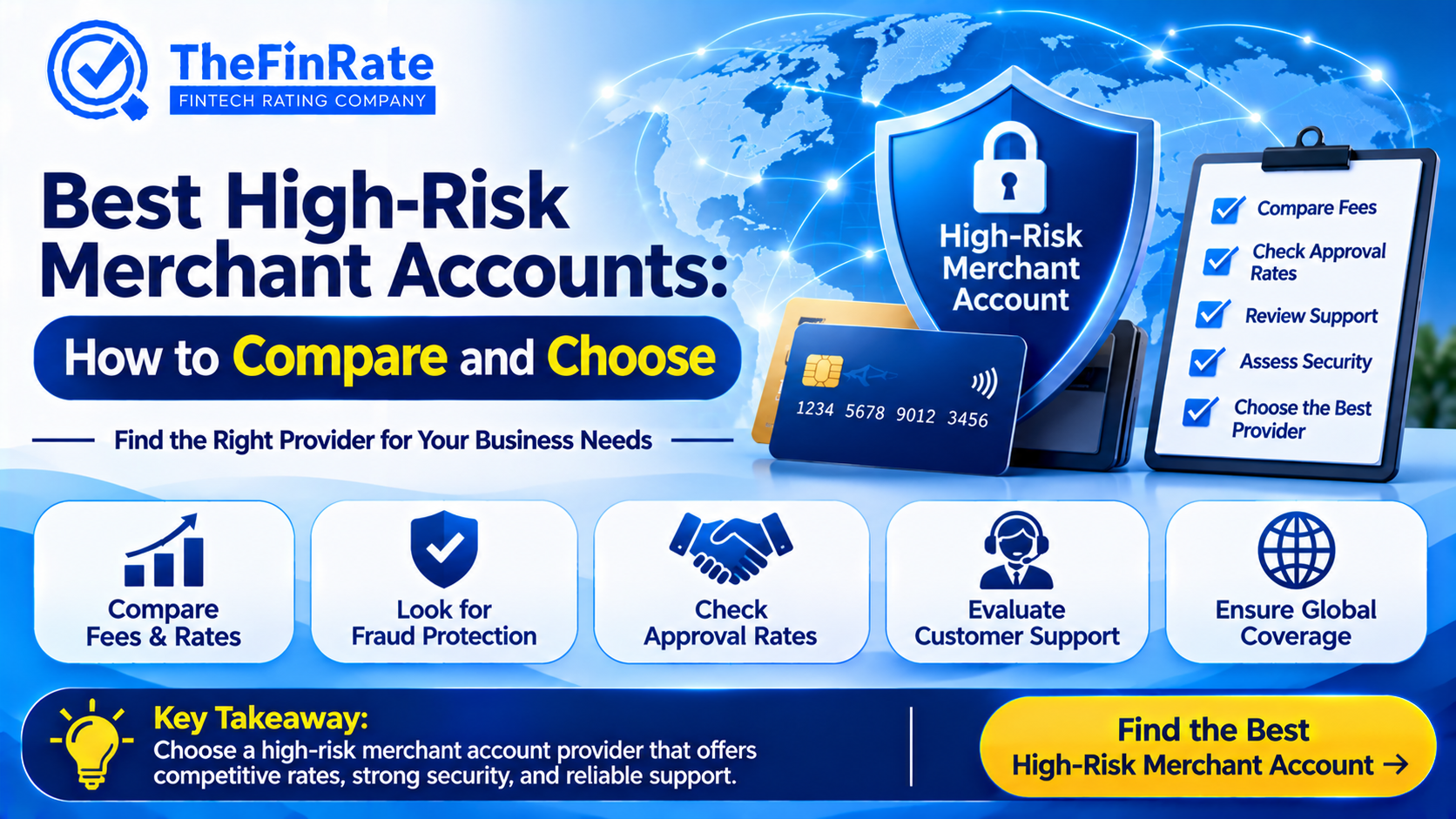
Best High-Risk Merchant Accounts: How to Compare and Choose

Searching for the best high-risk merchant accounts usually starts with a setback: a declined application, a sudden account closure or a processor that quietly froze funds. The frustrating part is that most online rankings are written by the providers themselves, so "best" often means "best at marketing."
A more reliable approach is to understand how high-risk accounts work and judge providers against the criteria that actually affect your business. This guide covers what makes an account "best" for you, the main account types, red flags and a step-by-step selection process.
What Makes a Business High Risk?
Providers assess the likelihood of chargebacks, fraud and regulatory problems. Common triggers include:
- Industry: forex, gaming, adult content, CBD and supplements, travel, subscriptions and some digital services.
- Business model: free trials, recurring billing and delayed delivery raise dispute risk.
- Chargeback and refund history: high ratios signal future losses.
- Business age: new businesses have no processing track record.
- Geography: international sales add fraud and compliance complexity.
High risk is a pricing and underwriting category, not a judgment about legitimacy. A business that is high risk at one bank may be acceptable at another.
What "Best" Really Means
There is no universal best provider. The best high-risk merchant account for you is the one that:
- Explicitly accepts your exact business model.
- States its fees, reserves and contract terms clearly in writing.
- Keeps your funds stable and payouts predictable.
- Offers real chargeback and fraud support.
- Scales with your volume without forcing a disruptive switch.
A cheap rate with a heavy reserve and an unclear contract is usually worse than a slightly higher rate with transparent terms.
Types of High-Risk Merchant Accounts
- Dedicated merchant accounts
Held in your own name and underwritten individually. They offer more control and stability, but approval takes longer and needs more paperwork.
- Aggregated or pooled accounts
You process under a provider's master account. Setup is faster, but you have less control and may face holds if activity looks unusual.
- Offshore and international accounts
Useful for merchants with global customers, but they need careful attention to licensing, tax and local rules.
- Specialist billing platforms
Some industries use billing providers built for their model. These can simplify compliance but may limit control over the acquiring relationship.
The Criteria That Matter Most
- Industry acceptance in writing
Do not rely on a sales call. Ask for confirmation that your products and business model are accepted.
- Total cost
Compare processing rates, monthly and gateway fees, setup fees, chargeback and refund fees, and early termination charges. The headline percentage rarely tells the full story.
- Reserves and payout timing
A rolling reserve holds part of your sales for a period to cover chargebacks. Ask for the percentage, the hold period and the release schedule.
- Who holds the account
Some providers place merchants with partner banks or processors. Knowing who sets the terms helps you understand who can freeze or close your account.
- Chargeback management
Look for alerts, dispute tools and fraud screening such as 3D Secure and address verification.
- Contract terms
Check length, auto-renewal and termination fees. Long contracts with steep exit fees can trap you with a poor provider.
- Support
A named contact and fast responses matter most when something goes wrong.
Providers Commonly Considered
These names appear frequently in high-risk payment discussions. This is not a ranking, and availability, pricing and eligibility vary by country and industry, so verify each on its own site:
- PaymentCloud and Durango Merchant Services: specialists often considered by online merchants declined elsewhere.
- Host Merchant Services and Payline Data: broader providers with some high-risk options, sometimes through partners.
- Soar Payments and CDGcommerce: often listed for varied restricted industries and guided onboarding.
- emerchantpay: often described as a direct acquirer with international reach, suited to established merchants.
Whichever you shortlist, ask each one the same questions and compare written quotes.
Red Flags to Watch For
- Guaranteed approval before any underwriting.
- Vague or missing fee schedules.
- Pressure to sign long contracts or equipment leases.
- Refusal to explain reserves or who holds the account.
- Rankings or reviews that look paid and give no way to verify claims.
- Very low rates that ignore your industry's real risk.
Common Mistakes to Avoid
- Misdescribing the business. Inaccurate onboarding details can lead to sudden termination.
- Comparing only the percentage rate. Reserves and payout delays often cost more.
- Skipping the contract. Fund-holding and termination clauses matter.
- Ignoring chargebacks. Rising ratios can trigger card network monitoring programs.
- Using a single account. One hold or review can stop all revenue.
How to Choose in Five Steps
- Gather your numbers. Know your monthly volume, average ticket, refund rate and chargeback rate.
- Prepare documents. Business registration, bank statements, policies and processing history speed up approval.
- Shortlist three providers that explicitly name your industry.
- Request written quotes and compare total cost, reserves and contract terms.
- Pilot first. Start with a controlled volume, watch approvals and chargebacks, then add a backup provider as you grow.
For a closer look at how these accounts work and how providers differ, see this guide to high-risk merchant accounts.
Keeping Your Account Stable
Approval is only the beginning. To reduce the risk of holds or closure:
- Describe products, pricing and fulfilment accurately.
- Make refunds and cancellation simple.
- Use recognisable billing descriptors so customers do not dispute unfamiliar charges.
- Review chargebacks weekly and act on trends early.
- Keep a second provider ready as a backup.
Conclusion
The best high-risk merchant accounts are not the ones with the loudest marketing or the lowest advertised rate. They are the accounts from providers that accept your business, explain fees and reserves in writing and stay stable as you grow. Compare at least three quotes, read the contract carefully and protect your chargeback ratio from day one. That diligence costs far less than recovering from a frozen account.