
10 Creative Ways to Display Composite Products at Industry Trade Shows

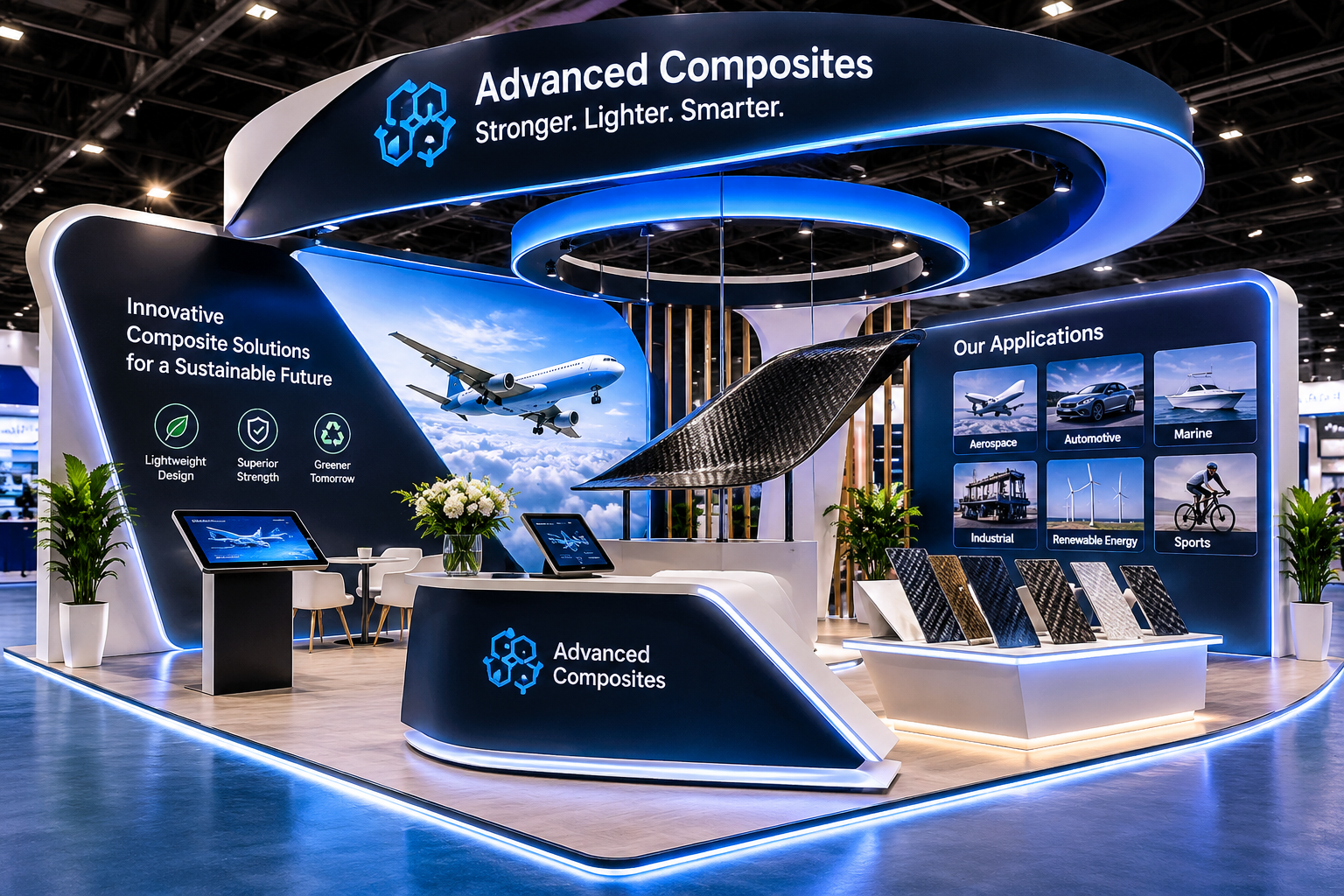
Presenting innovative materials effectively is essential for companies participating in competitive industry exhibitions. In the composites manufacturing sector, businesses need to demonstrate product quality, technical capabilities, and real-world applications to attract potential customers. A well-planned Composites trade show booth design can help manufacturers turn their exhibition space into an informative and visually appealing environment. From interactive product displays and digital presentations to hands-on demonstrations and creative display structures, the right presentation strategy can make complex composite products easier to understand. At events such as CAMX 2026, creative product displays can help exhibitors capture attention, encourage conversations, and build valuable industry connections.
1. Use Customized Display Stands for Composite Products
Customized product stands are an effective way to present composite materials in an organized and professional manner.
Manufacturers can design dedicated stands for carbon fiber panels, fiberglass components, reinforced plastic products, and other advanced materials.
Different display heights can help visitors examine products from multiple angles. Clear product labels can explain material types, specifications, and industrial applications.
For larger components, specially designed platforms can provide stable and attractive product presentation.
The display structure should complement the product rather than distract visitors from its features.
Customized stands also help exhibitors maintain consistency across different product categories.
2. Create Interactive Product Demonstration Stations
Interactive demonstration stations allow visitors to explore products rather than simply viewing them.
Companies can establish small demonstration counters where representatives explain product characteristics and manufacturing processes.
For example, visitors may examine composite samples, compare material finishes, or observe selected manufacturing demonstrations.
These stations can also include digital screens displaying product applications and technical information.
An interactive presentation creates opportunities for direct communication between visitors and company representatives.
It can also help potential customers understand how specific materials may address their manufacturing requirements.
3. Showcase Products Through Transparent Display Cases
Transparent display cases can create an attractive presentation while protecting valuable or delicate composite components.
They are particularly useful for displaying precision-engineered parts, specialized components, and smaller material samples.
Clear cases allow visitors to examine products from different angles without physically handling them.
Integrated lighting can further improve visibility and highlight important product details.
Each case should include concise information about the displayed material, its characteristics, and its intended applications.
This presentation method works well when companies want to create a clean and organized exhibition environment.
4. Use Large-Scale Graphics to Explain Product Applications
Large graphics help visitors understand how composite materials are used across different industries.
Manufacturers can display high-quality images of aerospace structures, automotive components, wind turbine blades, marine applications, and construction products.
These visuals provide context and explain how individual materials contribute to larger engineering solutions.
Companies should combine application images with short descriptions and relevant technical information.
For example, an exhibitor showcasing carbon fiber products can include graphics explaining their use in lightweight automotive structures.
Large-format visuals also improve booth visibility and strengthen brand communication.
5. Introduce Digital Screens for Technical Product Presentations
Digital screens provide an effective way to present information that may be difficult to communicate through physical samples alone.
Manufacturers can use LED displays, touchscreens, and presentation monitors to showcase product specifications, manufacturing processes, and application videos.
Animated presentations can explain composite layering, molding, curing, and other production techniques.
Touchscreen interfaces can allow visitors to select products and explore their features independently.
Companies should keep digital content simple, informative, and visually engaging.
Well-positioned screens can attract attention while providing useful information to technically focused visitors.
6. Develop Side-by-Side Material Comparison Displays
Comparison displays are useful when manufacturers offer multiple material solutions.
Companies can arrange different composite samples together and provide information about their characteristics and applications.
For example, exhibitors may present different types of reinforcement materials or composite panels for comparison.
Relevant specifications can be displayed through charts, product labels, or digital screens.
Comparisons should be accurate and based on appropriate testing conditions.
This approach helps visitors understand product differences and identify materials that may suit their specific requirements.
It also creates opportunities for technical discussions with exhibition representatives.
7. Build Creative Vertical Product Displays
Vertical displays can help manufacturers make better use of limited exhibition space.
Instead of placing every product on counters, companies can use wall-mounted panels, vertical stands, and suspended display structures.
These arrangements can showcase smaller composite samples, material sheets, product photographs, and technical information.
Vertical displays also help create a visually organized booth without overcrowding the floor.
However, installation must follow venue safety requirements, and all displayed products should be securely supported.
This method is especially useful for exhibitors working with multiple product categories.
8. Highlight Products with Strategic Lighting
Lighting can make composite products more noticeable and improve their presentation.
LED spotlights can emphasize featured components, while integrated shelf lighting can highlight smaller material samples.
Backlit panels can also make technical graphics and product information easier to notice.
Manufacturers should choose lighting according to the product's size, surface finish, and display requirements.
The objective is to improve visibility without creating glare or unnecessary distractions.
A well-lit product display can contribute to a professional and modern exhibition appearance.
9. Create Real-World Application Display Areas
Visitors often want to understand how composite products perform in actual industrial environments.
Companies can create application-focused display sections that connect individual materials with their end uses.
For example, a manufacturer can display an automotive composite component alongside images of the vehicle application.
An aerospace materials supplier can showcase structural samples with relevant aircraft-related graphics.
These displays help visitors understand the practical value of the company's products.
They also make it easier for sales representatives to discuss potential applications and customized solutions.
10. Offer Hands-On Product Exploration Experiences
Hands-on experiences can make product presentations more memorable.
Where product safety and event rules allow, companies can invite visitors to examine selected composite samples, inspect surface finishes, or explore component construction.
A dedicated exploration counter can display samples of different thicknesses, textures, and structures.
Representatives can explain material properties and answer questions during these interactions.
Companies should select appropriate samples that can withstand repeated handling.
This presentation method encourages participation and gives visitors a more direct understanding of the products.
11. Organize Product Displays According to Industry Applications
Composite materials serve several industries, and organizing displays according to applications can make a booth more useful.
Manufacturers can create separate sections for aerospace, automotive, marine, construction, and renewable energy applications.
Each section can include relevant samples, product photographs, and application information.
This arrangement allows visitors to navigate directly to the solutions relevant to their businesses.
It also helps manufacturers communicate the versatility of their product portfolios.
12. Combine Product Displays with Clear Technical Information
Attractive displays should always be supported by useful information.
Visitors need to understand what a product is, how it works, and where it can be used.
Companies can provide product specifications, material descriptions, manufacturing details, and application information through display labels and digital resources.
QR codes can direct visitors to technical datasheets and product catalogs.
Information should be organized into short sections that are easy to read.
A combination of physical presentation and accessible technical documentation creates a more informative experience.
13. Use Modular Display Systems for Flexible Product Presentation
Modular display systems allow exhibitors to change their product arrangements according to different exhibition requirements.
Manufacturers can use interchangeable shelves, display counters, graphic panels, and product stands.
These components can be rearranged for different booth sizes and product categories.
Modular systems are especially useful for businesses participating in several industry exhibitions throughout the year.
They also support more efficient use of exhibition budgets because many components can be reused.
14. Create Dedicated Product Launch Areas
Trade shows can provide an excellent opportunity to introduce new composite materials and manufacturing solutions.
Companies launching products can create dedicated presentation areas within their booths.
These sections may include branded displays, product samples, digital presentations, and demonstration counters.
A clearly defined launch area helps visitors identify new offerings.
Companies can also schedule short product presentations throughout the event.
This creates opportunities to attract interested visitors and communicate the benefits of newly developed solutions.
15. Prepare Your Product Displays for CAMX 2026
CAMX 2026, the Composites and Advanced Materials Expo, provides an important platform for companies working with advanced materials and composite manufacturing technologies.
Exhibitors should carefully select which products deserve the most attention.
The display strategy should reflect the company's objectives, target audience, and available exhibition space.
Manufacturers can prioritize innovative materials, newly developed components, manufacturing technologies, and real-world applications.
Product samples should be prepared in advance, and all technical descriptions should be reviewed for accuracy.
Companies should also coordinate display structures, graphics, transportation, and installation requirements before the event.
Early planning can help create a more organized and effective exhibition presentation.
16. Select Professional Booth Builders for Better Product Presentation
Even the best product display ideas require professional planning and execution.
Experienced booth builders can help manufacturers develop customized structures that suit their products and exhibition requirements.
They can assist with display counters, shelving, lighting, graphics, digital integration, fabrication, and installation.
Before selecting a partner, companies should review previous exhibition projects and evaluate their ability to handle customized requirements.
It is also important to compare project timelines, pricing, material quality, and included services.
A suitable booth-building partner can help transform product presentation ideas into practical exhibition solutions.
17. Train Staff to Explain Product Features and Applications
Product displays attract attention, but knowledgeable staff members help visitors understand their importance.
Representatives should be familiar with material properties, technical specifications, manufacturing processes, and industrial applications.
They should also know how to explain product advantages in straightforward language.
When visitors show interest in a particular component, staff should be prepared to provide relevant technical information and discuss possible applications.
Proper staff training improves communication and helps create a positive impression of the company.
18. Use Product Displays to Generate Qualified Leads
Every product display should support the company's wider exhibition objectives.
Companies can position lead collection counters or digital registration systems near important display sections.
Visitors interested in specific products can request technical documentation, arrange meetings, or share their project requirements.
Representatives should record relevant information to support follow-up communication.
Rather than collecting large numbers of unrelated contacts, exhibitors should focus on identifying visitors with genuine business interest.
This approach can make exhibition participation more productive.
19. Evaluate Which Product Displays Attract the Most Attention
After the exhibition, manufacturers should evaluate the performance of their different product presentation methods.
They can review which displays generated the most visitor interactions, technical questions, and business inquiries.
Feedback from booth staff can also identify products that were difficult to explain or displays that need improvement.
For example, if visitors spend more time exploring physical samples than reading technical posters, future exhibition planning can prioritize hands-on product presentation.
These insights can help businesses improve their display strategies for upcoming events.
20. Explore New Trends in Composite Product Presentation
Exhibition product presentation is becoming more interactive and experience-focused.
Manufacturers are exploring digital visualization, touchscreen product catalogs, immersive demonstrations, and flexible modular display systems.
Sustainable booth materials and reusable product stands are also gaining importance.
Another developing approach is personalized product exploration, where visitors can access information based on their industry or specific application requirements.
By adopting suitable presentation methods, companies can make complex products easier to understand and create more meaningful exhibition experiences.
Conclusion
Creative product displays can help composites manufacturers communicate technical capabilities, highlight material innovations, and attract relevant industry visitors. From transparent display cases and interactive demonstration stations to digital presentations and real-world application areas, every display should make products easier to explore and understand. Companies preparing for CAMX 2026 should carefully plan their product presentation, booth layout, branding, and visitor engagement strategy. Working with an experienced exhibition partner can help bring these ideas together effectively. Businesses looking to explore suitable exhibition partners can use Composites trade show booth design to compare booth builders and identify solutions that support their exhibition goals.