

Staying healthy does not have to be complicated. Small daily habits, such as eating balanced meals, drinking enough water, and staying physically active, can make a big difference. Learning how to Track Your Meals, Water Intake, and daily activity helps you understand your routine, make better choices, and work towards your health goals.
Why Is Tracking Your Daily Health Important?
Tracking your daily habits gives you a clear picture of your lifestyle. Sometimes, we eat more than we realise, forget to drink enough water, or spend too much time sitting. Keeping a simple record can help identify these habits.
It also makes it easier to understand your progress. Whether your goal is weight management, better energy, or improved fitness, tracking helps you stay consistent and motivated.
1. Track Your Meals with a Food Diary
One of the easiest ways to improve your eating habits is by recording what you eat throughout the day. A food diary helps you understand your food choices and daily eating patterns.
Record Everything You Eat
Write down your breakfast, lunch, dinner, and snacks. Include portion sizes and ingredients whenever possible. This information helps you recognise whether your meals contain enough protein, carbohydrates, healthy fats, vitamins, and minerals.
Use a Nutrition Tracking App
Digital nutrition apps make meal tracking easier. You can search for foods, scan barcodes, and record meals within seconds. Some apps also estimate calories and nutritional values.
For better results, focus on balanced nutrition instead of counting every calorie. Choose whole foods, vegetables, fruits, lean proteins, and healthy fats.
2. Monitor Your Daily Water Intake
Water is essential for several important body functions. It supports digestion, helps regulate body temperature, and maintains normal body function.
However, many people forget to drink enough water during busy working hours.
Set Daily Water Reminders
Setting reminders on your phone can help you develop a regular drinking routine. Try drinking water after waking up, with meals, and throughout the day.
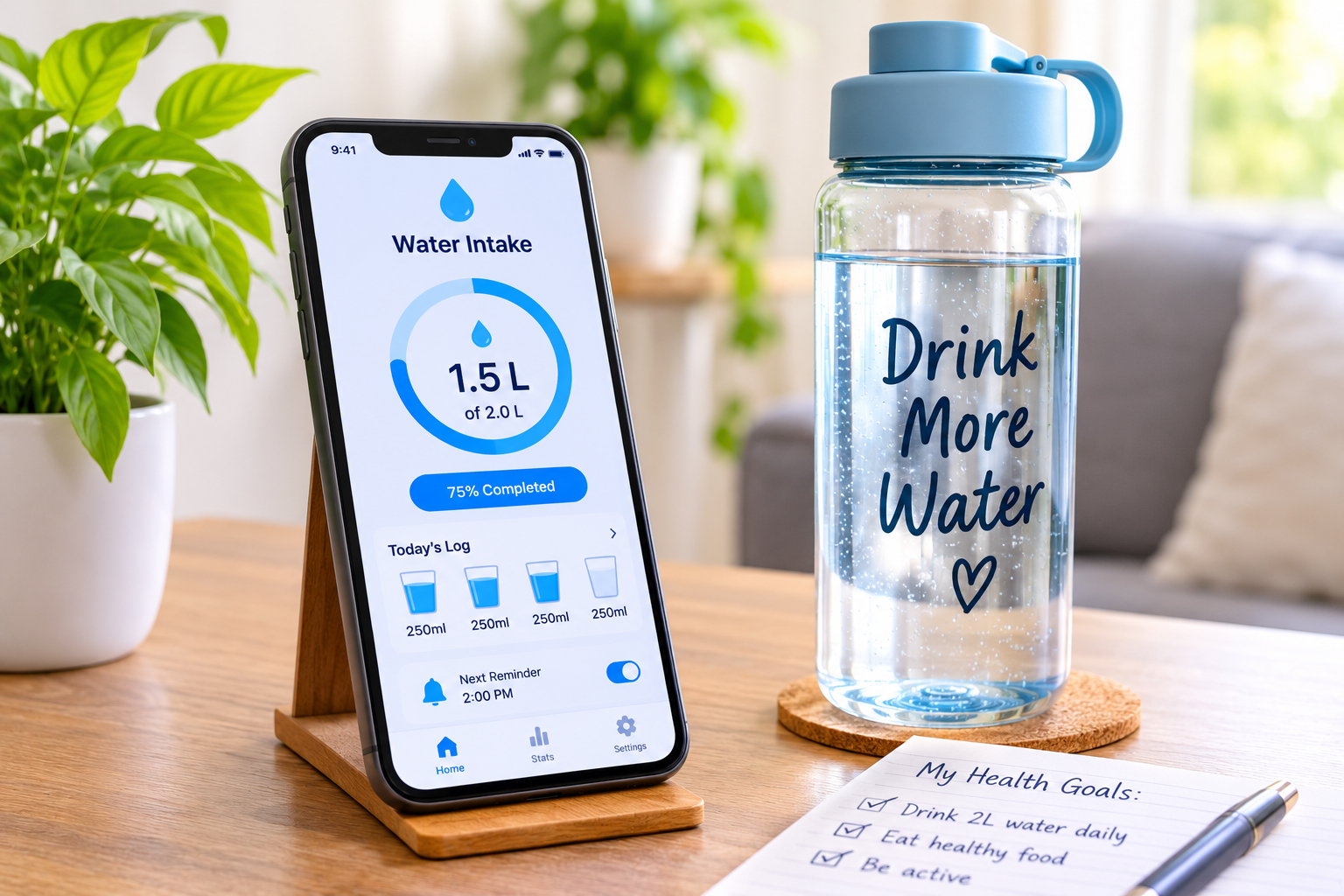
Use a Water Tracking App
Water tracking apps allow you to record how much water you drink. Some apps provide daily reminders and progress charts to help you stay consistent.
Remember that water needs vary depending on physical activity, weather, diet, and individual health conditions. Pay attention to your body's needs rather than following one fixed target.
3. Track Your Daily Physical Activity
Physical activity is another important part of a healthy lifestyle. Regular movement supports heart health, improves fitness, and can help maintain a healthy weight.
You do not need an expensive gym membership to stay active. Walking, cycling, dancing, and home workouts are simple ways to include movement in your routine.
Count Your Daily Steps
A fitness tracker or smartphone can help monitor your daily steps. Checking your step count encourages you to move more throughout the day.
Start with a realistic target based on your current activity level and gradually increase it.
Monitor Exercise Time
Record how much time you spend walking, exercising, or doing other physical activities. Tracking your exercise routine helps you understand your progress and maintain consistency.
4. Choose the Right Health Tracking Tools
Technology has made it easier to monitor everyday health habits. Different tools can help you manage meals, hydration, and physical activity in one place.
Some useful options include:
-
Nutrition apps: Help record meals, calories, and nutrients.
-
Water reminder apps: Track daily water consumption.
-
Fitness trackers: Monitor steps, movement, and exercise.
-
Smartwatches: Provide information about activity, heart rate, and sleep.
-
Health journals: Allow you to record daily habits manually.
Choose tools that are simple to use and match your personal goals. You do not need to use several apps if one reliable tool meets your needs.
5. Create a Simple Daily Tracking Routine
Consistency is more important than perfection. Instead of spending too much time recording every detail, create a simple routine that fits your lifestyle.
Here are a few practical habits:
-
Record your breakfast, lunch, dinner, and snacks.
-
Keep a water bottle nearby.
-
Check your daily steps in the evening.
-
Review your physical activity before going to bed.
-
Check your weekly progress to identify areas for improvement.
These small steps can help you build healthier habits without making your routine stressful.
6. Use Your Tracking Data to Improve Your Lifestyle
Tracking information is only useful when you apply it to your daily routine. Review your records regularly and look for patterns.
For example, if you notice that you drink less water during working hours, keep a bottle beside your laptop. If you spend most of the day sitting, schedule short walking breaks.
Avoid comparing your progress with others. Everyone has different health needs, activity levels, and daily routines. Focus on gradual improvements that are realistic and sustainable.


