
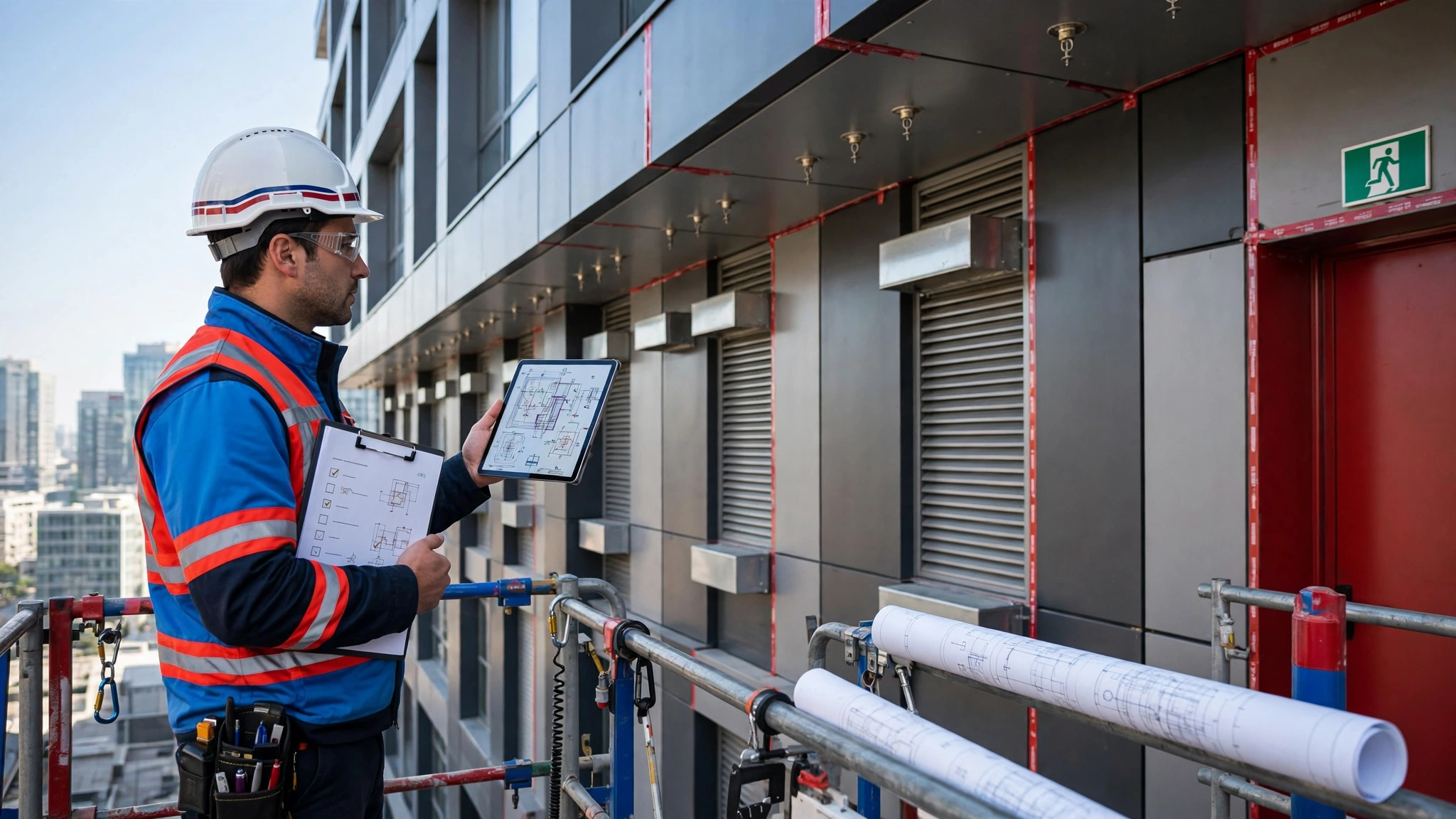
Fire safety design is a technical responsibility that influences how buildings protect occupants, limit property damage and respond to emergencies. A successful design must consider building layout, construction materials, fire protection systems, smoke movement and evacuation conditions. These factors are closely connected, so a decision in one discipline can affect the performance of another. The CFPS Certification demonstrates specialist knowledge in fire protection and provides a professional benchmark for individuals working to reduce fire losses. When this knowledge is supported by engineering judgement, practical experience and clear technical documentation, project teams can develop more reliable fire safety strategies.
Competent professionals do not simply check whether equipment appears on a drawing. They examine whether the proposed arrangements address the building's actual hazards and intended use.
2. Essential Knowledge Behind Fire Safety Design
Fire safety engineering draws on several technical subjects. Understanding these areas helps professionals identify design weaknesses and develop suitable solutions.
Important knowledge areas include:
-
Fire dynamics: Understanding ignition, heat release, fire growth and combustion.
-
Smoke behaviour: Evaluating how smoke travels through rooms, corridors and vertical openings.
-
Human behaviour: Considering occupant response, movement and evacuation requirements.
-
Fire resistance: Understanding how building elements perform when exposed to fire.
-
Detection and suppression: Reviewing systems intended to identify and control fire incidents.
-
Building regulations: Interpreting relevant codes and technical requirements.
These subjects should be considered together rather than treated as separate design tasks.
For example, increasing the size of a room may affect occupant numbers, travel distances and smoke management requirements. A design change that appears architectural can therefore have important fire safety consequences.
Engineers should identify these relationships early and communicate their implications to the wider design team.
3. Demonstrating Specialist Fire Protection Competence
Professional competence requires a combination of education, relevant knowledge and the ability to apply recognised principles responsibly.
The CFPS Certification is associated with the National Fire Protection Association and assesses fire protection knowledge through a professional examination. Its subject matter relates to recognised practices for reducing fire-related losses.
For professionals, preparation and continuing development can strengthen understanding of:
-
Fire prevention and hazard identification.
-
Fire protection principles and system functions.
-
Fire safety management.
-
Building fire protection considerations.
-
Emergency preparedness.
-
Risk reduction and loss prevention.
These subjects are useful in different working environments. A professional involved in a manufacturing facility may focus on industrial hazards, while someone supporting a commercial building may examine evacuation arrangements, fire detection and compartmentation.
However, certification should never be treated as automatic approval to undertake every engineering activity. Project responsibilities must reflect the individual's actual competence, experience and applicable professional requirements.
4. Chartered Recognition and Engineering Responsibility
Specialist knowledge is one part of professional practice. Engineers working on complex developments must also demonstrate sound judgement, ethical conduct and responsibility for their decisions.
In Australia, chartered professional recognition provides an established framework for assessing engineering competence. Engineers Australia evaluates applicants against professional standards, including technical capability and professional practice.
Within fire safety engineering, the area of practice can involve:
-
Fire and smoke behaviour.
-
Evacuation science and human behaviour.
-
Performance-based fire engineering.
-
Fire protection system analysis.
-
Building and fire code interpretation.
-
Fire risk assessment and mitigation.
-
Coordination with other engineering disciplines.
These capabilities are particularly relevant when a project needs a technically justified alternative to a straightforward prescriptive design approach.
For example, a building with unusual geometry may require additional assessment of smoke movement and evacuation conditions. The engineer must explain the methodology, assumptions and limitations behind the proposed solution.
Professional recognition supports confidence in engineering judgement, but every recommendation must still be supported by appropriate project evidence.
5. Applying Competence During Design and Construction
Fire safety requirements can change as projects move from concept design to construction. Materials may be substituted, room layouts adjusted and building services relocated.
A disciplined review process helps maintain the intended fire strategy.
A practical workflow can include:
Concept stage: Identify occupancy, building characteristics and relevant fire safety objectives.
Detailed design: Review escape arrangements, fire resistance, detection, suppression and smoke management.
Construction stage: Examine technical submissions, installation details and proposed variations.
Inspection stage: Review completed work and identify defects that could affect fire protection performance.
Handover stage: Ensure that relevant records, system information and operational requirements are available to the building owner.
Consider a service contractor proposing additional openings through a fire-resisting wall. The project team should assess the proposed penetrations and ensure that suitable tested fire-stopping arrangements are specified and installed.
This example demonstrates why engineering coordination and quality assurance are essential beyond the initial design stage.
6. Conclusion
Strong fire safety design depends on technical knowledge, careful assessment and responsible professional decisions. Specialist fire protection expertise helps professionals understand hazards and protection measures, while recognised engineering competency supports sound judgement on complex projects. Neither qualification nor registration should replace project-specific analysis, experience or proper technical review.
Vortex Fire highlights these professional responsibilities through its published credentials and fire safety engineering capabilities. Its approach emphasises technical leadership, professional development and life safety. Engineers exploring CPeng Australia can learn about recognised competency, ethical practice and responsibility for engineering decisions. Applying CPeng Australia principles within fire safety design supports accountable project delivery, particularly where complex technical challenges require clear evidence and defensible solutions.
FAQs
What makes fire safety design technically challenging?
It requires coordination between fire behaviour, building construction, occupant safety, protection systems and regulatory requirements.
Why should fire engineers understand human behaviour?
Occupants respond differently during emergencies. Their movement, awareness and ability to evacuate influence the effectiveness of a fire strategy.
What does a fire protection qualification demonstrate?
It demonstrates that an individual has developed and assessed relevant knowledge of fire protection principles and recognised industry practices.
What is the difference between specialist certification and chartered status?
Specialist certification focuses on a defined professional knowledge area, while chartered status assesses broader engineering competency and professional responsibility.
Why is design coordination important?
It helps prevent conflicts between architectural, structural and building services designs that could weaken fire protection measures.
Should fire safety reviews continue during construction?
Yes. Construction changes and installation issues can affect the original fire strategy and should be assessed before acceptance.


