
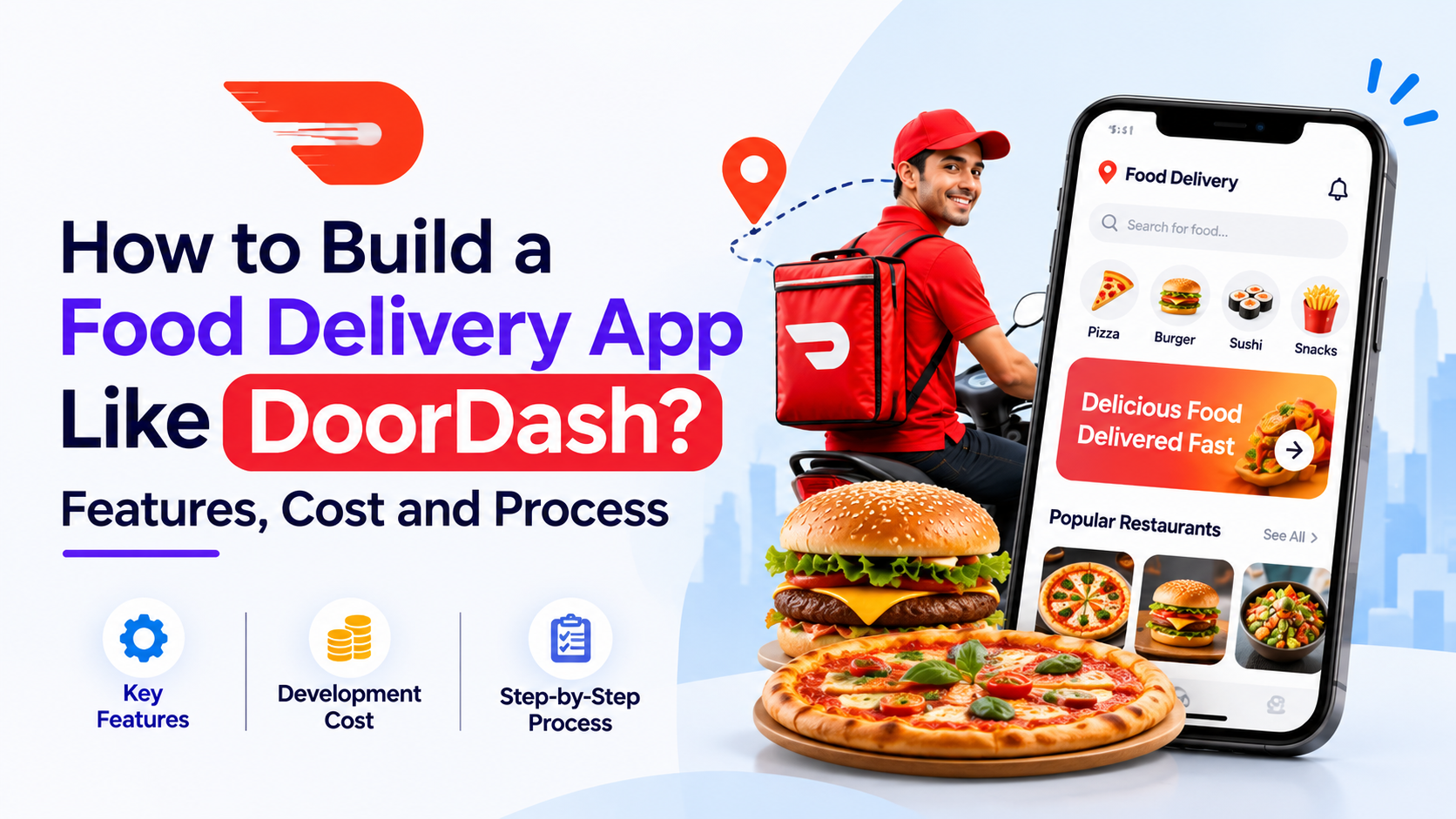
How to Build a Food Delivery App Like DoorDash? Features, Cost and Process
Online food delivery has changed how people discover restaurants and order their favourite meals. Customers now expect a convenient way to browse menus, place orders, make payments, and track deliveries without visiting restaurants. This growing demand has created opportunities for entrepreneurs and businesses to launch their own food delivery platforms.
Apps like DoorDash have made the food delivery experience easier by connecting customers, restaurants, and delivery partners through a single platform. If you are planning to enter this market, building a similar application can help you establish your own food delivery business.
But how do you build a food delivery app like DoorDash? You need the right features, technology, development strategy, and business model. Let's explore the complete process.
Understand How a Food Delivery App Like DoorDash Works
Before starting development, it is important to understand how a DoorDash-like food delivery platform operates. It generally connects three primary user groups: customers, restaurants, and delivery partners. An admin dashboard manages the entire platform.
Each user has a different role in the ordering process.
-
Customers: Browse nearby restaurants, explore menus, place orders, make payments, and track deliveries.
-
Restaurants: Manage their profiles, update menus, receive orders, and prepare food for delivery.
-
Delivery Partners: Accept delivery requests, collect orders, navigate to customer locations, and complete deliveries.
-
Administrators: Manage users, restaurants, delivery partners, payments, commissions, and overall platform activities.
These applications work together through a centralized backend system. When a customer places an order, the restaurant receives the request, prepares the food, and coordinates with an available delivery partner.
Understanding this workflow helps you plan the right features and create a smooth food delivery experience.
What Features Should a DoorDash-Like App Include?
Features play an important role in making a food delivery application useful and easy to operate. Your platform should provide separate functionalities for customers, restaurants, delivery partners, and administrators.
Customer App Features
The customer application should make ordering food simple and convenient.
-
User Registration: Allow customers to create accounts using email, phone numbers, or social logins.
-
Restaurant Discovery: Help users find nearby restaurants based on location, cuisine, ratings, and pricing.
-
Menu Browsing: Display food images, descriptions, prices, and customization options.
-
Shopping Cart: Let customers add dishes, change quantities, and review their orders.
-
Secure Payments: Support cards, digital wallets, UPI, and cash on delivery, depending on the target market.
-
Real-Time Order Tracking: Allow customers to monitor order preparation, pickup, and delivery progress.
-
Ratings and Reviews: Enable customers to share feedback about restaurants and delivery services.
Restaurant App Features
Restaurants need simple tools to manage their daily operations. They should be able to update menus, change item availability, accept or reject orders, and manage preparation times.
Order notifications help restaurant owners respond quickly, while sales reports provide useful insights into customer demand and business performance.
Delivery Partner App Features
The delivery partner application should include registration, availability management, delivery requests, GPS navigation, and order status updates.
These features help drivers manage assigned deliveries and communicate progress with customers and administrators.
Admin Dashboard Features
The admin dashboard provides centralized control over the entire food delivery platform. Administrators can manage customer accounts, approve restaurants, monitor delivery partners, track orders, handle refunds, and manage commission structures.
A well-organized dashboard also helps business owners monitor platform performance and identify operational issues.
How to Build a Food Delivery App Like DoorDash?
Developing a food delivery application requires a clear plan. Following a structured development process helps you manage resources, reduce unnecessary expenses, and build a platform that meets your business requirements.
Step 1: Research Your Market and Business Requirements
Start by identifying your target customers, competitors, restaurant partners, and delivery locations. Understand what customers expect from a food delivery service and identify opportunities to offer something different.
You should also decide whether your platform will operate in one city, multiple locations, or across different regions.
Step 2: Choose the Right Business Model
Select a business model that supports your revenue goals. You can operate a multi-restaurant marketplace, partner with individual restaurants, or build a platform for a specific food category.
Your business model will influence the features, payment structure, delivery workflow, and commission settings.
Step 3: Plan the UI/UX Design
Create a simple and user-friendly interface for every application. Customers should be able to find restaurants and place orders without confusion. Restaurants need an organized order management interface, while delivery partners require easy access to delivery requests and navigation.
A consistent design across all applications helps improve usability and customer satisfaction.
Step 4: Develop the Frontend and Backend
The frontend includes the customer app, restaurant application, delivery partner app, and admin dashboard. The backend connects these components and manages user accounts, restaurant information, orders, payments, and delivery assignments.
If you want to launch with a customizable solution, working with a DoorDash clone app development company can help you build a platform with the essential features and workflows required for your business.
Step 5: Integrate Payments, GPS, and Notifications
Integrate suitable payment gateways to process customer transactions securely. GPS and mapping services help customers discover nearby restaurants and allow delivery partners to navigate to pickup and drop-off locations.
Push notifications, SMS, and email alerts keep users informed about order confirmations, delivery assignments, and payment updates.
Step 6: Test and Launch Your Application
Before launching, test all major functionalities, including registration, restaurant listings, ordering, checkout, payments, delivery assignments, and real-time tracking.
Check application performance across different devices and operating systems. Once testing is complete, deploy the application and begin onboarding restaurants and delivery partners.
Step 7: Maintain and Improve the Platform
Development does not end after launch. Monitor customer feedback, fix technical issues, improve application performance, and introduce new features based on business requirements.
You can also expand into new delivery locations as your customer base grows.
What Technology Is Used to Develop a Food Delivery App?
Choosing the right technology stack helps improve application performance, security, and scalability.
Some commonly used technologies include:
-
Frontend Development: React.js, Next.js, and Angular.
-
Mobile App Development: Flutter, React Native, Swift, and Kotlin.
-
Backend Development: Node.js, Python, Java, and PHP.
-
Database Management: MySQL, PostgreSQL, MongoDB, and Redis.
-
Cloud Infrastructure: AWS, Google Cloud, and Microsoft Azure.
-
Maps and Location Services: Google Maps API.
-
Payment Integration: Stripe, PayPal, and Razorpay.
Real-Time Communication: WebSockets, Socket.IO, and Firebase.
The final technology stack depends on your application requirements, target audience, expected traffic, and development budget.
How Much Does It Cost to Build an App Like DoorDash?
The cost of developing a food delivery app like DoorDash depends on its complexity, features, design, technology, and integrations.
A basic application with essential ordering and payment features generally requires a smaller investment. A more advanced platform with multiple applications, real-time tracking, restaurant management, AI-powered recommendations, and automated delivery assignments requires additional development resources.
The major factors affecting development costs include:
-
Number of applications and user roles.
-
UI/UX design requirements.
-
Custom features and integrations.
-
Payment gateway and GPS integration.
-
Backend infrastructure and cloud hosting.
-
Security and quality testing.
-
Maintenance and ongoing updates.
You can also start with a minimum viable product (MVP) that includes essential functionalities. This allows you to test your business idea, collect customer feedback, and introduce advanced features as your business grows.
How Can a Food Delivery App Generate Revenue?
A food delivery platform can generate revenue through different business models. Choosing the right combination depends on your target market and restaurant partnerships.
Restaurant Commission: Charge restaurants a percentage of every completed order received through your platform.
Delivery Charges: Collect delivery fees from customers based on distance, location, or delivery requirements.
Service Fees: Add a small platform fee to customer orders to support operational expenses.
Subscription Plans: Offer monthly or yearly membership plans with benefits such as free delivery, exclusive discounts, or priority services.
Sponsored Restaurant Listings: Allow restaurant partners to pay for better visibility in search results and promotional sections.
In-App Advertising: Generate additional income by displaying relevant restaurant promotions and sponsored offers.
Combining multiple revenue streams can help create a sustainable food delivery business.
How Can AI Improve a DoorDash-Like Food Delivery App?
AI-powered features can make food delivery platforms more efficient and personalized. For example, AI-based recommendation systems can suggest restaurants and dishes based on customer preferences and previous orders.
Smart delivery assignment can help identify suitable delivery partners based on their availability and location. Predictive delivery estimates can also improve customer expectations by considering order preparation and delivery information.
Additionally, demand forecasting can help businesses understand ordering patterns and plan restaurant partnerships, delivery resources, and promotional campaigns.
These features can be introduced gradually as your platform collects more operational data.
Conclusion
Building a food delivery app like DoorDash requires more than creating an ordering interface. You need a connected platform that supports customers, restaurants, delivery partners, and administrators throughout the complete delivery process.
From selecting the right business model and planning essential features to choosing suitable technologies and managing development costs, every stage contributes to the success of your platform.
Start with the core functionalities, focus on customer convenience, and choose a scalable development approach. With the right strategy and continuous improvements, you can build a competitive food delivery application that supports your business growth.


