
Understanding Leakage Protection in Modern Electrical Distribution Systems

Electrical safety involves more than protecting circuits from overloads and short circuits. In many installations, it is also necessary to detect current that escapes from its intended path and may create a risk of electric shock or equipment damage. A Leakage Current Circuit Breaker is designed to address this concern by monitoring the balance of current in a circuit and disconnecting the supply when a qualifying residual current condition is detected. Its effectiveness depends on the device's internal sensing technology, material quality, correct selection, and compatibility with the wider electrical installation.
The enclosure is an important part of the device's construction. Manufacturers generally use insulating engineering plastics to separate internal electrical components from the external environment. These materials need suitable electrical insulation and mechanical stability, while also supporting the enclosure's shape and assembly requirements. Surface quality and dimensional consistency matter because the housing must accommodate the internal mechanism and fit appropriately within a distribution board. Material selection should therefore be considered as part of the overall product design rather than simply an aesthetic choice.
Inside the device, conductive contacts and mechanical components support the switching process. The contacts establish the electrical connection and separate when the protection mechanism operates. Their material properties and contact surfaces influence how reliably the device performs repeated switching operations. Springs, latches, and the operating mechanism must also work together smoothly. Consistent component manufacturing and careful assembly help reduce the possibility of mechanical irregularities that could affect operation.
The sensing mechanism is central to leakage protection. In many residual-current devices, a sensing component monitors the relationship between the current flowing through the circuit conductors. Under normal conditions, the outgoing and returning currents are balanced. When some current flows through an unintended path, the balance changes. The device detects this difference and activates its tripping mechanism when the detected condition meets its operating criteria. This response can help reduce the risk associated with certain electrical leakage faults.
When selecting a device, buyers should first understand the protection requirements of the installation. Residential distribution boards, commercial buildings, workshops, and industrial facilities may have different electrical arrangements and operating conditions. The device must be compatible with the circuit design, connected equipment, earthing arrangement, and applicable local electrical regulations. Buyers should consult a qualified electrical professional to determine the appropriate product type and configuration instead of selecting a device based only on appearance or a general product description.
It is also important to distinguish residual-current protection from overcurrent protection. A conventional RCCB detects residual current but does not necessarily provide protection against overloads or short circuits. An RCBO combines residual-current protection with overcurrent protection in one device. An MCB, by comparison, is primarily intended to protect against overload and short-circuit conditions. Understanding these differences helps procurement teams avoid choosing a device that leaves part of the installation's protection requirements unaddressed.
Product documentation should be reviewed before purchasing. Buyers can request information about the device's intended application, residual-current characteristics, product classification, applicable standards, testing records, and installation guidance. The type of residual-current protection must be suitable for the electrical equipment connected to the circuit, since some loads can produce different forms of residual current. Compatibility should be checked against the manufacturer's technical documentation and relevant installation rules.
Manufacturing quality has a direct influence on the consistency of protection devices. The sensing assembly, switching mechanism, conductive contacts, and enclosure all require controlled production processes. Inspection of incoming materials helps prevent unsuitable components from entering assembly. Production checks can identify issues with component placement and mechanical movement, while final testing helps verify that the device responds according to its intended design. Manufacturers should maintain clear quality procedures and provide relevant product information to support professional evaluation.
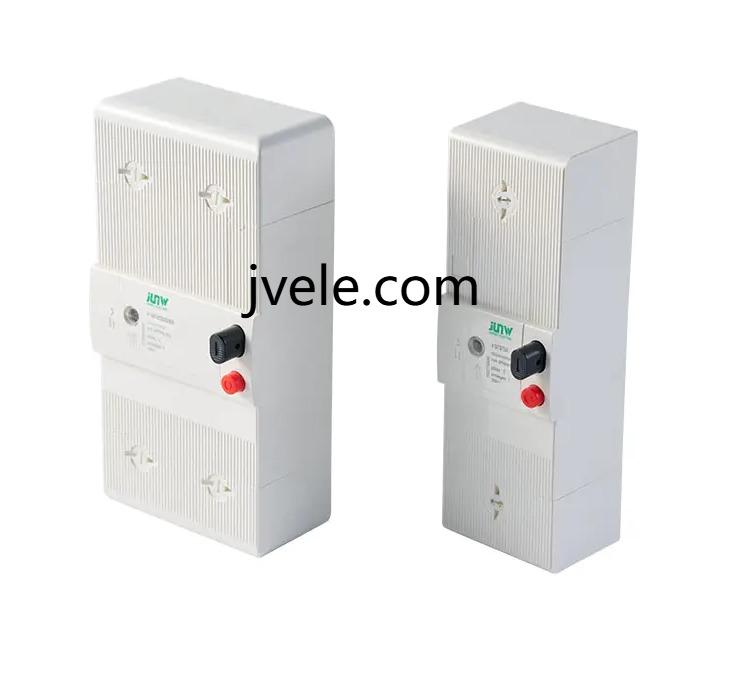
Installation design also affects how convenient the device is to use. Clear terminal identification can help qualified electricians connect the product correctly, while an accessible operating handle makes switching and reset operations easier to understand. A test button is commonly included on residual-current protection devices to allow users or maintenance personnel to check the device's operation according to the manufacturer's instructions. This function does not replace professional inspection or the required maintenance procedures.
The user experience extends beyond the operating handle. In residential and commercial settings, an unexpected trip can interrupt lighting, appliances, or business equipment. Users need clear information about the purpose of the protective device and what to do when it disconnects a circuit. Repeated tripping should not be ignored or resolved by repeatedly resetting the device without identifying the cause. A qualified electrician should investigate the installation and connected equipment when an unexplained fault occurs.
Appearance and structural organization contribute to practical installation. A consistent enclosure design helps the device integrate with other components in a distribution board. Clearly arranged markings, recognizable controls, and accessible connection points can make product identification and maintenance more straightforward. Manufacturers also need to consider how the device fits alongside other protective components, including MCBs and surge protection devices. A coordinated design can support a more organized distribution assembly without compromising the electrical requirements of the product.
Zhejiang Junwei Electric Co., Ltd. develops and manufactures low-voltage electrical products, including differential circuit breakers, miniature circuit breakers, meter boxes, and fuses. Its product range serves different electrical distribution and protection requirements. For buyers evaluating leakage protection devices, reviewing product classifications, confirming installation compatibility, and requesting relevant technical documentation are important steps before procurement. Manufacturers and distributors can explore the company's electrical product range and discuss specific sourcing requirements through https://www.jvele.com/


