
Machine Tool Expo Exhibits: How to Create a Strong Brand Experience
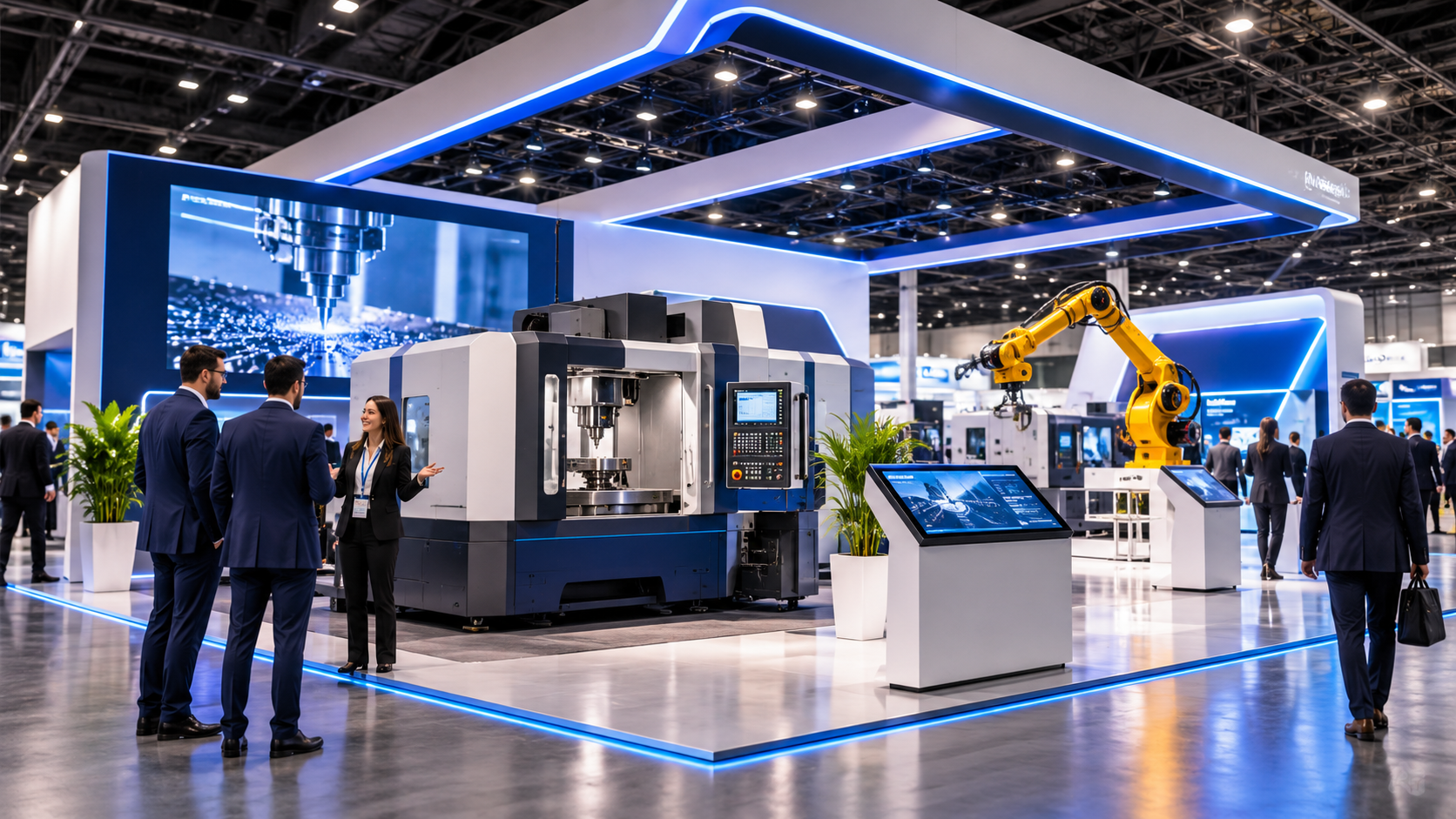
Manufacturing companies need more than advanced machinery to stand out at a competitive trade show. They need an environment that communicates their expertise, technology, reliability, and value within a limited amount of time. Well-designed Machine tool expo exhibits can help manufacturers create a strong brand experience by combining strategic layouts, product demonstrations, compelling graphics, interactive technology, and meaningful conversations. When these elements work together, an exhibit can become more than a display of equipment. It can become a physical representation of the company's identity and the solutions it provides to customers.
Why Brand Experience Matters at Trade Shows
A trade show visitor may see hundreds of companies during an event.
Some booths may have impressive machines. Others may use large screens, colorful graphics, demonstrations, or interactive technology.
With so much competition, simply being present is not enough.
A strong brand experience helps visitors answer three important questions:
- Who is this company?
- What does it offer?
- Why should I care?
When the answers are clear, visitors are more likely to remember the brand after leaving the exhibition floor.
Start With a Clear Brand Message
Every successful exhibit should begin with a central message.
This message should communicate what the company wants visitors to remember.
For a machine tool manufacturer, the message might focus on:
- Precision
- Automation
- Productivity
- Innovation
- Reliability
- Engineering expertise
- Advanced manufacturing
Instead of trying to promote everything at once, choose one central theme and build the exhibit around it.
For example:
Precision Technology for the Future of Manufacturing
Every major element of the booth can then reinforce this idea.
Make the Brand Visible From a Distance
Trade show halls are large and busy.
Visitors may notice your booth before they know anything about your products.
Strong visibility therefore matters.
Use:
- Large but clean logos
- High-level signage
- Clear headlines
- Consistent brand colors
- Strong product imagery
- Overhead signs where appropriate
The goal is to make your company recognizable from several feet away.
However, visibility does not mean filling every available surface with branding.
A clean and focused presentation often creates a stronger impression.
Build a Consistent Visual Identity
Brand experience depends heavily on consistency.
Your booth should visually connect with your website, product packaging, marketing materials, sales presentations, and other communication channels.
Maintain consistency in:
- Typography
- Logo placement
- Imagery
- Color usage
- Graphic style
- Messaging
- Digital interfaces
When visitors see the same visual language across different touchpoints, the brand becomes easier to recognize and remember.
Use Machinery as a Branding Element
For machine tool companies, the equipment itself is part of the brand experience.
A machine should not simply be placed in an empty space.
Its position, lighting, surrounding graphics, and demonstration strategy should communicate the company's capabilities.
For example, a featured machine can be positioned as the centerpiece of the booth with supporting messaging that explains:
What it does
Who it helps
Why it is different
What results it can deliver
This makes the machinery part of the overall brand story.
Create a Logical Booth Layout
A strong brand experience requires a booth that is easy to navigate.
Visitors should naturally move between different sections.
A possible structure could include:
Welcome Area
Introduce the company and its main message.
Featured Technology
Showcase the most important machine or solution.
Demonstration Zone
Allow visitors to see technology in action.
Interactive Area
Provide digital information and product exploration.
Meeting Area
Give sales teams space for detailed conversations.
Follow-Up Area
Capture lead information and provide next steps.
This structure can create a smooth visitor journey.
Make the Booth Feel Open
A welcoming booth encourages visitors to enter.
Avoid unnecessary walls or barriers that make the exhibit feel closed.
Open spaces allow visitors to see:
- Machines
- Staff
- Demonstrations
- Displays
- Meeting areas
from the aisle.
This creates curiosity.
Visitors can see what is happening before deciding whether to walk inside.
Use Graphics to Tell Your Story
Graphics should support your brand message.
Instead of filling walls with product specifications, use graphics to explain the company's value.
For example:
Engineering Expertise
Advanced Automation
Precision Manufacturing
Reliable Production
Each message can be supported with a relevant visual or product example.
Graphics should be easy to understand while walking.
Highlight Your Differentiators
Visitors need to understand why your company is different.
Ask:
- What makes our machines unique?
- What technology do we offer that competitors may not?
- What industries do we serve particularly well?
- What type of support do we provide?
- What results can customers expect?
Your answers should appear throughout the exhibit.
For example, if your company is known for advanced automation, automation should be visible in the demonstrations, graphics, videos, and staff conversations.
Create an Emotional Connection
Industrial marketing can sometimes become overly technical.
Technical information is important, but people also remember experiences.
A strong exhibit can create emotions such as:
- Curiosity
- Confidence
- Excitement
- Trust
- Interest
- Inspiration
Live demonstrations, impressive machinery, interactive experiences, and knowledgeable staff can make the booth more memorable.
The goal is to make visitors feel that your company understands the future of manufacturing.
Use Interactive Technology Strategically
Interactive technology can strengthen a brand experience when it serves a clear purpose.
Touchscreens can allow visitors to:
- Explore products
- Compare machines
- View applications
- Watch demonstrations
- Review specifications
- Explore case studies
Large displays can show manufacturing processes that cannot be physically recreated at the event.
Virtual reality can also provide opportunities to explore complex machinery or production environments.
The important point is that technology should support your brand message rather than distract from it.
Create a Strong Demonstration Program
Live demonstrations provide an opportunity to show your brand's expertise.
A good demonstration can communicate:
Innovation + Performance + Expertise
Rather than simply operating a machine, explain what is happening.
For example:
"This process demonstrates how automated tool changing can reduce manual intervention while maintaining production consistency."
The presenter is not simply showing equipment.
They are showing knowledge.
That expertise becomes part of the brand experience.
Give Visitors Something to Remember
A strong exhibit should contain at least one memorable element.
It might be:
- A live machining demonstration
- A robotic production cell
- An interactive product configurator
- A large digital manufacturing simulation
- A unique finished component
- A technical presentation
- A creative booth structure
The memorable element should still connect to the company's core message.
A gimmick may attract attention, but a relevant experience creates stronger brand recall.
Make Staff Part of the Brand
Your employees are one of the most important parts of the exhibit.
Visitors may remember a helpful conversation longer than they remember a graphic.
Staff should be:
- Approachable
- Knowledgeable
- Professional
- Prepared
- Attentive
They should avoid standing together in groups or spending excessive time on phones.
Every interaction is an opportunity to reinforce the company's identity.
Train Staff to Tell the Same Story
Different representatives should not communicate completely different messages.
Before the event, establish:
- Main brand message
- Key products
- Primary differentiators
- Target customer profiles
- Important talking points
- Demonstration scripts
- Lead qualification questions
This creates consistency.
A visitor who speaks with one representative should receive the same core message as someone who speaks with another.
Design for Different Buyer Personas
Not every visitor will have the same priorities.
An engineer may want technical specifications.
A production manager may want information about throughput.
A business owner may focus on investment value.
A procurement professional may ask about service and delivery.
Your exhibit should provide multiple entry points for these audiences.
Technical displays can support engineers.
Application examples can help production managers.
Business-focused messaging can engage executives.
Create Comfortable Meeting Spaces
Brand experience continues after the initial attraction.
When a visitor is interested in your products, the conversation may need to move to a quieter area.
Meeting spaces should be:
- Comfortable
- Professional
- Conveniently located
- Easy to access
- Appropriately private
A well-designed meeting area communicates that your company takes business relationships seriously.
Use Product Samples
Physical samples can make a technical brand more tangible.
Display finished components produced using your machinery.
Visitors can examine:
- Surface quality
- Precision
- Complexity
- Material characteristics
- Manufacturing results
A sample can also become a conversation starter.
Instead of asking, "Would you like to hear about our machine?" a representative can begin with:
"This component was produced using the system you are looking at."
That makes the discussion more concrete.
Integrate Sustainability Into the Brand Story
Sustainability can also become part of a modern manufacturing brand experience.
Companies can communicate efforts related to:
- Energy efficiency
- Reduced material waste
- Efficient production
- Reusable exhibit structures
- Digital information
- Sustainable materials
However, sustainability messaging should be genuine.
Visitors are more likely to respond positively to specific examples than broad claims.
Make the Experience Shareable
Visitors increasingly interact with brands through digital channels during and after events.
Consider creating visually interesting areas that can be photographed or shared.
This might include:
- A distinctive machine installation
- A branded demonstration area
- An impressive digital display
- A finished product wall
- A unique technical visualization
Encouraging social sharing can extend the reach of the exhibit beyond the exhibition floor.
Use QR Codes Carefully
QR codes can connect physical experiences with digital information.
A visitor can scan a code to access:
- Product specifications
- Technical brochures
- Demonstration videos
- Product pages
- Case studies
- Meeting requests
Avoid placing QR codes everywhere.
Use them where they provide a clear next step.
For example:
Scan for Complete Machine Specifications
is more useful than simply displaying a QR code without context.
Make Lead Capture Part of the Experience
Lead capture should feel like a natural part of the conversation.
Instead of immediately asking every visitor for contact information, first provide value.
After discussing a product, staff can ask:
"Would you like us to send you the complete application information?"
If the visitor agrees, contact details can be collected along with the specific information they requested.
This makes lead generation feel more useful and less intrusive.
Measure Brand Engagement
Brand experience can be measured.
Useful indicators include:
- Booth traffic
- Demonstration attendance
- Product interactions
- Meeting requests
- Qualified leads
- Content downloads
- QR code scans
- Social mentions
- Follow-up meetings
These metrics can help determine which parts of the exhibit were most effective.
Think About the Experience After the Show
The brand experience should continue after visitors leave.
Follow-up communications should reflect what happened at the booth.
For example:
Thank you for visiting our CNC automation demonstration at IMTS. We have attached the specifications for the system we discussed.
This creates continuity between the physical event and the digital relationship.
Common Mistakes to Avoid
Too Much Branding
Visitors need useful information, not endless logos.
Too Many Products
Focus on the solutions that matter most.
Confusing Layout
Create clear visitor pathways.
Weak Demonstrations
Show meaningful applications rather than random machine movements.
Unprepared Staff
Your people are part of the brand experience.
No Follow-Up
Continue the relationship after the event.
Final Thoughts
A powerful manufacturing booth is more than a collection of machines, graphics, and technology. It is an environment designed to communicate what a company stands for and how its solutions can help customers. From the first visual impression to the final sales conversation, every detail contributes to the visitor's perception of the brand. By combining clear messaging, purposeful booth architecture, live demonstrations, interactive technology, product samples, knowledgeable staff, and comfortable meeting areas, Machine tool expo exhibits can create memorable experiences that help manufacturing brands stand apart from competitors and build stronger relationships with potential customers.


