


Ask a founder or CEO what marketing delivered last quarter and the answer is often a pause, followed by a list of activities: campaigns launched, posts published, leads generated. What is missing is a clear line from spend to revenue.
Marketing digital transformation consulting tackles exactly this gap. It modernises how marketing data is captured, connected and reported, so decision makers can see what is working and invest with confidence. This article looks at the problem from the leadership side.
It is not a question of buying another analytics tool. Most companies already have the platforms they need; what they lack is a consistent way of connecting them and a shared agreement on which numbers matter.
The problem: marketing is busy, but its impact is invisible
In many B2B companies, D2C brands and startups, marketing runs across a dozen platforms: ad accounts, social channels, email, the website, marketplaces, the CRM. Each produces its own numbers, and none of them agree.
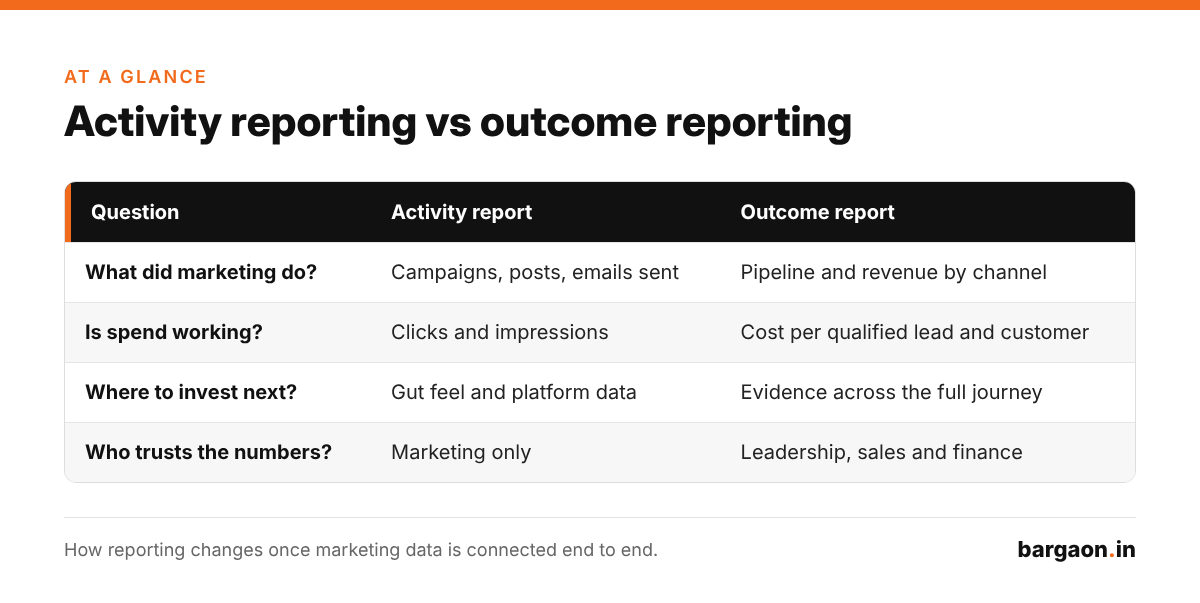
Monthly reports become a patchwork of screenshots and platform metrics. Leadership sees clicks, impressions and leads, but not which channels produce customers or how long they take to convert. Budget conversations turn into debates about opinion rather than evidence.
Marketing teams feel this too. They know some work is performing, but without connected data they struggle to prove it, and good programmes get cut alongside weak ones.
Why visibility breaks down
The root causes are usually structural:
-
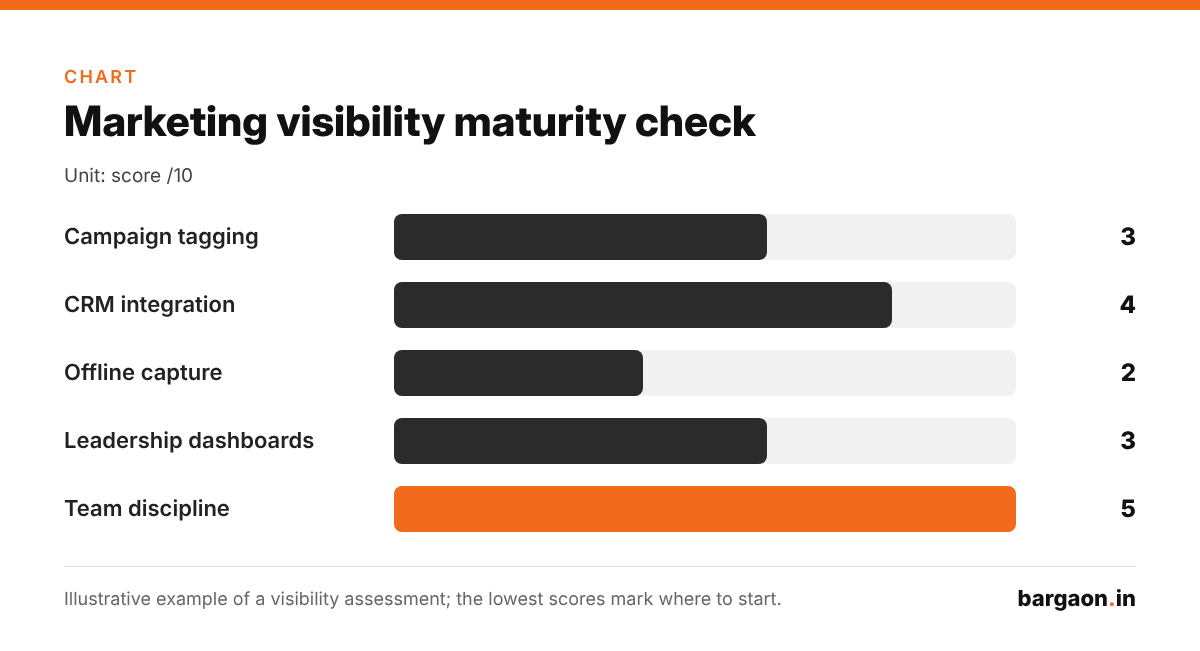
Inconsistent tracking. UTM tags, conversion events and form fields vary by campaign or team member.
-
Disconnected systems. Ad platforms, analytics and the CRM are not linked, so the journey breaks.
-
Offline gaps. Calls, WhatsApp chats and in-person meetings never reach the data.
-
Vanity metrics. Reports focus on what is easy to measure, not what matters commercially.
-
Skills gaps. Teams are strong on execution but lack data and systems expertise.
-
Platform changes. Privacy updates, consent rules and platform reporting changes break tracking that once worked, and nobody notices for weeks.
What poor visibility costs
Without a clear view, budgets drift toward channels that look good on platform dashboards rather than channels that create revenue. Strong programmes get cut because their value is not visible, while weak ones survive on impressive-looking numbers.
There is a leadership cost as well. Marketing loses credibility in the boardroom, planning cycles become tense, and the business struggles to scale what works. For companies seeking investment or entering new markets, the inability to explain acquisition economics clearly can weaken confidence in the whole growth story.
Teams also lose time. Analysts and managers spend days every month assembling reports by hand, reconciling figures that never quite match, and answering follow-up questions that a reliable dashboard would have answered on its own.
The solution: rebuild the marketing data foundation
Good marketing digital transformation consulting starts by defining the questions leadership needs answered: which channels drive pipeline, what a customer costs to acquire, how long buyers take to convert. The tracking, systems and reports are then designed backwards from those questions.
That usually means standardising campaign tagging, connecting ad platforms and analytics to the CRM, capturing offline touchpoints, and building a small set of dashboards that leadership actually uses. Whether this is delivered by an internal team or a digital transformation agency, the principle is the same: fewer, better numbers that everyone trusts.
The work should also respect how buyers really behave. A B2B buyer may read several articles, attend a webinar and then call sales directly; a D2C shopper may see an ad, browse on mobile and buy days later. The measurement design has to capture those paths honestly rather than giving all credit to the last click.
How the engagement runs
A typical engagement follows these steps:
-
Leadership workshop to agree the business questions and key metrics.
-
Tracking audit across website, ads, analytics, forms and CRM.
-
Measurement plan defining events, naming rules and lifecycle stages.
-
Implementation of tags, integrations and offline capture.
-
Dashboard build for leadership, marketing and sales views.
-
Team training on maintaining tracking discipline and reading reports.
-
Quarterly review to refine metrics as the business evolves.
What leadership gains
With a connected foundation, marketing conversations shift from activity to outcomes. Leadership can see which channels contribute to revenue, compare cost per customer across sources, and move budget with evidence rather than instinct.
Marketing teams benefit too. Clear data protects good work, speeds up testing and makes it easier to request investment. And because tracking rules are documented, the foundation stays reliable as campaigns, team members and markets change.
Over time, the business builds a shared language around growth. Finance, sales and marketing look at the same numbers, which makes planning faster and far less contentious.
Make marketing performance visible
A useful first test: pick last month's marketing spend and try to trace it to closed revenue by channel. If that takes more than a morning, the data foundation needs work.
Bargaon's Digital Transformation page explains how marketing data, systems and reporting are modernised for startups, B2B companies and D2C brands. It is a practical starting point for planning the change, and for setting expectations about what a connected marketing foundation can show your leadership team.


