
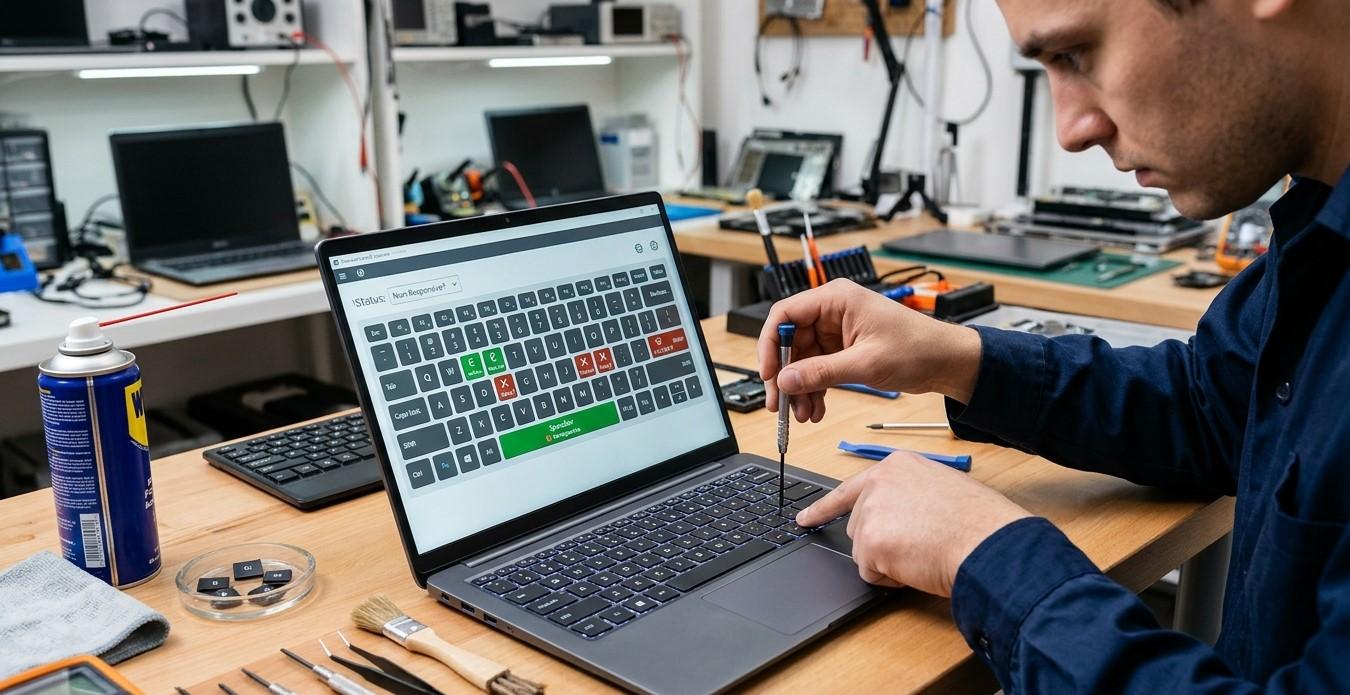

A laptop keyboard is essential for typing, working, studying, and everyday computer tasks. When certain keys stop responding or the entire keyboard becomes unresponsive, even simple activities can become frustrating. These problems may result from dust, software errors, outdated drivers, liquid spills, or hardware damage. Whether you are searching for the best mobile device repair in Douglasville or exploring mobile device repair Douglasville, Mobile Device Techs provides helpful technology guidance to help users understand common device problems and possible solutions.
Table of Contents
-
Common Signs of Laptop Keyboard Problems
-
Keys Not Responding
-
Keyboard Typing Incorrect Characters
-
Sticky or Stuck Keys
-
Laptop Keyboard Not Working at All
-
Liquid Spills and Physical Damage
-
How to Prevent Keyboard Problems
-
When to Seek Professional Repair
-
Frequently Asked Questions
1. Common Signs of Laptop Keyboard Problems
Laptop keyboard issues can appear in several ways. Common warning signs include:
-
Individual keys stop responding.
-
The keyboard types incorrect characters.
-
Some keys repeat automatically.
-
Keys feel sticky or difficult to press.
-
The entire keyboard stops working.
-
Typing becomes delayed or inconsistent.
Identifying the symptoms can help you narrow down the cause.
2. Keys Not Responding
If certain keys do not work, dust, debris, software glitches, or physical damage may be responsible.
Possible solutions:
-
Restart your laptop.
-
Check whether dirt or debris is blocking the affected keys.
-
Gently clean the keyboard using compressed air.
-
Test the keys in another application.
-
Check whether an external keyboard works properly.
If only specific keys remain unresponsive, the keyboard may have a hardware problem.
3. Keyboard Typing Incorrect Characters
Sometimes a laptop keyboard produces different characters from the ones you press. This may happen because of an incorrect language layout or keyboard settings.
Try these steps:
-
Open your computer's language or keyboard settings.
-
Check the selected keyboard layout.
-
Confirm that the correct language is enabled.
-
Review accessibility settings, including Sticky Keys and Filter Keys.
-
Restart your laptop and test typing again.
Keyboard shortcuts and settings may vary depending on your operating system.
4. Sticky or Stuck Keys
Sticky keys can make typing difficult and may cause repeated characters. Dust, food particles, and liquid residue are common causes.
Turn off your laptop before cleaning it. Use a soft brush or compressed air to remove loose debris. Avoid pouring liquids or spraying cleaning products directly onto the keyboard.
If a key remains stuck after cleaning, it may need professional attention.
5. Laptop Keyboard Not Working at All
When the entire keyboard stops responding, the problem may involve software, drivers, or an internal hardware connection.
Try the following:
-
Restart your laptop.
-
Check whether an external keyboard works.
-
Install available operating system updates.
-
Review keyboard drivers in Device Manager on Windows.
-
Check whether the keyboard works at the login screen or in the computer's firmware settings, if accessible.
If the keyboard does not respond anywhere, hardware inspection may be necessary.
6. Liquid Spills and Physical Damage
Liquid spills can damage keyboard circuits and internal laptop components. Dropping the laptop or applying excessive pressure can also damage individual keys or internal connections.
If liquid spills onto your laptop:
-
Turn it off immediately.
-
Disconnect the charger and other accessories.
-
Do not continue pressing keys.
-
Avoid using a hair dryer or direct heat.
-
Seek professional inspection as soon as possible.
Do not assume the keyboard is safe simply because it starts working again after a spill.
7. How to Prevent Keyboard Problems
Regular care can reduce the risk of keyboard damage.
-
Keep food and drinks away from your laptop.
-
Clean the keyboard gently and regularly.
-
Avoid pressing keys too forcefully.
-
Keep dust and debris away from your workspace.
-
Install software and driver updates.
-
Use a protective laptop case when carrying your device.
These habits can help maintain keyboard performance over time.
8. When to Seek Professional Repair
If troubleshooting does not resolve the problem, a technician may need to inspect the keyboard or internal connections.
Consider professional assistance when:
-
Multiple keys stop working.
-
The keyboard fails after liquid exposure.
-
Keys are physically damaged.
-
The keyboard works intermittently.
-
Software troubleshooting makes no difference.
A proper diagnosis can help determine whether the keyboard needs cleaning, repair, or replacement.
Frequently Asked Questions
1. Why are some keys on my laptop not working?
Dust, debris, damaged keys, driver problems, or internal keyboard faults may cause individual keys to stop responding.
2. Can I clean my laptop keyboard myself?
Yes. You can gently remove loose debris using a soft brush or compressed air while the laptop is powered off.
3. Why is my laptop typing the wrong letters?
An incorrect keyboard layout, language setting, or accessibility feature may be responsible.
4. Can water damage permanently affect a laptop keyboard?
Yes. Liquid can damage keyboard circuits and other internal components, sometimes causing permanent problems.
5. Should I replace my laptop keyboard if it stops working?
Not necessarily. The issue may be software-related or caused by a loose connection. Proper diagnosis can help determine whether replacement is needed.
Conclusion
Laptop keyboard problems can result from dirt, stuck keys, incorrect settings, outdated drivers, liquid spills, or hardware damage. Identifying the symptoms and trying safe troubleshooting steps can help restore normal typing. Whether you are researching the best mobile device repair in Douglasville, comparing mobile device repair Douglasville options, or looking for practical technology advice from Mobile Device Techs, understanding these common problems can help you make informed decisions about your devices.
Call to Action
Having trouble with your laptop keyboard or another device? Visit Mobile Device Techs for helpful troubleshooting tips, technology guidance, and practical device-care information.