
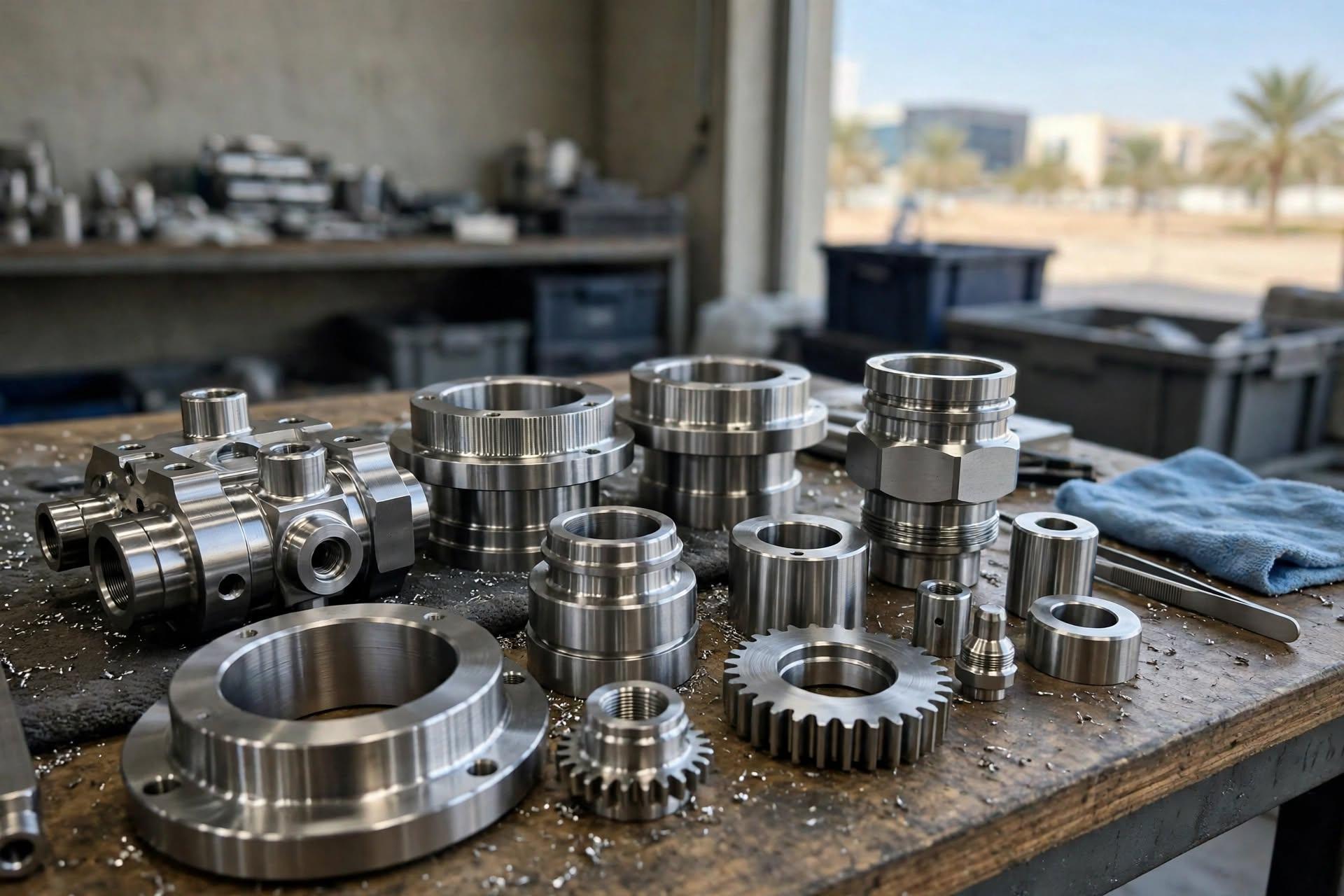
Precision Engineering for Reliable Custom Part Production

Manufacturing a custom component requires more than selecting a machine and cutting raw material. Each part has its own geometry, dimensions and production requirements, which influence the machining method used to create it. Precision machining services in sharjah provide a manufacturing approach for producing components according to technical drawings, helping businesses address specific engineering and production needs.
How Component Design Determines the Machining Method
The design of a component is one of the most important factors in choosing a machining process. Its shape, dimensions and individual features determine how material should be removed and which equipment can perform the required operations.
CNC milling is suitable for components that need flat surfaces, slots, shaped sections and different geometric features. The process uses rotating cutting tools to remove unwanted material from a workpiece. Depending on the design, different cutters can be selected to produce the required shapes and surface details.
CNC turning is generally suitable for cylindrical workpieces. During this process, the material rotates while a cutting tool removes material from its surface. It can support straight turning, taper turning, threading and external groove production. This makes turning useful when a component requires a specific circular profile.
Drilling is selected when a component needs cylindrical holes. Different drill types can create pilot holes, produce additional holes or enlarge existing openings. The choice of drilling tool depends on the hole's intended function and the required dimensions.
Wire EDM offers another machining option for intricate component geometries. It uses electrical sparks between electrodes to remove material, with dielectric fluid separating the electrodes. This process can be considered when a component's shape requires a more specialised cutting method.
For manufacturers, understanding these differences makes it easier to communicate production requirements. Rather than requesting a particular machine without explaining the component, businesses should share the complete design so the appropriate machining approach can be considered.
Understanding Tolerances and Surface Finish Requirements
Dimensions are central to custom component manufacturing, but simply providing the overall length, width and height may not be enough. Some components also require specific tolerances that define the acceptable variation in their measurements.
A tolerance describes how much a finished dimension can vary from its specified value. For example, a drawing may identify a required measurement and define the acceptable deviation around it. This information helps the manufacturing team understand how accurately a feature must be produced.
The Genesis-MFG CNC machining page explains that standard machining tolerances and higher-precision requirements can differ. Its published information identifies standard machining tolerance of approximately ±0.005 inches (0.13 mm), while greater precision may be required for certain applications. Actual achievable accuracy depends on the material and component geometry, so project-specific requirements should be discussed before production.
Surface finish is another detail that should be communicated during the quotation stage. A component may require a particular surface condition depending on its intended use and design. If finishing requirements are important, they should be included in the technical documentation rather than introduced after manufacturing planning has started.
When preparing a component drawing, businesses should pay attention to:
The dimensions that determine the component's overall shape.
Tolerances associated with important features.
Hole positions, sizes and other machining details.
Surface finishing requirements where applicable.
Clear specifications help avoid confusion and provide a more reliable basis for evaluating the finished component. They also make it easier for the manufacturing team to understand which dimensions require particular attention.
Why Material and Production Information Matter
The selected material influences the machining approach because different materials respond differently to cutting operations. A manufacturing plan should therefore consider the material together with the component's shape and dimensional requirements.
Businesses should identify the material before requesting a quotation. If the material has already been specified in the engineering design, that information should be included with the drawings. If it has not been finalised, the requirement should be discussed before the manufacturing process is confirmed.
Production quantity is equally important. The number of components required helps explain the scope of the project. A request for a small quantity of custom-machined parts may have different planning considerations from a request for a larger production quantity.
Genesis-MFG's CNC precision machining information highlights the importance of providing drawings, material details, quantities and finishing requirements when requesting a quotation. These details give the manufacturing team a clearer picture of the project and reduce the possibility of missing important information.
Businesses researching precision machining services in sharjah should prepare their requirements before contacting a manufacturer. A practical submission can contain:
STEP, IGES or another suitable three-dimensional design file.
A PDF drawing showing dimensions and tolerances.
The required material and component quantity.
Any necessary finishing instructions.
Providing these details together creates a more complete description of the manufacturing task. It also helps the business communicate its expectations without relying on lengthy explanations that may leave important technical information unclear.
Coordinating CNC Operations for Complex Components
Not every custom component can be completed using only one machining operation. Some designs require multiple processes or different machines to achieve their final geometry.
For example, a component may require milling to create its main shape and drilling to produce accurately positioned holes. Another component may need turning to establish a cylindrical profile before additional features are machined. The exact sequence depends on the design and the operations required.
The machining equipment may also be arranged differently according to the production task. In some situations, the necessary tools can be used on one CNC machine. In other situations, the workpiece may need to move between different machines to complete the required operations.
This makes the relationship between design and production particularly important. A detailed drawing helps identify the features that must be manufactured and provides a reference for determining the necessary operations.
CNC machining services uae are an important consideration for businesses seeking custom-machined parts based on engineering requirements. However, a suitable manufacturing decision should consider the complete component rather than evaluating an individual machining operation in isolation.
Before confirming a project, businesses should review the drawing, check whether all important dimensions are included and ensure that material and finishing information is available. These practical steps help create a clearer understanding between the customer and manufacturing team.
Conclusion
Custom component production depends on selecting suitable machining operations and communicating accurate technical requirements. Milling, turning, drilling and wire EDM offer different ways to produce components with specific shapes and geometries. Material selection, tolerances, surface finish and production quantity also influence the manufacturing plan.
Genesis-MFG provides CNC precision machining capabilities for custom manufacturing requirements. Businesses considering cnc machining services uae can prepare their CAD drawings, dimensions, material details and finishing instructions before requesting a quotation. Visit the Genesis-MFG CNC Precision Machining page to explore the available processes and discuss the requirements of your next component project.
FAQs
What determines the machining method for a custom part?
The component's geometry, material, dimensions and required features help determine which machining method is appropriate.
What does machining tolerance mean?
Machining tolerance describes the acceptable variation between a specified dimension and the actual measurement of a finished component.
Can one component require multiple CNC operations?
Yes. A component may require milling, drilling, turning or other operations depending on its design and required features.
Why should material information be included in a quotation request?
Material information helps the manufacturing team understand the workpiece and consider an appropriate machining approach.
Which drawings should be provided for custom machining?
A three-dimensional design file and a two-dimensional drawing containing dimensions and tolerances provide useful technical information for quotation preparation.


