
Tips for Creating an Immersive Drone Technology Exhibition Experience

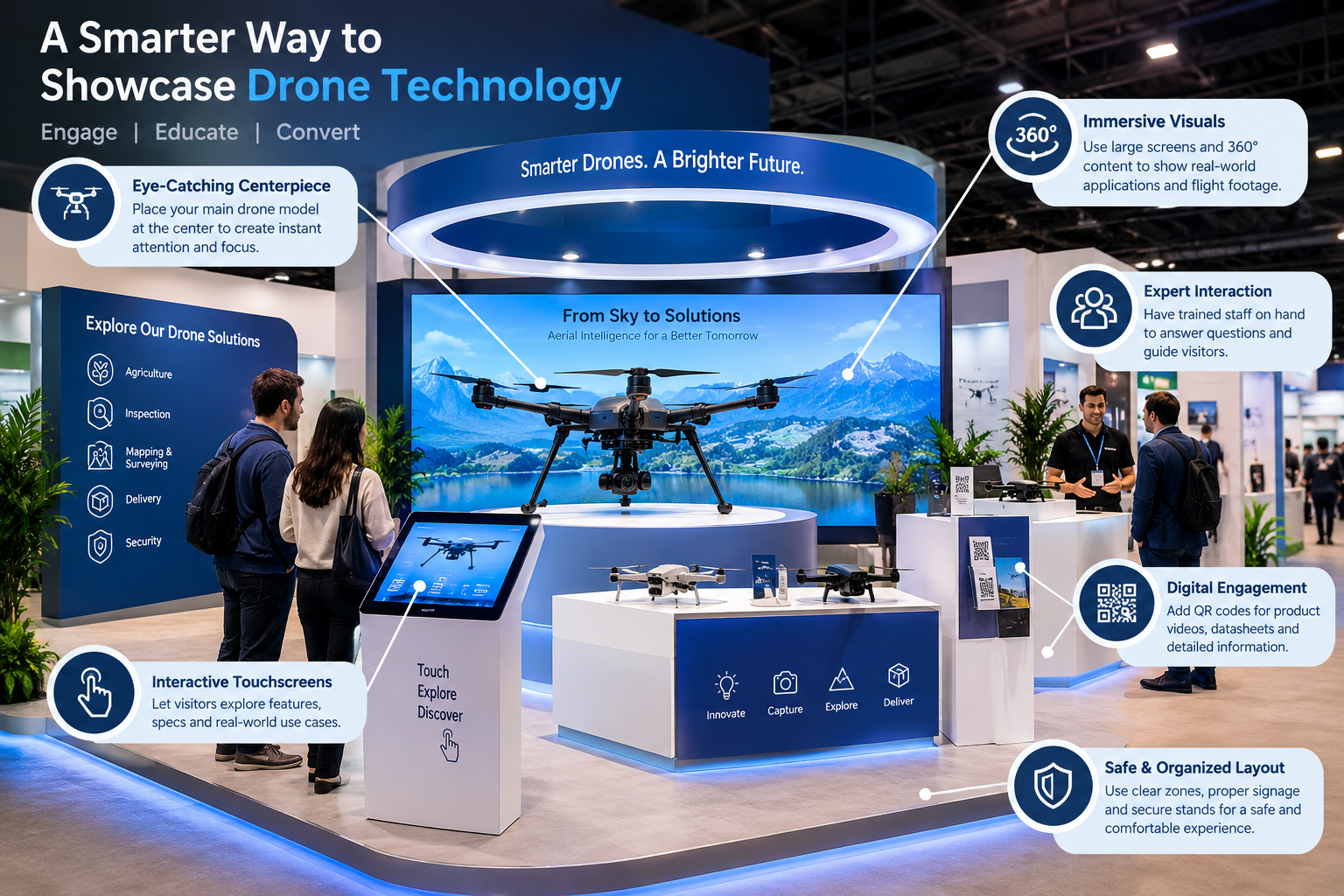
Drone tech display booths can help UAV manufacturers and technology providers turn complex products into engaging exhibition experiences. At commercial drone events, visitors want more than a quick look at an aircraft or a list of technical specifications. They want to understand how drone systems operate, explore their applications, and discover how the technology could support their business objectives. By combining interactive demonstrations, realistic visuals, thoughtful booth layouts, and personalized conversations, exhibitors can create an environment that encourages visitors to explore, learn, and connect with the brand.
What Is an Immersive Drone Technology Exhibition Experience?
An immersive exhibition experience allows visitors to engage with a product through multiple forms of interaction. Instead of simply looking at a display, visitors may explore a digital interface, watch a simulated flight, examine a physical drone, or follow a complete operational workflow.
For UAV companies, immersion does not necessarily mean using expensive virtual reality equipment or elaborate structures. A carefully planned product demonstration can be just as effective when it helps visitors understand the technology and its practical purpose.
The main objective is to make the product easier to understand and remember. Every booth element should contribute to that goal, from the first visual visitors notice to the conversations they have with the exhibition team.
1. Begin With a Clear Experience Concept
Before choosing booth materials, screens, or interactive equipment, establish the experience the company wants to create.
A drone manufacturer launching a new aircraft may want visitors to explore its physical design and supported payloads. A mapping software company may focus on demonstrating how aerial imagery becomes useful geographic information. An inspection technology provider might build its presentation around the stages of an inspection workflow.
Choose one central theme that connects the product, the audience, and the intended outcome. Then organize the booth around that theme.
A clear concept prevents the display from becoming a collection of unrelated technologies. It also helps staff deliver consistent explanations and makes the visitor journey easier to follow.
2. Design an Inviting and Open Booth Layout
The physical environment influences whether visitors feel comfortable entering the booth. An open entrance, clear sightlines, and accessible product displays make exploration easier.
Avoid placing large counters or bulky structures directly in front of important displays. Instead, arrange the space so visitors can identify the main product and understand where to go for more information.
Consider creating distinct zones for product discovery, interactive demonstrations, software exploration, and business discussions. Smaller booths can achieve the same effect through careful positioning of display stands and flexible furniture.
Allow enough room for groups to watch demonstrations without blocking other visitors. A well-organized layout supports the experience by making movement natural rather than directing everyone through a rigid sequence.
3. Use Physical Drone Models as the Starting Point
Physical UAV models provide an immediate connection between visitors and the technology. They allow people to observe the aircraft's structure, examine components, and understand how different parts fit together.
Display selected models at appropriate heights and provide sufficient space around them. Use secure stands to protect equipment and keep the presentation organized.
Place concise information panels near each product. These should identify the intended application, relevant capabilities, and available configurations without overwhelming visitors with technical detail.
For a more informative experience, pair the physical drone with a visual showing how it is used in the field. This connects the product's physical design with the work it is intended to support.
4. Create Demonstrations That Tell a Story
A demonstration becomes more engaging when it follows a recognizable sequence. Rather than displaying features independently, show how the technology supports a complete task.
For example, a drone mapping demonstration could begin with mission planning, continue with aerial data collection footage, and conclude with a processed map. An inspection demonstration might show image capture, data organization, and report preparation.
Explain what happens at each stage and identify where the product contributes value. Keep the demonstration concise enough for visitors who are exploring several exhibition stands.
Rehearse the presentation before the event and prepare a backup video or offline version. This ensures that the experience can continue even if a live demonstration or internet connection becomes unavailable.
5. Introduce Interactive Touchscreen Experiences
Touchscreens can allow visitors to explore product information according to their interests. Instead of presenting every feature at once, an interactive interface can organize content into clear categories.
A UAV manufacturer could let visitors explore different aircraft models, payload options, or supported applications. A software company might provide a guided tour of its dashboard, mapping tools, or fleet management functions.
Use simple navigation and short explanations. Visitors should not need extensive instructions to begin exploring.
Position the touchscreen where several people can view it comfortably, and make sure important information remains accessible to visitors who prefer not to interact with a device. Digital interaction should complement personal assistance, not replace it entirely.
6. Use Drone Flight Footage to Create Context
Drone technology is often used in environments that cannot be recreated inside an exhibition venue. High-quality video helps bring these applications into the booth.
Footage may show aerial surveying, infrastructure inspection, agricultural monitoring, construction progress, or other relevant operations. Choose examples that closely match the needs of the audience.
Where possible, connect the video to the product on display. A physical aircraft can sit beside a screen showing representative footage from that type of platform, helping visitors connect the equipment with its application.
Keep videos focused and use captions when the venue is noisy. Avoid excessive visual effects that make the content difficult to understand or distract from the product's actual capabilities.
7. Explore Augmented Reality and Virtual Reality
Augmented reality and virtual reality can add another layer to an exhibition experience when they solve a genuine communication challenge.
Augmented reality might help visitors examine a three-dimensional aircraft model, explore a payload configuration, or identify internal components. Virtual reality can provide a simulated environment for exploring flight planning or inspection scenarios.
These experiences should be designed around a clear task. For instance, a visitor might use an interactive model to understand how different payloads fit onto a UAV platform.
Consider practical issues such as equipment availability, hygiene, accessibility, setup time, and staff support. If a headset creates a long queue or makes the product harder to understand, a conventional screen demonstration may be more effective.
8. Present Data Through Visual Demonstrations
Many commercial UAV products generate data that requires processing and interpretation. Showing how this information becomes useful can create a more compelling exhibition experience.
Display sample maps, terrain models, inspection imagery, thermal outputs, or analytics dashboards where relevant to the product. Arrange the visuals in a logical sequence so visitors understand how the information is collected and used.
For example, an exhibitor could show a sample aerial image alongside a processed map, explaining the steps between data capture and the final output.
Clearly distinguish illustrative or simulated information from actual project results. Avoid suggesting that every output will have identical quality, as results can depend on equipment, environmental conditions, collection methods, and processing workflows.
9. Build an Industry-Specific Experience
Different industries have different reasons for adopting UAV technology. A booth that addresses a visitor's professional challenges can feel more relevant than one that presents only general product features.
For construction audiences, emphasize applications such as site documentation, mapping, and progress monitoring. Agricultural visitors may be interested in crop observation and field assessment. Infrastructure professionals may want to explore inspection workflows and data management.
Use industry-specific visuals, demonstrations, and discussion prompts to make these applications understandable.
If the company serves several sectors, create clearly labeled content areas rather than mixing every use case into one presentation. This helps visitors identify the most relevant information quickly.
10. Combine Hardware and Software Into One Experience
A complete UAV solution may include aircraft, sensors, flight planning tools, data processing, and reporting software. Presenting these components together can help visitors understand the overall system.
Position a physical drone near a screen showing its related software workflow. Demonstrate how a mission is planned, how information is collected, and how the resulting data is reviewed.
This is particularly useful for companies offering integrated solutions. It allows visitors to see how different products work together rather than evaluating each component separately.
Explain compatibility requirements and supported configurations accurately. If certain features require additional hardware, software, or services, make those requirements clear during the demonstration.
11. Use Lighting and Sound Thoughtfully
Lighting can direct attention toward important products and create a more comfortable environment. Use focused illumination for aircraft and sensors, while keeping information panels and workstations easy to view.
Avoid reflections on screens and shadows that obscure important components. Ensure that the overall booth remains well lit and that visitors can read signs from the expected viewing distance.
Sound should support the experience rather than compete with conversations happening nearby. If the booth includes audio narration or video sound, use captions and appropriate volume levels.
In many exhibition environments, visual demonstrations are more practical than audio-heavy presentations because visitors are moving between several stands.
12. Make the Booth Comfortable for Longer Conversations
Immersive experiences should also provide room for visitors who want to discuss products in detail. Potential customers may need to ask about integration, implementation, training, support, or technical limitations.
Include a small meeting area when space permits. Arrange seating and tables so that discussions can take place without disrupting demonstrations or blocking walkways.
Staff should have access to product information and technical resources during these conversations. If a visitor needs specialist assistance, establish a clear process for connecting them with the right representative.
A comfortable discussion area helps transform initial curiosity into more meaningful professional engagement.
13. Train Staff to Guide the Experience
Technology alone does not create an immersive booth. Staff members play an important role in helping visitors understand the display and choose the information that matters to them.
Prepare the team to deliver a short introduction, operate demonstrations, answer common questions, and explain the relationship between product features and practical applications.
Encourage staff to ask visitors about their industries and current challenges before recommending a demonstration. This approach creates more relevant conversations than presenting the same information to everyone.
Assign clear responsibilities for welcoming visitors, running demonstrations, answering technical questions, and recording follow-up requests. Good coordination helps maintain the experience during busy periods.
14. Use Gamification Carefully
Simple interactive challenges can encourage visitors to explore the booth. For example, a company might invite visitors to identify a suitable UAV configuration for a sample application or explore a simulated mapping workflow.
These activities can make technical information easier to remember, especially when they involve a realistic problem.
Keep the challenge relevant to the product and short enough to fit into the exhibition schedule. Avoid activities that create congestion or require visitors to provide unnecessary personal information.
The objective is to make learning more engaging, not to distract attendees with unrelated entertainment.
15. Make Technical Information Easy to Access
Visitors often want more detail after watching a demonstration. Provide concise product guides, specification sheets, application examples, and relevant technical documentation.
Digital resources can make this information easier to access after the event. QR codes may link to product pages, demonstration videos, or downloadable materials, provided the destinations are accurate and mobile-friendly.
Organize resources by product or application so visitors can find what they need quickly.
For complex solutions, consider offering separate introductory and technical materials. This allows general visitors to understand the product while giving engineers and procurement teams access to more detailed information.
16. Support Accessibility and Safe Interaction
An immersive booth should remain accessible and safe for all visitors. Keep routes clear, secure cables, stabilize display stands, and ensure that screens and product information can be viewed comfortably.
Provide alternatives for visitors who cannot or do not wish to use headsets or touchscreens. Important information should also be available through staff assistance or conventional displays.
For physical UAV equipment, follow venue requirements for battery handling, powered devices, and secure mounting. Live drone flights should only be conducted when expressly permitted and when appropriate safety measures are in place.
Safety and accessibility should be considered during the design stage rather than added at the last moment.
17. Select a Booth Builder Who Understands Technology Displays
Creating an immersive experience may involve coordinating custom structures, physical products, screens, lighting, software demonstrations, interactive equipment, and visitor flow.
An experienced exhibition booth builder can help translate these requirements into a workable design. When reviewing potential providers, examine their previous projects and ask how they manage technical integration, installation, logistics, and event deadlines.
Share the intended visitor journey, product dimensions, equipment needs, floor plan, branding requirements, and budget before the design is finalized.
Businesses preparing for Commercial UAV Expo 2026 can explore Exhibitorly's Commercial UAV Expo 2026 booth builder resource when comparing possible exhibition partners.
18. Promote the Experience Before the Event
The visitor experience can begin before the exhibition opens. Pre-event marketing gives potential customers a reason to visit the booth and learn about a particular innovation.
Share product previews, short demonstration videos, application examples, and accurate event details through the company's website, email campaigns, and professional social channels.
Where appropriate, invite interested visitors to schedule a meeting or demonstration. Explain what they will be able to explore rather than relying on a general invitation.
Coordinate the promotional message with the booth team so the experience promised before the event matches what visitors encounter in person.
19. Capture Leads Without Interrupting the Experience
Lead collection is important, but it should not dominate the visitor interaction. Start by helping visitors explore the technology and understand whether it is relevant to their needs.
When there is a clear reason to continue the conversation, request contact details with the visitor's consent and record the relevant application or question.
Use a lead management system to organize follow-up tasks. Visitors requesting detailed specifications may need technical documentation, while potential buyers may benefit from a product consultation.
Respect privacy and explain how submitted information will be used. A thoughtful process helps preserve the positive experience while supporting the company's business objectives.
20. Measure Whether the Experience Worked
After the exhibition, assess whether the booth helped visitors understand the technology and supported the company's goals.
Useful measures may include demonstration participation, qualified leads, scheduled meetings, relevant product enquiries, and follow-up opportunities. Feedback from visitors and booth staff can also reveal which elements were most useful.
Review the performance of individual features. Did the interactive screen help explain the software? Did the product demonstration attract relevant prospects? Was the layout comfortable during busy periods?
Use these findings to improve future exhibitions. The most successful experience is not necessarily the most expensive or technologically complex; it is the one that helps the intended audience understand the product and take a useful next step.
Frequently Asked Questions
What makes a drone technology exhibition experience immersive?
An immersive experience encourages visitors to explore a product through physical displays, demonstrations, interactive software, application videos, or simulated workflows. The aim is to make the technology easier to understand and remember.
Do drone exhibitors need virtual reality to create an engaging booth?
No. Virtual reality is optional. Well-designed physical displays, software demonstrations, clear visuals, and knowledgeable staff can create an engaging experience without specialized headsets.
How can UAV companies demonstrate products indoors?
Companies can use recorded flight footage, interactive simulations, software demonstrations, sample datasets, and physical product displays. Live flights should only be considered when the venue explicitly permits them and safety requirements can be met.
How can exhibitors keep visitors engaged?
Use concise demonstrations, relevant application examples, interactive displays, and personalized conversations. Give visitors options to explore the product independently or speak with a knowledgeable representative.
Why is booth layout important for an immersive experience?
A good layout allows visitors to move comfortably between displays, demonstrations, and discussion areas. It also ensures that important products remain visible and that interactive stations do not obstruct walkways.
How can companies measure the success of an immersive booth?
Track qualified leads, demonstration participation, scheduled meetings, product enquiries, and post-event opportunities. Visitor feedback can help determine which features improved understanding and engagement.
How should companies choose an exhibition booth builder?
Evaluate the provider's design portfolio, experience with technology displays, project management, technical integration capabilities, installation support, and pricing transparency. Confirm responsibilities and deadlines before work begins.
Conclusion
Creating an immersive drone technology exhibition experience requires a clear concept, practical demonstrations, relevant visuals, accessible displays, and a team that can explain the technology confidently. Companies should choose interactive features based on what their audience needs to understand rather than adding technology simply because it looks impressive. With careful planning, an organized visitor journey, and the right exhibition partner, Drone tech display booths can help UAV businesses communicate their innovations, build professional relationships, and create more meaningful exhibition opportunities at Commercial UAV Expo 2026.


