
How to Use Cloth Napkins Without Placemats for a Clean Table Setting
Introduction
Placemats are useful, but they are not necessary for every meal. If you prefer a more open table or want to keep cleanup simple, cloth napkins can help create a defined place setting without adding another layer to the table.
A napkin can provide a small amount of visual structure beside each plate while still leaving the table surface visible. With the right fabric, size, and placement, you can create a comfortable setting that feels intentional without looking crowded.
Place the Napkin Beside the Plate
The simplest approach is to place one folded cloth napkin directly beside the plate.
For a traditional arrangement, position it to the left of the plate, near the fork. For a more relaxed meal, you can place it directly beside the plate or slightly underneath the edge.
This arrangement works particularly well on tables where you want the surface itself to remain part of the design.
Let the Table Surface Be Part of the Look
Without placemats, the material of the dining table becomes more visible. Wood grain, stone, glass, or another tabletop finish can provide its own visual character.
Choose a napkin color that complements the surface instead of trying to cover it. A neutral napkin can work beautifully on a natural wood table, while a deeper shade can create contrast against a lighter surface.
This approach keeps the setting simple while allowing the table to remain the main foundation.
Choose Cotton Napkins for Everyday Meals
Cotton napkins are a practical option when you regularly eat without placemats.
They can be folded neatly beside each plate and used throughout breakfast, lunch, or dinner. If a small amount of food reaches the table, the napkin is also immediately available rather than sitting across the entire place setting.
Choose a few versatile colors so the same collection can work with different dinnerware.
Use Linen Napkins for a More Relaxed Setting
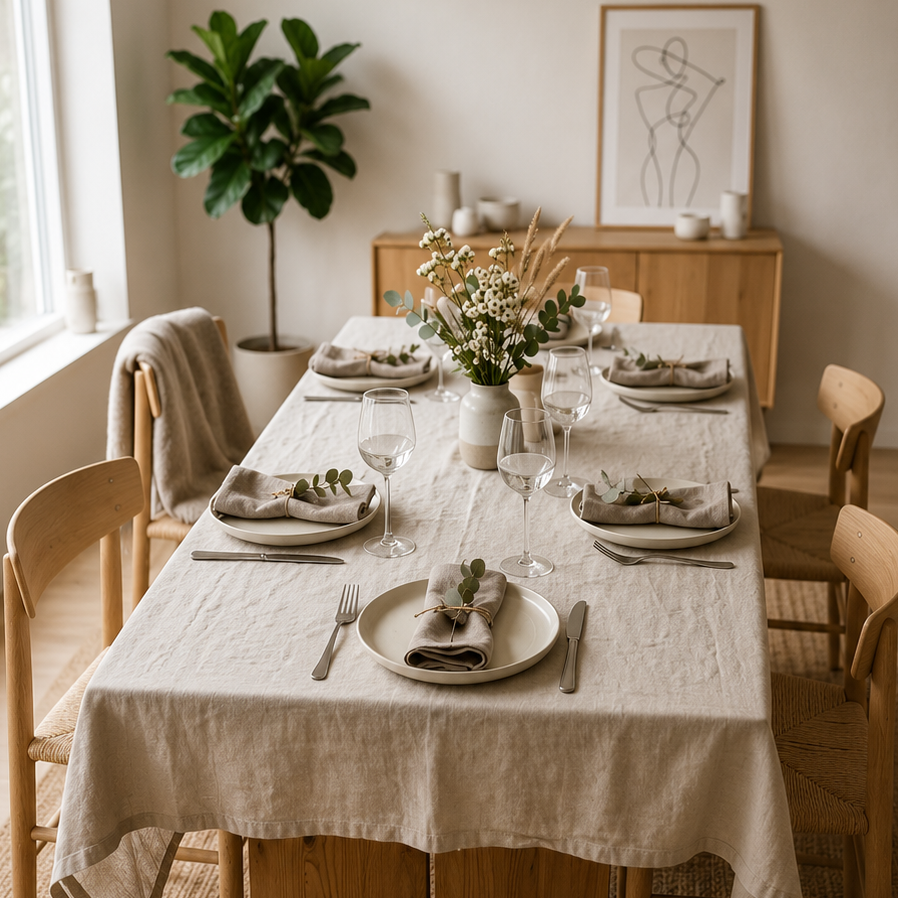
Linen napkins can add natural texture when you want the table to feel understated but not plain.
Instead of creating a perfectly pressed fold, try a loose rectangle or simple square. The natural texture of linen can provide enough visual interest on its own.
This style works especially well when the table includes simple ceramic plates, glassware, or wooden serving pieces.
Choose the Right Napkin Size
When you are not using placemats, the napkin should provide enough presence to define the place setting without taking up too much room.
A larger dinner napkin can work well for evening meals, while a smaller option may be more convenient for quick breakfasts or lunches.
Consider the size of your table and the amount of space available between guests. A well-proportioned napkin helps the table feel balanced.
Coordinate Napkins With Dinnerware
You do not need to match your napkins exactly to your plates. Instead, look for complementary colors and textures.
For example, plain white plates can be paired with patterned napkins, while colorful dinnerware may look better with a solid fabric.
If your table has a strong wood grain or another distinctive surface, simple cloth napkins can help complete the setting without introducing too many competing patterns.
Use a Simple Fold
A minimalist table usually benefits from an uncomplicated napkin fold.
Fold the napkin into a rectangle and place it beside the plate, or fold it into a square and position it underneath the fork. You can also leave a soft, relaxed fold if you prefer a less formal appearance.
There is no need to create an elaborate design when the goal is a clean everyday table.
Make the Setup Easy to Change
One advantage of skipping placemats is that the table can be changed quickly between meals.
A simple set of dinner napkins can move from an everyday breakfast setting to a more polished dinner arrangement simply by changing the fold or placement.
You can also switch between colors depending on your dinnerware or the season without storing large amounts of additional table décor.
Consider Custom Napkins for Personal Place Settings
Custom napkins can add individuality when you want each place setting to feel more personal.
A small initial, monogram, or subtle design can identify each person's napkin while keeping the table uncluttered. This can be especially useful for households that use reusable napkins regularly.
Keep the personalization understated if you want the table to maintain a minimalist appearance.
Keep Cleanup Simple
One benefit of using cloth napkins without placemats is that there are fewer items to collect after a meal.
Clear the plates and utensils first, then gather the used napkins for laundering. Because the table surface remains exposed, it can also be wiped down quickly once the meal is finished.
Keeping a small rotation of napkins makes this routine easier. Clean ones can be folded and returned to the same storage area after washing.
Conclusion
You do not need placemats to create an attractive and organized dining table. Cloth napkins can define individual place settings while allowing the table's natural surface to remain visible.
Cotton napkins are practical for everyday meals, while Linen napkins can add natural texture to a relaxed setting. Dinner napkins provide useful coverage for larger meals, and custom napkins can add a personal detail without creating clutter.
By choosing the right size, color, and placement, a simple napkin can provide everything you need for a clean and comfortable table setting without relying on placemats.


