
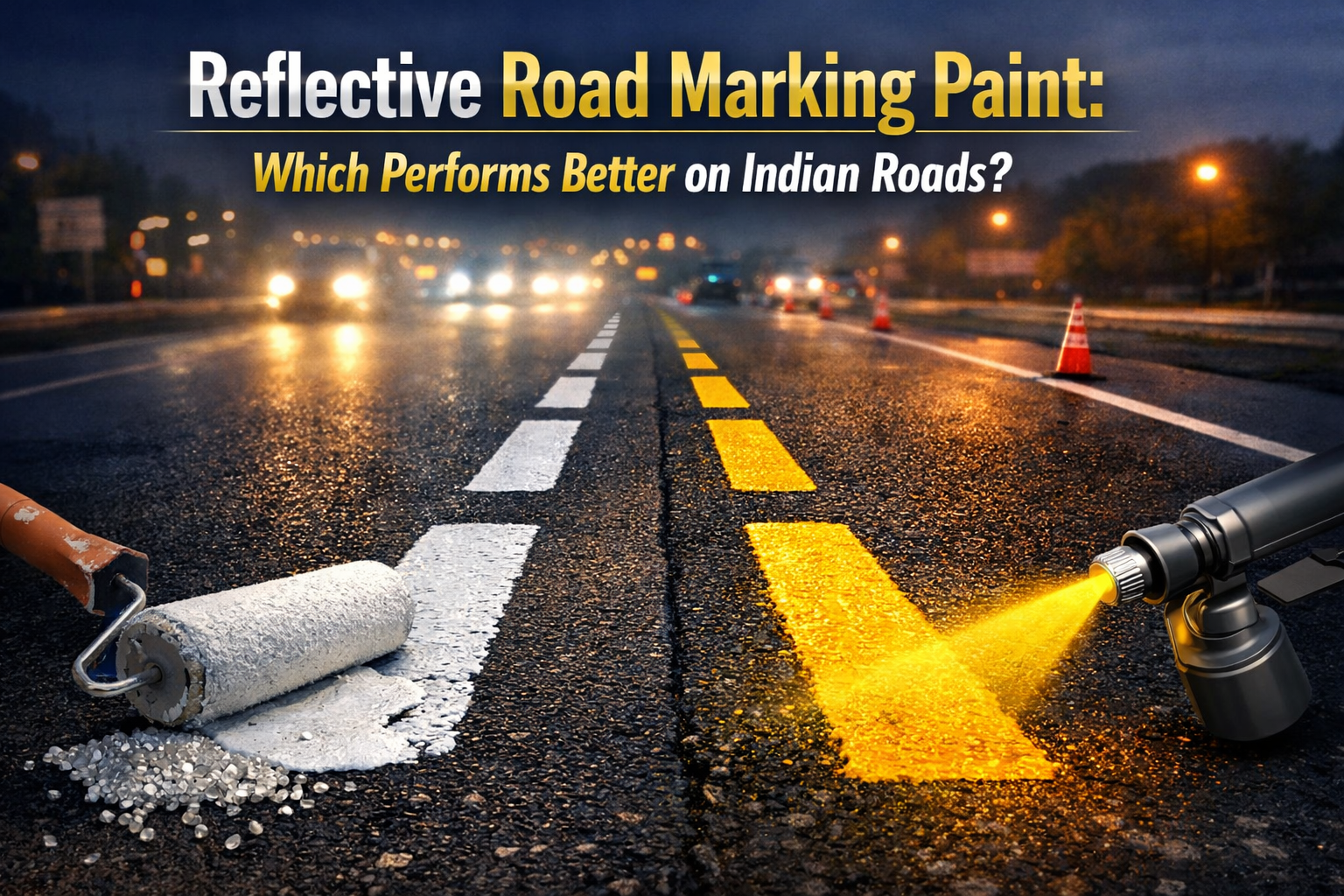
Thermoplastic vs Reflective Road Marking Paint: Which Performs Better on Indian Roads?
India records over 4.6 lakh road accidents annually (MoRTH data), making road safety infrastructure more critical than ever. Clear, durable, and highly visible road markings play a vital role in reducing collisions, especially at night and during monsoon seasons.
But when it comes to performance on Indian highways, city roads, and industrial zones — which performs better: Thermoplastic or Reflective Road Marking Paint?
As experienced Thermoplastic Road Marking Paint Manufacturers and Road Marking Paint Manufacturers in India, we understand how climate, traffic density, and surface conditions directly impact performance. In this expert guide, we break down durability, reflectivity, cost-effectiveness, and long-term value to help contractors, government authorities, and infrastructure developers make informed decisions.
Product Overview & Standout Features
1️⃣ Thermoplastic Road Marking Paint
Thermoplastic paint is a heat-applied road marking material composed of resins, pigments, glass beads, and fillers. Once heated to approximately 180–200°C, it forms a thick, durable coating that bonds strongly with the road surface.
Key Features:
-
2–3 mm thick application
-
High durability under heavy traffic
-
Excellent retro-reflectivity with embedded glass beads
-
Fast drying time (5–10 minutes)
-
Ideal for highways and high-speed corridors
As leading Thermoplastic Road Marking Paint Suppliers, we’ve seen thermoplastic markings last 2–3 years even under extreme Indian weather conditions.
2️⃣ Reflective Road Marking Paint
Reflective paint is typically solvent-based or water-based and contains glass beads to enhance night visibility. It is easier to apply but generally thinner compared to thermoplastic coatings.
Key Features:
-
Cold-applied
-
Quick and economical solution
-
Good initial brightness
-
Suitable for low to medium traffic roads
-
Ideal for temporary markings and city streets
Many Reflective Road Marking Paint Manufacturers in India supply this paint for municipal projects where budget and quick execution are primary concerns.
Technical Specifications
Thermoplastic Paint
-
Application Temperature: 180–200°C
-
Thickness: 2–3 mm
-
Retro-reflectivity: 250–400 mcd/m²/lux
-
Lifespan: 2–3 years
-
Skid Resistance: High
-
Suitable for: Highways, expressways, toll roads
Reflective Paint
-
Application: Cold spray
-
Thickness: 0.5–0.8 mm
-
Retro-reflectivity: 100–250 mcd/m²/lux
-
Lifespan: 6–12 months
-
Skid Resistance: Moderate
-
Suitable for: Urban roads, parking areas, temporary projects
According to IRC (Indian Roads Congress) standards, thermoplastic markings are recommended for high-traffic zones due to superior wear resistance.
Pros & Cons
Thermoplastic Road Marking Paint
Pros:
✔ Long-lasting performance
✔ Superior night visibility
✔ Resistant to heavy traffic & monsoon
✔ Cost-effective in long term
Cons:
✘ Higher initial cost
✘ Requires heating equipment
Reflective Road Marking Paint
Pros:
✔ Lower upfront cost
✔ Easy and quick application
✔ Ideal for short-term or maintenance work
Cons:
✘ Shorter lifespan
✘ Fades faster in heavy rain and high traffic
✘ Requires frequent reapplication
Comparison to Alternatives
Durability in Indian Climate
India’s extreme temperatures (5°C–50°C) and heavy monsoons demand robust materials. Thermoplastic outperforms reflective paint due to its thicker layer and strong adhesion.
Cost Analysis
-
Thermoplastic: Higher initial investment but lower lifecycle cost
-
Reflective: Lower initial cost but frequent maintenance
For example, on a national highway project, thermoplastic may cost 30–40% more initially but reduce repainting frequency by 50%, resulting in long-term savings.
Performance in High-Traffic Areas
Under constant heavy vehicle movement (trucks, buses), reflective paint wears out within months, while thermoplastic maintains line integrity and brightness.
This is why most Road Marking Paint Manufacturers in India recommend thermoplastic for highways and industrial corridors.
Conclusion
When comparing Thermoplastic Road Marking Paint Manufacturers and Reflective Road Marking Paint Manufacturers in India, the difference ultimately lies in durability, lifecycle cost, and safety performance.
✅ Choose Thermoplastic If:
-
You need long-term durability
-
The road experiences heavy traffic
-
High night visibility is critical
-
You want lower maintenance costs
✅ Choose Reflective Paint If:
-
Budget constraints are strict
-
The project is temporary
-
Traffic volume is moderate
For Indian highways and high-density urban roads, thermoplastic clearly performs better in terms of safety, durability, and long-term ROI.
At Tread Safe Steel, we combine industry expertise, IRC-compliant manufacturing standards, and advanced quality control to deliver premium thermoplastic road marking solutions tailored for Indian conditions.
FAQ
1. Which is more durable: thermoplastic or reflective road marking paint?
Thermoplastic paint is significantly more durable and can last 2–3 years, while reflective paint typically lasts 6–12 months.
2. Why is thermoplastic preferred on highways?
Due to its thickness, superior reflectivity, and resistance to heavy traffic and monsoon conditions.
3. Are thermoplastic paints cost-effective?
Yes. Although the initial cost is higher, reduced maintenance and longer lifespan make them more economical over time.
4. Can reflective paint be used on national highways?
It can be used temporarily, but thermoplastic is recommended for long-term performance.
5. Who are leading Road Marking Paint Manufacturers in India?
Trusted companies like Tread Safe Steel provide high-quality, IRC-compliant thermoplastic and reflective road marking paints for diverse infrastructure projects.


