

Security Trade Show Exhibit Builder: A Complete Guide for First-Time Exhibitors

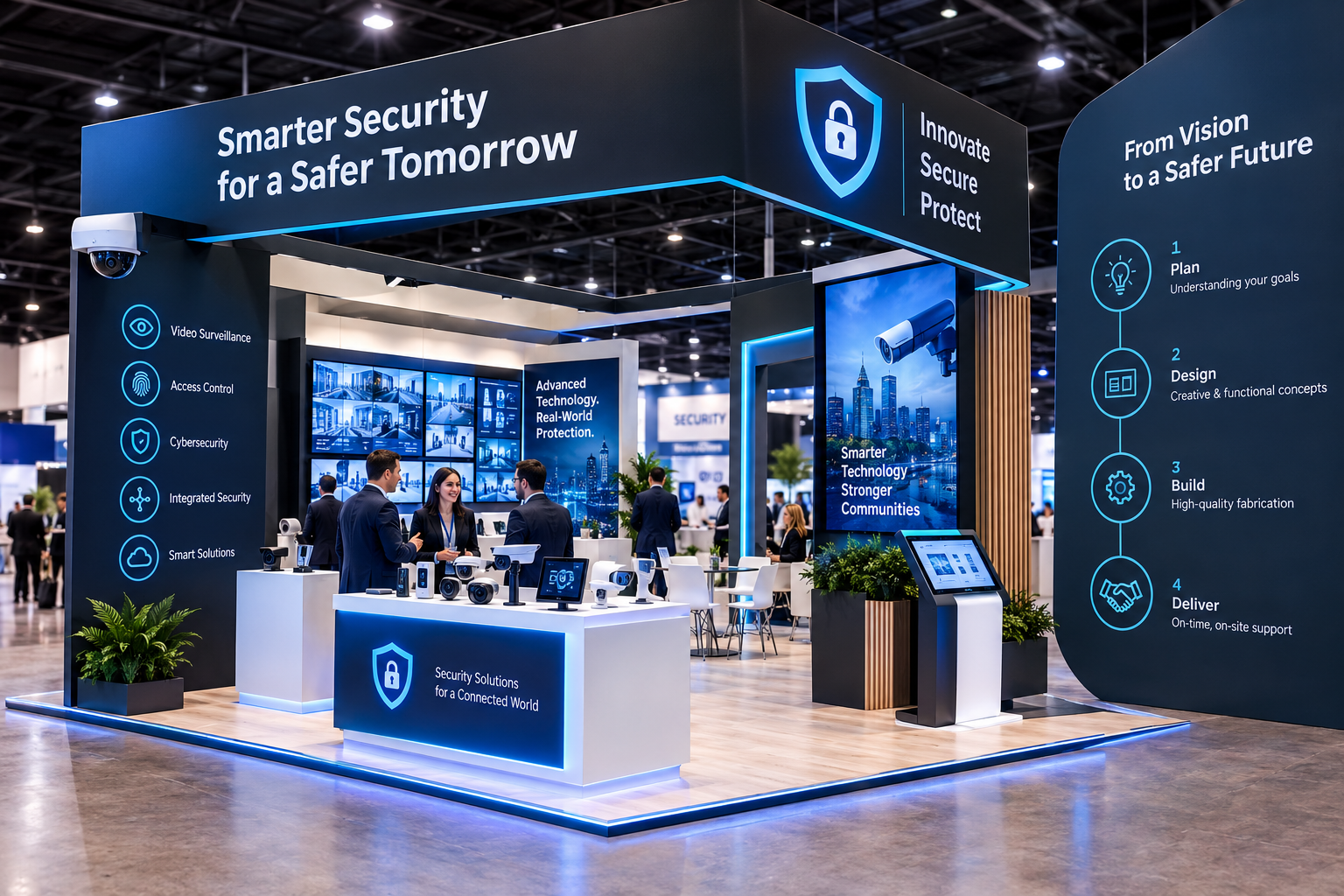
Participating in a security trade show can help your company introduce new products, meet qualified buyers, build industry relationships, and strengthen brand visibility. However, first-time exhibitors often underestimate the planning involved in creating a booth that attracts attention and supports meaningful conversations. Working with a professional Security trade show exhibit builder can make the entire process easier by bringing design, construction, graphics, logistics, and installation together. A well-planned exhibit gives security companies an opportunity to demonstrate their technology and communicate their value clearly in a competitive exhibition environment.
Why Security Trade Shows Matter for First-Time Exhibitors
Security exhibitions bring together professionals from areas such as surveillance, access control, cybersecurity, public safety, biometrics, risk management, and security technology. Visitors may include decision-makers, technology specialists, distributors, government representatives, consultants, and industry partners.
For a first-time exhibitor, this environment provides valuable opportunities to:
-
Introduce a new security product
-
Demonstrate technology in person
-
Generate qualified leads
-
Meet potential business partners
-
Study competitors
-
Build brand recognition
-
Gather customer feedback
-
Discover emerging industry trends
The booth becomes the physical representation of your company. Therefore, its design should support your marketing and sales goals rather than simply look attractive.
What Does a Security Trade Show Exhibit Builder Do?
A professional exhibit builder manages many of the practical and creative elements involved in creating a trade show booth.
Depending on your requirements, the builder may assist with:
-
Booth concept development
-
3D exhibit design
-
Structural construction
-
Custom graphics
-
Lighting
-
Flooring
-
Product displays
-
Demonstration areas
-
Meeting spaces
-
Storage
-
Furniture
-
Audio-visual technology
-
Installation
-
Dismantling
-
Transportation coordination
For a first-time exhibitor, this support can reduce the complexity of managing several suppliers independently.
Start With Clear Exhibition Goals
Before discussing booth design, determine what you want to accomplish at the event.
Your goals could include generating leads, launching a product, scheduling demonstrations, meeting existing customers, recruiting distributors, or improving brand awareness.
For example, a surveillance technology company may prioritize live product demonstrations. A cybersecurity company may need private meeting areas for detailed conversations. An access-control company may need physical space to demonstrate its technology.
Your goals should influence the booth layout from the beginning.
Define Your Target Audience
Think about who you expect to visit the booth.
Ask:
-
Who makes purchasing decisions?
-
What problems do they need to solve?
-
What products interest them?
-
What information do they need before making a decision?
-
What questions are they likely to ask?
Understanding your audience helps create a more relevant visitor experience.
Choose the Right Booth Size
Booth size affects everything from layout to budget.
A smaller booth can still make a strong impression when its space is organized effectively. A larger booth provides more opportunities for meeting rooms, product demonstrations, storage, and interactive experiences.
First-time exhibitors should avoid choosing a booth size simply because a larger space looks impressive. Instead, select an area that supports your objectives and expected visitor volume.
A professional Security trade show exhibit builder can help determine how to use the available floor space efficiently.
Create a Strong Booth Layout
A successful booth should guide visitors naturally through the space.
A typical security technology booth may include:
-
Brand introduction area
-
Product demonstration zone
-
Interactive technology section
-
Consultation area
-
Meeting space
-
Storage area
-
Lead collection point
The layout should prevent unnecessary congestion while keeping important products and messages visible.
Keep Important Areas Accessible
Do not place your most important products behind large furniture or crowded displays.
Visitors should immediately understand where they can:
-
Learn about your company
-
Watch a demonstration
-
Speak with a representative
-
Explore products
-
Request additional information
Good circulation improves the overall visitor experience.
Make Your Brand Visible From a Distance
Trade show halls can contain hundreds of exhibitors competing for attention. Your branding needs to work from several feet away.
Use:
-
Large but readable logos
-
Clear headlines
-
Strong product imagery
-
Short value statements
-
Consistent typography
-
Professional graphics
Avoid covering every available surface with text.
Visitors usually scan a booth quickly before deciding whether to stop. Your primary message should therefore be understandable within seconds.
Communicate a Simple Value Proposition
First-time exhibitors sometimes try to explain every product and service on the booth walls.
This can make the display confusing.
Instead, identify one central question:
Why should a visitor care about this company?
Your headline should communicate the answer.
For example, instead of using a generic statement such as “Advanced Security Solutions,” a company could focus on a specific benefit such as integrated surveillance, intelligent access management, or faster threat detection.
The exact message should reflect the company's products and audience.
Use Product Demonstrations Strategically
Security products often benefit from live demonstrations.
Visitors may want to see how a camera identifies activity, how an access-control system works, how analytics software processes information, or how different security systems communicate.
Demonstrations can transform passive visitors into active participants.
However, demonstrations should be easy to understand.
Design Demonstrations Around Real Problems
Rather than simply showing technical features, demonstrate how the product solves a real-world challenge.
For example:
Problem: Unauthorized access to a restricted facility.
Demonstration: Show how the system verifies credentials, identifies unusual activity, and alerts security personnel.
This approach helps visitors understand practical value.
Integrate Technology Without Overcomplicating the Booth
Technology can make a security exhibit more engaging, but it should have a purpose.
Useful options include:
-
Touchscreen presentations
-
Product simulators
-
Digital catalogs
-
Interactive displays
-
Video walls
-
Live dashboards
-
Augmented reality
-
Demonstration equipment
Technology should support conversations rather than become a distraction.
A screen playing a generic video may not be as effective as an interactive demonstration that allows visitors to explore the product themselves.
Create a Comfortable Meeting Area
Trade show conversations can move from a quick introduction to a detailed discussion.
If your sales team expects serious business conversations, include a dedicated meeting area.
Depending on the booth size, this could include:
-
Small discussion tables
-
Semi-private seating
-
Enclosed meeting rooms
-
Product consultation areas
The space should be comfortable without making the booth feel closed to general visitors.
For security companies, private meeting areas can be especially useful when discussing technical requirements, contracts, or sensitive business needs.
Include Practical Storage
Storage is often overlooked during booth planning.
Sales representatives may need space for:
-
Brochures
-
Promotional materials
-
Personal belongings
-
Product samples
-
Packaging
-
Spare equipment
Without storage, these items may end up behind chairs or underneath tables, making the booth appear untidy.
A professional exhibit builder can integrate concealed storage into the design.
Pay Attention to Lighting
Lighting can significantly influence how a booth looks.
Different lighting techniques can highlight:
-
Logos
-
Product displays
-
Architectural features
-
Demonstration areas
-
Graphics
-
Meeting spaces
The goal is not simply to make the booth brighter. Lighting should help visitors notice the areas that matter most.
For security technology, carefully positioned lighting can also make physical products easier to inspect.
Use Graphics to Explain Complex Technology
Security products can be technically complicated. Graphics can simplify the explanation.
For example, a display might show:
Threat → Detection → Analysis → Alert → Response
This type of visual storytelling allows visitors to understand a solution quickly.
Infographics, diagrams, product illustrations, and simple process graphics can be more effective than long paragraphs of technical information.
Choose Materials That Match Your Brand
The materials used in an exhibit influence how visitors perceive the company.
A premium technology company may prefer a sophisticated architectural design. A company focused on flexibility may choose modular components. A startup may prioritize a compact and cost-effective structure.
Your booth should reflect your brand personality while maintaining professional trade show standards.
Consider Custom vs. Modular Exhibits
First-time exhibitors often wonder whether they need a completely custom booth.
The answer depends on your objectives, budget, booth size, and future exhibition plans.
Custom Exhibits
Custom exhibits provide greater flexibility in:
-
Architecture
-
Branding
-
Product presentation
-
Visitor flow
-
Meeting areas
-
Technology integration
They can be particularly useful for companies with complex demonstrations or strong visual branding requirements.
Modular Exhibits
Modular systems can provide flexibility and easier reuse.
They may work well for companies that:
-
Attend multiple events
-
Change booth sizes
-
Need portable components
-
Want greater budget control
-
Expect repeated use
Discuss both options with your exhibit partner before making a decision.
Plan the Visitor Journey
A good booth should provide a logical visitor journey.
A simple journey could look like:
Attract → Explain → Demonstrate → Discuss → Convert
The visitor first notices the booth. Then they understand the company offering. Next, they interact with a product or demonstration. A representative discusses their requirements, and finally the visitor takes a measurable next step.
This next step could be:
-
Scheduling a meeting
-
Requesting a product demonstration
-
Scanning a QR code
-
Booking a follow-up call
-
Requesting a quotation
Train Your Booth Staff
Even the best exhibit cannot compensate for poorly prepared staff.
Before the event, establish clear responsibilities.
Staff should know:
-
The main booth message
-
Key products
-
Target customer profiles
-
Common visitor questions
-
Lead qualification criteria
-
Demonstration procedures
-
Follow-up processes
Avoid having every staff member deliver a completely different message.
Encourage Conversations Instead of Hard Selling
Visitors generally respond better to useful conversations than aggressive sales pitches.
Train staff to ask questions such as:
-
What security challenges are you currently facing?
-
What type of facility do you manage?
-
Are you evaluating a new system?
-
What technologies are you currently using?
-
What would you like to improve?
These questions help representatives understand visitor needs.
Prepare Lead Capture Before the Event
Lead generation should be planned before visitors arrive.
Decide what information you need from each lead.
This could include:
-
Name
-
Company
-
Job title
-
Email
-
Phone number
-
Product interest
-
Purchase timeline
-
Specific requirements
Digital lead capture can make the process faster and reduce paperwork.
However, the system should remain simple. Visitors should not have to complete a long questionnaire before speaking with your team.
Plan Installation and Dismantling Early
First-time exhibitors sometimes focus heavily on booth design and overlook logistics.
Installation may involve:
-
Shipping
-
Material handling
-
Electrical services
-
Rigging
-
Flooring
-
Furniture delivery
-
Graphics
-
Equipment setup
-
Final inspections
Dismantling also needs planning.
A full-service exhibit partner can coordinate many of these requirements and help reduce last-minute problems.
Understand Trade Show Rules
Every exhibition venue can have specific regulations.
These may cover:
-
Booth height
-
Hanging signs
-
Lighting
-
Electrical equipment
-
Rigging
-
Demonstrations
-
Sound levels
-
Fire safety
-
Material specifications
Check the exhibitor manual early.
A professional exhibit builder can also help interpret technical requirements and design within venue restrictions.
Create an Effective Budget
Your exhibition budget should include more than booth construction.
Consider costs such as:
-
Booth space
-
Exhibit design
-
Construction
-
Graphics
-
Furniture
-
Technology
-
Shipping
-
Installation
-
Dismantling
-
Electrical services
-
Promotional materials
-
Staff travel
-
Lead management
Build a realistic budget before finalizing the design.
It is also wise to maintain a contingency amount for unexpected costs.
Measure Your Results
After the show, evaluate performance.
Useful metrics include:
-
Total visitors
-
Qualified leads
-
Product demonstrations
-
Meetings scheduled
-
Sales opportunities
-
Follow-up appointments
-
Cost per lead
-
Revenue generated
-
Brand engagement
These results can help improve your next exhibition.
For example, if the booth received many visitors but generated few qualified leads, your messaging or staff qualification process may need improvement.
Common Mistakes First-Time Exhibitors Should Avoid
Several mistakes can reduce the effectiveness of a trade show booth.
Overloading the Booth With Information
Too much text can make the booth difficult to understand.
Ignoring Visitor Flow
A beautiful booth can still fail if visitors cannot move comfortably through it.
Using Technology Without Purpose
Interactive screens should support your objectives rather than simply fill empty space.
Forgetting Storage
Visible boxes, bags, and materials can make an otherwise professional booth look disorganized.
Failing to Train Staff
Representatives should understand the products and know how to start meaningful conversations.
Waiting Until the Last Minute
Late planning can create unnecessary pressure and additional costs.
How to Select the Right Exhibit Builder
When comparing exhibit companies, look beyond portfolio images.
Ask potential partners about:
-
Relevant industry experience
-
Design capabilities
-
Customization options
-
Modular solutions
-
Project management
-
Installation support
-
Dismantling services
-
Logistics coordination
-
Graphic production
-
Technology integration
-
Communication process
-
Budget transparency
A builder should understand your business objectives, not just your booth dimensions.
Questions to Ask Before Hiring an Exhibit Builder
Before signing an agreement, ask:
-
Have you worked with technology or security companies?
-
Can you create a 3D booth concept?
-
What services are included?
-
Who manages installation?
-
Who handles dismantling?
-
How are graphics produced?
-
Can the booth be reused?
-
How do you manage shipping?
-
What happens if the booth needs changes?
-
How do you stay within budget?
Clear answers can help prevent misunderstandings later.
Why First-Time Exhibitors Should Start Early
Trade show planning involves many moving parts. Starting early gives you more time to refine your message, compare exhibit solutions, approve designs, produce graphics, arrange shipping, and train staff.
Early planning also gives your exhibit builder enough time to solve design challenges before they become urgent.
A rushed booth can still look professional, but it may not deliver the strategic experience your company needs.
Build an Experience, Not Just a Booth
The most successful security exhibits do more than display products. They create an experience that helps visitors understand the company's expertise.
Think about what a visitor should remember after leaving your booth.
Perhaps it is:
-
A powerful product demonstration
-
A clear security solution
-
An insightful conversation
-
An impressive interactive experience
-
A useful technical explanation
That memorable element can influence whether the visitor continues the conversation after the event.
Final Checklist for First-Time Security Exhibitors
Before the show, review the following checklist:
-
Define exhibition goals
-
Identify your target audience
-
Select the right booth size
-
Choose a suitable exhibit format
-
Develop a clear message
-
Approve booth graphics
-
Plan product demonstrations
-
Arrange technology
-
Include storage
-
Design meeting areas
-
Train booth staff
-
Set up lead capture
-
Confirm shipping
-
Review venue regulations
-
Schedule installation
-
Prepare follow-up campaigns
This checklist can help turn a complicated exhibition project into a manageable process.
Conclusion
For first-time exhibitors, participating in a security trade show can seem overwhelming, but careful planning can make the experience much easier. From defining objectives and selecting the right booth size to designing demonstrations, preparing staff, managing logistics, and measuring results, every part of the exhibit contributes to the overall visitor experience. A professional Security trade show exhibit builder can help bring these elements together into a cohesive, practical, and engaging exhibition environment. With the right strategy and preparation, your first security trade show can become a strong foundation for future events, stronger industry relationships, and meaningful business opportunities.


