
How to Follow Multiple Football Leagues From One Place?

Football fans rarely follow just one competition.
A Nigerian supporter might watch the Premier League for Manchester United or Arsenal, keep an eye on Real Madrid and Barcelona in La Liga, check the NPFL, and still want updates from Serie A, Bundesliga, Ligue 1 or UEFA competitions.
The difficulty is not finding football information. The difficulty is keeping all of it organised.
Searching separately for every league, team, fixture and result can turn a simple matchday check into a long process. A better approach is to use one football hub and move between competitions according to what you need at that moment.
Here is a practical way to follow multiple football leagues from one place without losing track of fixtures, scores, results or standings.
Create One Starting Point for Every League
Instead of bookmarking a different website for every competition, begin with a central football leagues section.
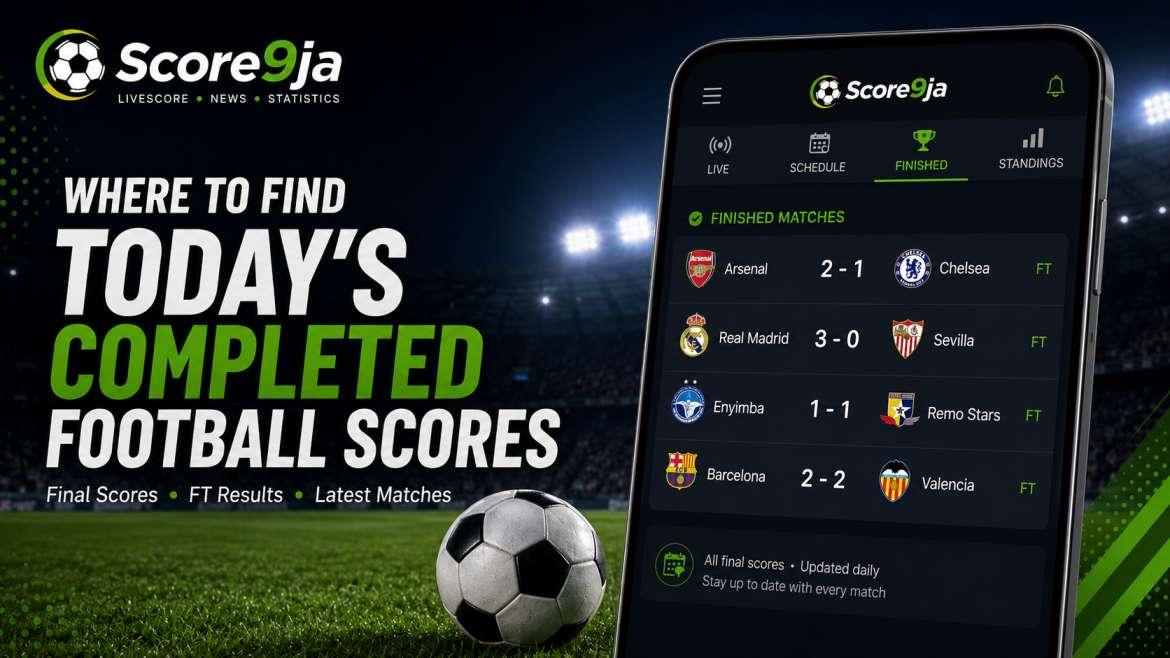
The football leagues and competitions section on Score9ja provides a useful starting point for moving between supported leagues.
From there, you can focus on competitions such as:
-
Nigeria Premier Football League;
-
Premier League;
-
La Liga;
-
Serie A;
-
Bundesliga;
-
Ligue 1;
-
other domestic leagues and competitions.
The advantage is simple: you do not need to start a fresh search whenever you switch from English football to Spanish or Nigerian football.
Decide Which Leagues Matter Most to You
Trying to follow every football competition equally will quickly become overwhelming.
Instead, create your own priority list.
For example:
Primary leagues
-
Premier League
-
NPFL
-
La Liga
Secondary leagues
-
Serie A
-
Bundesliga
-
Ligue 1
Additional competitions
-
UEFA Champions League
-
Europa League
-
CAF competitions
-
international tournaments
Your list will depend on the clubs and competitions you actually care about.
This small step makes a large football schedule easier to manage because you know where to look first.
Begin Each Matchday With the Overall Schedule
Before opening individual league pages, check what football is actually being played that day.
Some Saturdays may contain matches from nearly every major European league.
Other days may be dominated by cup competitions or international football.
A daily overview helps answer:
Which competitions are active today?
Which matches start first?
Are any major games overlapping?
Once you understand the day's schedule, you can decide which league pages deserve closer attention.
Organise Football by Kick-Off Time
When several leagues are playing on the same day, time becomes one of the most useful ways to organise them.
Imagine your matchday looks like:
15:00 – Premier League
16:30 – Bundesliga
18:30 – Serie A
20:00 – La Liga
Instead of thinking about four separate competitions, you now have one chronological football schedule.
This is particularly useful if matches overlap.
You may decide to watch one fixture while monitoring another through live football scores today.
That makes it possible to follow more football without constantly switching between unrelated searches.
Use League Pages for the Bigger Picture
A general matchday page is best for discovering what is happening across football.
League pages are better when you want competition-specific context.
Suppose you notice that three Premier League games are live.
You can then move into the Premier League section to understand how those matches relate to the current competition.
Later, you might switch to La Liga when Spanish games begin.
Think of it as:
Football-wide view → League view → Match view
This allows you to start broad and only go deeper when necessary.
Follow Live Matches Across Several Countries
This is where having everything connected becomes especially useful.
Imagine:
-
Arsenal are playing in England;
-
Real Madrid are playing in Spain;
-
an NPFL match is approaching full-time;
-
AC Milan kick off shortly afterwards.
Watching every game from start to finish may not be possible.
A live-score page lets you monitor the essential information from several competitions at once.
Check:
-
teams;
-
current score;
-
competition;
-
match status;
-
whether the game has reached half-time or full-time.
You can then open a particular match when it becomes more important.
Keep Competition Context Attached to Every Score
When several leagues and tournaments are mixed together, always check the competition name.
The same club may appear in different competitions during the same week.
For example:
Saturday – Premier League
Wednesday – Champions League
Sunday – Premier League
If you are checking recent league form, the Champions League result should not accidentally be counted as part of the Premier League sequence.
Competition labels help keep league results separate and prevent confusion.
Use Team Pages for Clubs You Follow Closely
League tracking does not mean you need to look at every club.
If you support specific teams, their team pages can become shortcuts.
For example, you might mainly follow:
-
Manchester United;
-
Real Madrid;
-
AC Milan;
-
an NPFL club.
Use the team view for upcoming fixtures and recent results, then return to the relevant league when you want to understand the wider standings.
This gives you two useful perspectives:
Club level: What is happening to my team?
League level: What does it mean for the competition?
Review Results One League at a Time
Once matches finish, avoid treating the day's scores as one huge list.
Review each competition separately.
For example:
Premier League
Check your team's result and direct rivals.
La Liga
Review the important Spanish results.
NPFL
See what happened to clubs around your team's position.
Serie A or Bundesliga
Catch up on the matches you were unable to follow live.
This approach makes completed results much easier to interpret.
A 2-0 victory means more when you know what happened elsewhere in the same league.
Check the Correct Table After the Results
League tables provide context that a final score cannot.
If Liverpool win, check the Premier League standings.
If Barcelona win, check La Liga.
If an NPFL club collects three points, review the NPFL table.
This sounds simple, but it matters when following several competitions simultaneously.
Each league has its own:
-
positions;
-
points totals;
-
matches played;
-
goal difference;
-
title race;
-
qualification picture;
-
relegation situation.
Keep results connected to their own competition.
Follow Rival Matches, Not Just Favourite Teams
Supporting one club in a league often means following several others indirectly.
If your team is chasing the title, clubs immediately around it matter.
If it is fighting relegation, results near the bottom matter.
This gives you a useful way to reduce a league to the matches that actually affect your interests.
Instead of following all ten games equally, focus on:
Your club + direct rivals + important table-changing fixtures
Repeat that approach for each league you follow.
Handle European Nights Differently
Domestic-league tracking works well at weekends, but European competitions require a slightly different approach.
A Champions League match may involve clubs you normally follow through different domestic leagues.
On those evenings, switch your focus from:
Premier League + La Liga + Serie A
to:
Champions League
The competition becomes the organising principle.
After the European round finishes, you can return to each club's domestic league before the weekend.
Build a Weekly Football Routine
Following several leagues becomes easier when you use the same routine every week.
Before the Weekend
Check upcoming fixtures across your main leagues.
Before Kick-Off
Arrange the important matches by start time.
During Games
Use live scores for fixtures you cannot watch.
After Full-Time
Review results competition by competition.
After Each Round
Check the relevant standings.
During the Week
Look ahead to midweek league, cup or continental fixtures.
This removes much of the repetition from following football.
Avoid Opening Too Many Sources
Following several competitions does not require several different platforms.
Constantly switching between search engines, social media, club accounts and league websites can make simple information harder to track.
Social platforms are useful for discussion and reactions, but the basic football information is easier to manage when kept together:
Leagues → Fixtures → Live Scores → Results → Tables
You can then use other sources when you want news, analysis or supporter reaction.
Use Score9ja as a Multi-League Football Hub
Score9ja allows fans to move from the football leagues and competitions directory into different football competitions while also using matchday and live-score sections when several leagues are active.
That structure is useful for supporters whose football interests extend beyond one country.
Instead of beginning again every time you switch leagues, you can keep the same football-following routine and simply change competition.
Final Thoughts
The best way to follow multiple football leagues from one place is not to monitor every match individually.
Start with a central league directory, choose the competitions that matter most to you and use the daily schedule to see when they are playing.
During matches, use live scores to handle overlapping fixtures.
Afterward, review results one competition at a time and check the corresponding standings to understand what changed.
For fans following the Premier League, La Liga, NPFL, Serie A, Bundesliga and other competitions, Score9ja provides a connected way to move between leagues without turning every matchday into a series of separate searches.
Keep the process simple:
Choose Your Leagues → Check Fixtures → Follow Live Scores → Review Results → Check Tables
That gives you one organised football routine across several competitions.


