

The Foot Problems Caused by Sandals With Thin Soles
The Foot Problems Caused by Sandals With Thin Soles
Minimalist sandals are often marketed as natural, lightweight, or barely there—but the reality is that thin soles can quietly trigger a chain reaction of foot problems. Most people don’t realize it’s happening until discomfort becomes part of their daily life. What feels airy and freeing at first often leads to soreness, fatigue, or long-term strain because the foot is forced to absorb more shock and work harder with every step.
This guide breaks down the foot problems commonly caused by sandals with thin soles, why they happen, and what to wear instead if you still want effortless, easy summer footwear.
Why Thin-Sole Sandals Cause So Many Problems
Feet are built to handle impact, but not without help. Modern walking surfaces—sidewalks, mall floors, driveways, airports—are unforgiving. Hard surfaces combined with thin soles mean the foot has no buffer from repeated impact forces. That lack of protection affects not only the foot itself but also the ankles, knees, hips, and even the lower back.
Below are the most common problems that show up when sandals lack cushioning and structure.
1. Heel Pain From Constant Impact
Sandals with thin soles offer little to no shock absorption. Every time your heel strikes the ground, the force transfers directly into the heel pad and the plantar fascia. Over time, this can lead to:
- Persistent soreness after long walks
- Pain when getting out of bed
- Tenderness along the heel edge
- Early signs of plantar fasciitis
Minimal soles also allow the heel pad to compress without support, which accelerates discomfort. This is why heel pain is one of the first warning signs that your sandals aren’t doing enough for you.
2. Arch Fatigue From Overworking the Foot Muscles
Without a structured midsole, the arch loses the reinforcement it needs. As a result, your foot muscles compensate by working overtime to stabilize every step.
This can cause:
- Aching arches at the end of the day
- Increased pronation (rolling inward)
- Midfoot soreness after long periods of standing
- Burning or throbbing sensations in the arch area
The flatter and thinner the sole, the harder the arch has to work—and the faster fatigue sets in.
3. Lack of Lateral Support Leads to Overpronation
Thin-soled sandals are usually flexible in all directions—too flexible. They bend and twist with minimal resistance, which might feel freeing but is mechanically unstable.
Without lateral support, the foot can collapse inward with each step. This affects:
- Alignment of the ankle
- Knee tracking
- Hip stability
- Lower back posture
Overpronation isn’t just a foot issue—it’s a whole-body alignment issue. And minimalist sandals make it far more common.
4. Forefoot Pain From Thin, Hard Bottoms
The front of the foot absorbs massive pressure every time you push off the ground. Without cushioning:
- The ball of the foot takes the brunt of impact
- Metatarsal heads become irritated
- Tingling or numbness can develop
- Long walks cause burning under the toes
People often confuse this with tired feet, but it’s actually mechanical overload caused by insufficient padding.
5. Increased Risk of Toe Gripping
Flip-flop–style sandals with thin soles often force wearers to curl or grip their toes to keep the shoe in place. Over time, this creates:
- Tight toe flexor muscles
- Pain across the top of the foot
- Early hammertoe formation
- Soreness in the small intrinsic foot muscles
Toe gripping becomes a habit and affects how the foot functions even when wearing other shoes.
6. Achilles Strain From Low, Flat Soles
Thin, flat soles don’t give the Achilles tendon any lift or cushioning. Over time, this contributes to:
- Tight calves
- Sore Achilles tendons
- Stiffness after periods of sitting
- Pain during uphill walking
Because the heel sits so low to the ground, the calves stay under constant stretch, which increases strain throughout the back of the leg.
7. Zero Protection From Sharp or Uneven Surfaces
Thin soles also lack basic protection from:
- Rocks
- Hot pavement
- Sidewalk cracks
- Uneven terrain
You feel every bump, ridge, or pebble underfoot. That repeated micro-trauma leads to general soreness, especially after long days outside.
8. Poor Alignment Affects Knees and Lower Back
Minimalist sandals don’t just burden the feet—they impact body alignment from the ground up.
Thin soles contribute to:
- Knees collapsing inward (valgus)
- Hip rotation
- Pelvic tilt
- Low-back tightness
Every step becomes slightly misaligned, and the issues build gradually. Many people don’t realize their knee or back pain is actually caused by their summer footwear.
Why Minimalist Sandals Are More Harmful in Real-Life Conditions
Barefoot-style or thin-soled sandals were designed to mimic natural walking—but our modern environment is anything but natural. Instead of soft grass and dirt paths, most people walk on:
- Concrete
- Tile
- Hardwood
- Asphalt
These surfaces create higher impact forces than the human foot evolved to handle alone. Without proper cushioning and support, thin soles push the foot far beyond its comfort threshold.
What to Wear Instead (Without Losing the Easy Sandal Feel)
Not everyone wants bulky shoes or heavy orthopedic footwear. Fortunately, you don’t need them. You simply need sandals designed to protect your feet from the stresses of modern walking.
Look for:
- Structured arch contouring
- Cushioned midsoles
- Heel stability
- Shock absorption
- Wider platforms for balance
- Soft, non-irritating straps
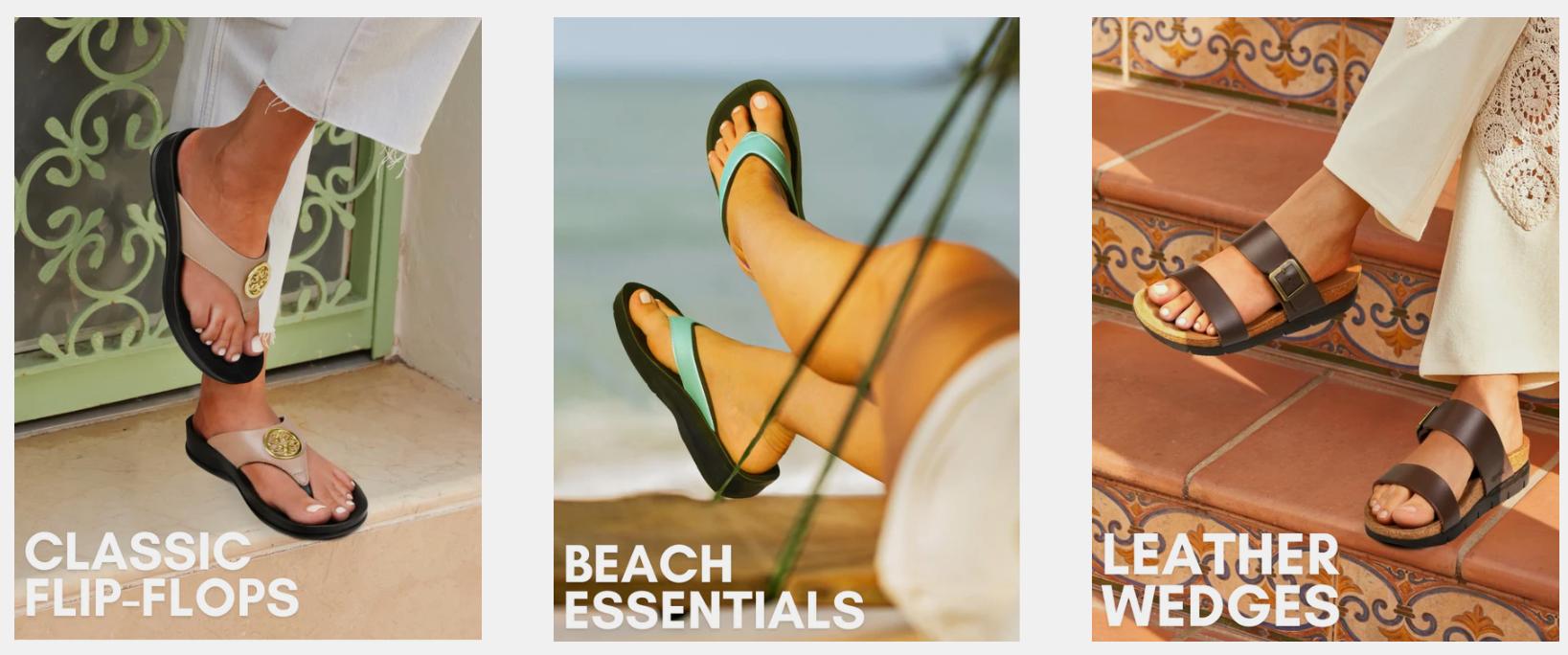
If you like effortless, slide-on styles but want to avoid the pain caused by thin soles, slide sandals with arch support offer the same convenience with far better comfort and stability.
How to Transition Away From Thin-Soled Sandals
Switching from minimal sandals to more supportive options can feel different at first—your feet aren’t used to actual reinforcement. Here’s how to ease into the transition:
1. Start with short wear times
Wear supportive sandals for part of the day, then gradually increase as your feet adapt.
2. Stretch your calves
This reduces strain and helps realign the foot.
3. Avoid going barefoot on hard floors
Especially if you’re experiencing heel or arch discomfort.
4. Replace sandals as soon as they lose cushioning
Supportive footwear wears out over time—but thin soles offer no support from the start.
Who Is Most Vulnerable to Pain From Thin-Sole Sandals?
While anyone can develop foot discomfort, some groups are especially at risk:
- People over 35
- Anyone with flat feet or high arches
- Those who walk or stand for long periods
- Individuals recovering from foot injuries
- People with knee or hip instability
- Women who experience foot changes during pregnancy
For these individuals, minimalist sandals can become a fast track to chronic pain.
Thin Soles Aren’t Worth the Long-Term Damage
Minimal sandals feel light and breezy, but they come with hidden costs. They force your feet to absorb more impact, work harder, and stabilize without the structural help they need. Over time, this leads to discomfort, fatigue, and even long-term alignment problems.
Upgrading to footwear with supportive cushioning and proper structure doesn’t just improve comfort—it protects your entire body from unnecessary strain. And the best part? Modern supportive sandals still look stylish while giving your feet the relief they deserve.

 English
 Arabic
 Spanish
 Portuguese
 Deutsch
 Turkish
 Dutch
Dutch
 Italiano
 Russian
 Romaian
 Portuguese (Brazil)
 Greek
Greek