
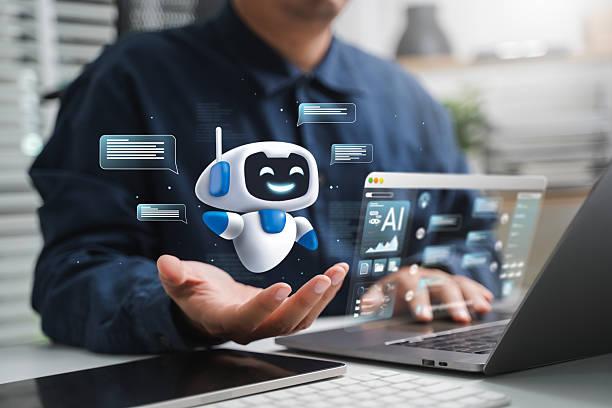
Why AI Agents Are Set to Transform Workflows, Decisions, and Digital Operations

Artificial intelligence is advancing from tools that respond to individual prompts toward systems capable of planning tasks, selecting tools, analysing information, and taking actions toward defined objectives. Known as AI agents, these systems can work across software applications, databases, communication platforms, and business processes. Their growing capabilities are creating new possibilities for customer service, software development, cybersecurity, finance, healthcare, logistics, research, and administrative operations.
A recent study by MarkNtel Advisors highlights that the global AI agent outlook was valued at USD 7.6 billion in 2025. It is projected to grow from USD 10.9 billion in 2026 to USD 110.5 billion by 2032, registering a CAGR of 47.13% during 2026–2032. This expansion reflects enterprise automation, generative AI development, cloud integration, and demand for intelligent systems that can complete complex workflows with less manual intervention.
AI Agents Move Beyond Basic Chatbot Functions
Traditional chatbots typically answer questions or follow predefined conversational paths. AI agents can perform broader activities by interpreting goals, dividing them into smaller steps, retrieving relevant information, using external tools, and adjusting their actions according to changing conditions.
The OECD describes agentic AI systems as technologies that can perceive and act within an environment with a degree of autonomy while using tools to achieve specific goals. This ability enables agents to move beyond content generation and participate directly in operational processes such as scheduling meetings, updating records, preparing reports, reviewing documents, or coordinating digital tasks.
Enterprise Automation Creates Practical Applications
Businesses often manage workflows that require employees to collect information from several systems, compare records, complete forms, and communicate results. AI agents can support these activities by connecting applications and completing sequences of related tasks rather than automating only one repetitive action.
Customer-service agents can review account histories, classify requests, recommend solutions, and prepare responses. Software-development agents can generate code, identify errors, run tests, and document changes. Finance teams can use agents to reconcile transactions, examine invoices, and flag unusual activity, while human professionals remain responsible for sensitive approvals and final decisions.
Multi-Agent Systems Divide Complex Responsibilities
Some tasks are too broad for one agent to complete efficiently. Multi-agent systems address this challenge by assigning specialised responsibilities to several coordinated agents. One agent may gather information, another may analyse it, and a third may verify the result before an action is taken.
This structure resembles a digital team in which each system contributes a specific capability. Multi-agent coordination could support supply-chain planning, scientific research, cybersecurity monitoring, and large-scale customer operations. However, organisations must clearly define how agents share information, resolve conflicting outputs, and escalate uncertain situations to human supervisors.
Governance Becomes Essential as Autonomy Increases
Greater autonomy can create operational, security, and accountability risks. An agent may access sensitive information, use an inappropriate tool, misunderstand instructions, or complete an action that produces unintended consequences. Organisations therefore need permission controls, activity logs, approval stages, testing procedures, and clear boundaries around what each agent is authorised to do.
The NIST AI Risk Management Framework provides organisations with a structured approach for identifying and managing risks associated with artificial intelligence. Its principles are relevant to AI agent deployment because trustworthy operation depends on continuous assessment, transparency, security, and reliable human oversight.
NIST also introduced an AI Agent Standards Initiative in 2026 to encourage secure, interoperable, and trusted agent systems. The initiative reflects the growing need for common technical standards as agents begin communicating with external tools, other agents, and critical digital environments.
Human Oversight Will Remain Important
AI agents can reduce repetitive work, but they do not eliminate the need for human judgment. Employees must establish objectives, review important outputs, manage exceptions, and determine when an automated action requires approval. Human involvement becomes especially important in healthcare, finance, employment, legal services, and other areas where errors can produce significant consequences.
Organisations will also need to redesign roles and workflows rather than simply adding agents to existing processes. Effective deployment requires employee training, data preparation, system integration, cybersecurity controls, and clear performance measures.
AI Agents Could Redefine Digital Work
AI agents represent a shift from software that provides information to systems that can participate in completing work. Their future impact will depend on reliability, interoperability, data quality, responsible governance, and the ability to operate safely within defined limits.
As agent capabilities mature, businesses are likely to use them across increasingly connected workflows. The strongest results will come from combining automated execution with human expertise, ensuring that AI agents improve operational efficiency without weakening accountability, security, or decision quality.


