


AI in Medical Research: How Tecosys Is Powering the Next Generation of Healthcare Innovation
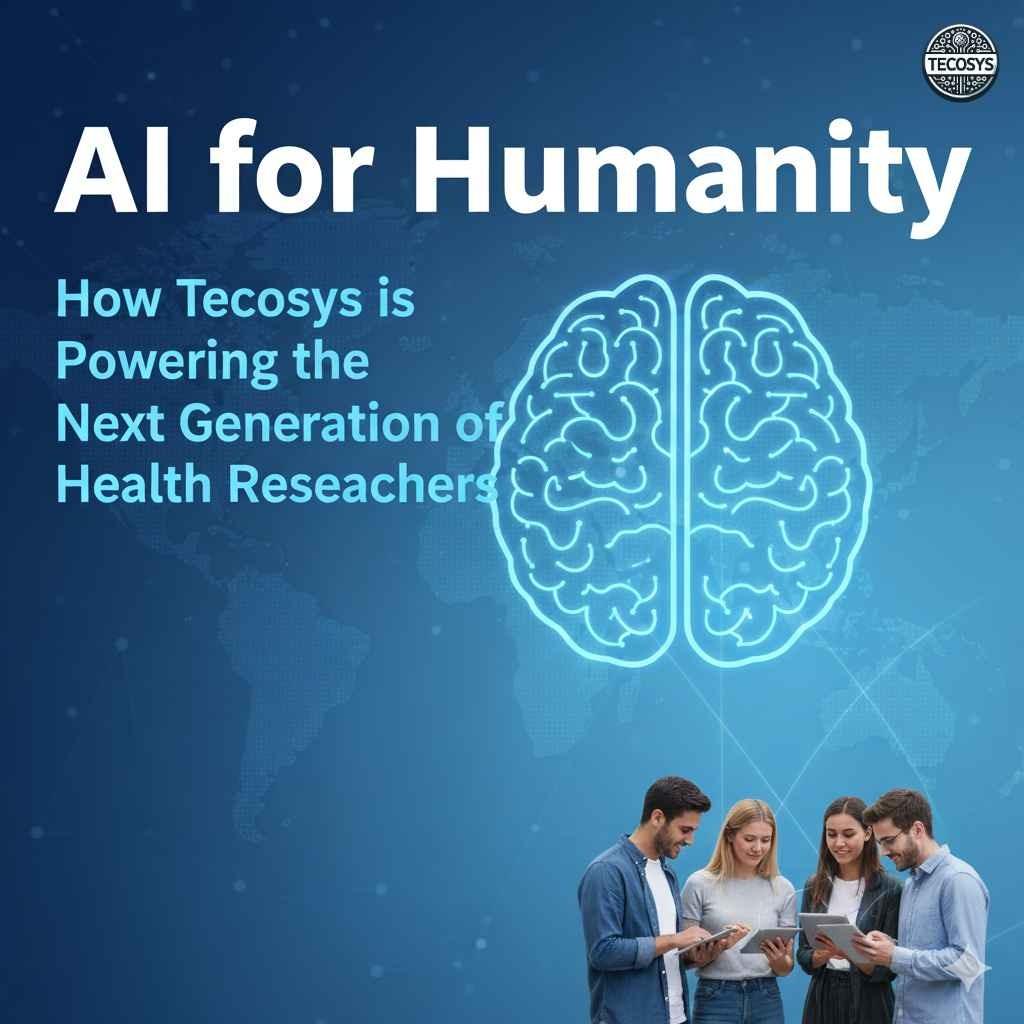
Artificial intelligence is transforming healthcare faster than ever — from diagnosing diseases to predicting outbreaks and accelerating medical research. As global health challenges grow, the idea of “AI for Humanity” becomes critically important. If AI is to make a real difference, it must be ethical, transparent, and accessible to every researcher, not just elite institutions.
This is where platforms like Tecosys and Nutaan AI are stepping in — helping health researchers overcome data barriers, scale discoveries, and build trustworthy, world-ready solutions.
Why AI in Healthcare Matters Right Now
The healthcare AI market is skyrocketing — with the U.S. predicted to reach nearly $195B by 2034.
AI now supports:
-
Clinical decision-making
-
Patient risk prediction
-
Drug discovery
-
Administrative workflows
-
Literature summarization
-
Synthetic data generation
-
Population health analytics
For health researchers, AI has become not just helpful — but essential.
Where Health Researchers Struggle
Even the most talented epidemiologists, clinicians, and biomedical scientists face hurdles:
-
Siloed and messy health data
-
Overwhelming volume of scientific literature
-
Limited compute or ML expertise
-
Complex regulations like HIPAA, GDPR, IRB, FDA
-
Privacy & governance concerns
-
Difficulty generating hypotheses from large datasets
AI can solve many of these challenges — but only when built responsibly and made accessible to all.
AI for Humanity: Building Fair, Accessible Health Innovation
Healthcare research shouldn’t be limited by geography or funding.
The vision behind ethical, human-centered AI is simple:
📌 Every researcher, anywhere in the world, should have the tools to make scientific breakthroughs.
Platforms like Tecosys embody this mission by combining domain-aware healthcare AI, transparent governance, and accessible tools for teams at any skill level.
Introducing Tecosys: AI Built for Global Health Research
Tecosys focuses on making high-quality AI available to health researchers everywhere — particularly in underserved regions.
Mission
Accelerate global health discoveries by providing trustworthy AI infrastructure designed specifically for medical research.
Vision
A world where any researcher can ask complex questions of health data — and receive clear, reliable, ethical insights.
What Makes Tecosys Different?
-
Domain-aware models trained on healthcare-specific data
-
Ethics-first architecture (privacy, fairness, explainability)
-
Easy no-code pipelines for non-technical researchers
-
Hybrid + federated learning for secure data collaboration
-
Built-in auditing & documentation for regulatory compliance
-
Team collaboration tools for real science workflows
How Tecosys Works (Simple Breakdown)
1. Data Ingestion & Cleaning
Automatically connects to EHRs, clinical trials, registries, wearables, etc.
Cleans, normalizes, and secures the data with full lineage tracking.
2. Privacy & Synthetic Data
Generates safe synthetic datasets using techniques like:
-
Differential privacy
-
K-anonymity
Ideal for sharing without exposing real patient identities.
3. Models & Analytics
Researchers get:
-
Pretrained models for imaging, clinical notes, risk scoring
-
AutoML tailored for health data
-
Tools for literature mining & hypothesis generation
-
Explainability modules (SHAP, LIME)
4. Validation & Governance
-
Bias detection
-
Cross-validation
-
Audit trails
-
IRB / FDA documentation workflows
5. Deployment & Collaboration
APIs, dashboards, federated setups, team annotations, and monitoring.
6. Support & Training
Guided experiments, tutorials, and expert assistance when needed.
Practical Use Cases
1. Outbreak Prediction in Low-Resource Settings
An epidemiologist can:
-
Upload case + mobility data
-
Run risk factor analysis
-
Build outbreak hotspot models
-
Share dashboards with health departments
2. Improving Clinical Trial Enrollment
A trial designer can:
-
Predict which sites will recruit faster
-
Test eligibility criteria through virtual simulations
-
Detect enrollment bias early on
3. Multi-Omics Research for Biomarkers
Biomedical teams can:
-
Align transcriptomics / proteomics data
-
Identify biomarker signatures
-
Validate findings with explainability tools
4. Public Health Research Without Big Compute
Local researchers can:
-
Use no-code pipelines
-
Train models across institutions using federated learning
-
Publish insights faster
Ethics, Trust, and Transparency: The Backbone of AI for Humanity
Platforms like Tecosys and Nutaan AI prioritize:
-
Explainability (model cards, SHAP, counterfactuals)
-
Bias reduction (sub-group audits, reweighting)
-
Fairness for vulnerable populations
-
Regulatory compliance across HIPAA, GDPR, IRB
-
Human-in-the-loop oversight
This ensures AI remains responsible, safe, and aligned with global health needs.
The Future: AI + Researchers Working Side by Side
AI won’t replace health researchers — it will empower them.
With trustworthy tools, medical science becomes faster, more transparent, and more equitable. If your clinic, lab, or institution is exploring AI-driven health innovation, this is the perfect time to take the next step.
If you're exploring how AI can strengthen your clinic or research workflow, you can learn more about ethical, human-centered health AI through and feel free to connect for a quick discussion. You can schedule a convenient time here: Book a Call.

 English
 Arabic
 French
 Spanish
 Portuguese
 Deutsch
 Turkish
 Dutch
Dutch
 Russian
 Romaian
 Portuguese (Brazil)
 Greek
Greek