
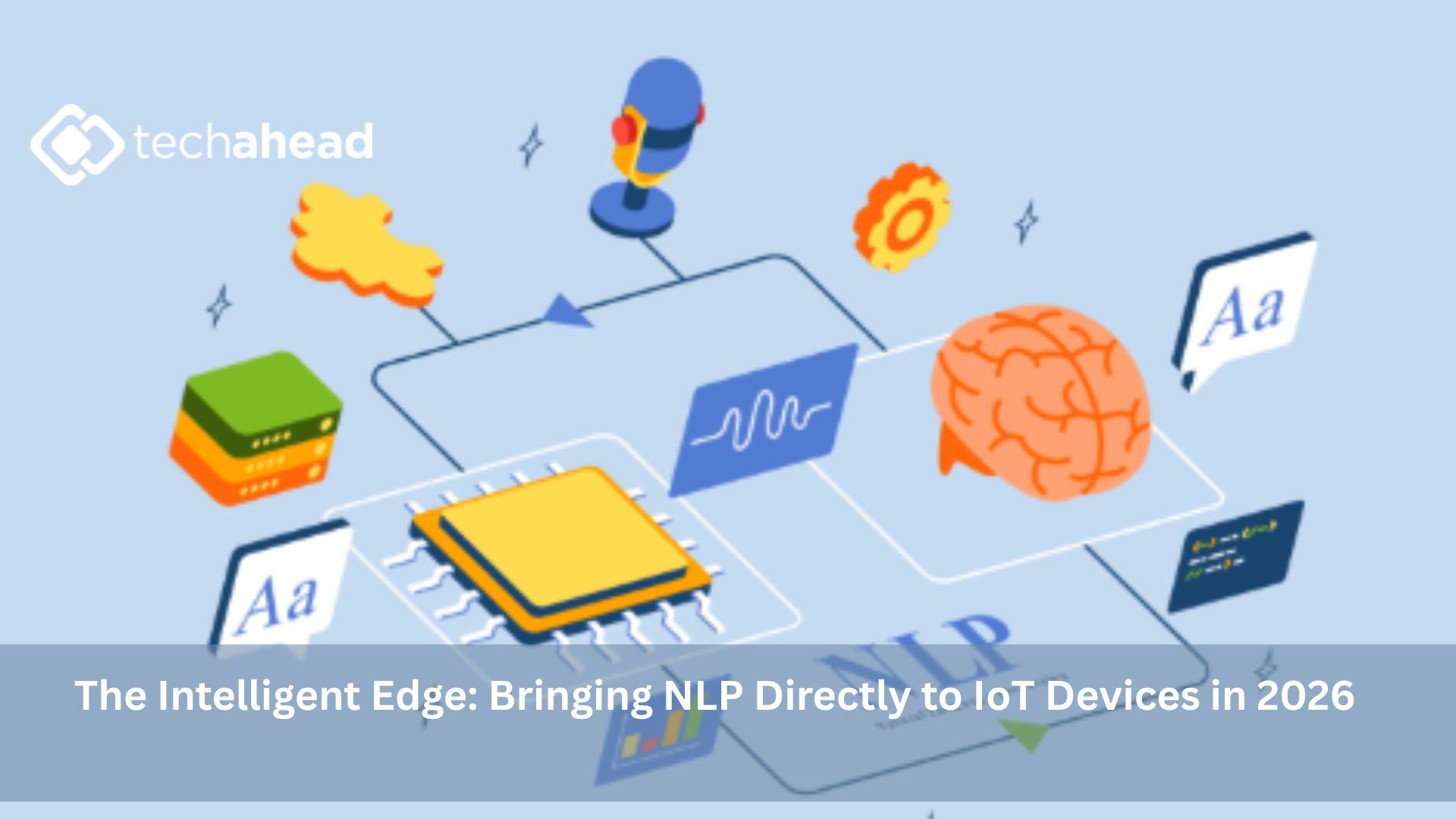
The Intelligent Edge: Bringing NLP Directly to IoT Devices in 2026

For years, enterprise AI followed a simple pattern: collect data at the edge, send it to the cloud, analyze it centrally, and push insights back to users.
That model is breaking.
In 2026, organizations are shifting intelligence closer to where data is created—on devices, gateways, and local networks. This evolution is known as edge intelligence, and it’s redefining how businesses deploy NLP Development Services alongside IoT Application Development Services.
Instead of waiting seconds—or minutes—for cloud responses, companies now expect real-time language understanding and decision-making directly at the source.
This is the rise of the intelligent edge.
Why the Cloud-Only Model No Longer Works
Centralized cloud processing made sense when connectivity was reliable and latency wasn’t mission-critical.
Today’s environments are different.
Factories require instant safety alerts. Hospitals depend on real-time monitoring. Logistics hubs operate in bandwidth-constrained locations. Retail stores need immediate customer insights.
Relying exclusively on cloud-based NLP introduces:
-
Latency that slows decisions
-
Bandwidth costs from streaming raw data
-
Privacy concerns around sensitive information
-
Operational risk during connectivity outages
Edge-based NLP solves these challenges by processing language and sensor data locally.
This is where NLP Development Services meet IoT Application Development Services in a powerful new architecture.
What “Edge NLP” Actually Means
Edge NLP refers to deploying lightweight natural language models directly on:
-
Industrial gateways
-
Smart cameras
-
Embedded controllers
-
Local servers
-
Connected devices
These models handle tasks such as:
-
Voice command recognition
-
Text classification from device logs
-
On-device anomaly explanation
-
Local summarization of sensor data
Instead of shipping everything to the cloud, devices interpret information themselves and only transmit actionable insights.
The result is faster response, greater resilience, and stronger privacy.
Real-World Applications Already in Production
Smart Manufacturing
Edge NLP enables machines to interpret technician notes, respond to voice commands, and explain equipment anomalies instantly.
A technician can ask, “Why did this unit stop?” and receive an immediate answer based on local sensor data and historical patterns—no cloud round trip required.
Healthcare and Remote Monitoring
Medical devices analyze patient readings locally while NLP processes clinician notes and voice inputs. Sensitive data stays on-site, improving compliance and reducing risk.
Energy and Utilities
Remote substations deploy NLP models that summarize field reports and correlate them with sensor readings to detect early signs of failure—even in low-connectivity environments.
Retail Operations
In-store systems process customer feedback and inventory changes locally, enabling real-time pricing and merchandising decisions.
Each of these scenarios depends on tightly integrated IoT Application Development Services to manage devices and connectivity, combined with advanced NLP Development Services to interpret language at the edge.
Engineering Challenges at the Intelligent Edge
Edge NLP sounds powerful—but implementing it at scale requires solving complex problems:
Model Optimization
Language models must be compressed and optimized to run on limited hardware.
Device Orchestration
Thousands of distributed endpoints need secure updates, monitoring, and lifecycle management.
Context Synchronization
Edge systems must maintain alignment with cloud platforms and enterprise data sources.
Governance and Security
Local processing still requires enterprise-grade controls, auditing, and compliance.
This is why organizations typically partner with specialists such as TechAhead, which brings together edge computing, NLP engineering, and IoT platform design into cohesive production systems.
Why Edge NLP Is Becoming a Strategic Priority
Forward-looking enterprises adopt edge NLP for four core reasons:
Speed
Decisions happen in milliseconds, not seconds.
Resilience
Systems continue operating even during network disruptions.
Privacy
Sensitive language data never leaves the device.
Cost Efficiency
Reduced bandwidth and cloud compute expenses.
These advantages compound as deployments scale.
Emerging Trends in 2026
Several developments are accelerating edge-based NLP adoption:
-
Domain-trained mini language models for industrial environments
-
Federated learning for distributed NLP improvement
-
Voice-first interfaces for operational systems
-
Hybrid architectures blending edge and cloud intelligence
-
Local explainability engines for compliance
Together, these trends are pushing intelligence outward—away from centralized platforms and into everyday infrastructure.
Organizational Impact: From Centralized Control to Distributed Intelligence
Edge NLP doesn’t just change architecture.
It changes how organizations operate.
Teams move from centralized monitoring to local autonomy.
Facilities become self-aware.
Decision-making becomes decentralized but coordinated.
Employees interact with systems conversationally, while leadership gains enterprise-wide visibility through aggregated insights.
Technology fades into the background. Outcomes take center stage.
Conclusion: The Future Thinks Locally
The next phase of digital transformation isn’t about collecting more data in the cloud.
It’s about understanding data where it’s created.
Enterprises investing in NLP Development Services alongside IoT Application Development Services at the edge are building systems that respond instantly, protect privacy, and operate resiliently—even in the most demanding environments.
In 2026, intelligence no longer lives in distant servers.
It lives everywhere.


