
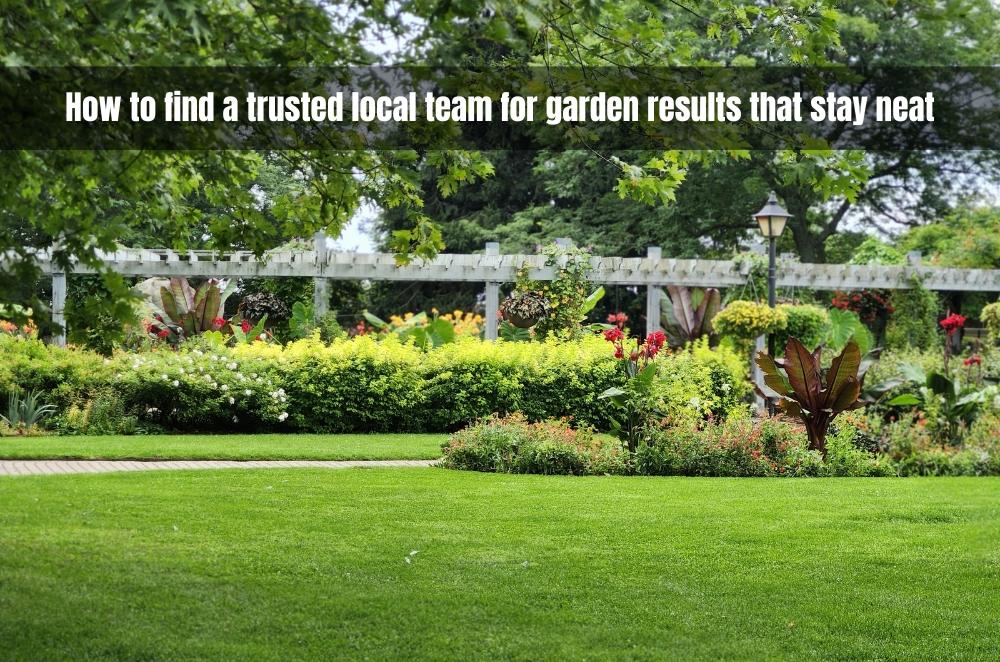
How to find a trusted local team for garden results that stay neat

There’s a particular kind of frustration that comes from a garden that almost works.
You tidy it on a Saturday. You edge the lawn. You yank out the obvious weeds. You stand back with that brief, hopeful feeling—finally, it looks sorted. Then the week happens. School bags land by the back door. The dog sprints the same shortcut along the fence line. A hot day bakes the ground. A storm dumps rain like someone tipped a bucket over the suburb. And somehow, by next weekend, the yard looks… tired again. Messy in that “nothing’s technically broken but everything feels unfinished” way.
When people say they want a trusted local team for tidy, reliable garden results, they’re often not chasing a fancy garden. They’re chasing a garden that doesn’t ask for constant rescuing. One that stays neat without needing you to keep patching, propping, redoing.
In Sydney, that comes down to something simple: the garden has to be built around real life, not a perfect photo.
The difference between “looks good today” and “stays good”
A garden that stays tidy has a few quiet features in common. They’re not always the things you notice first, but you feel them every day.
You feel it when you walk outside, and your shoes don’t sink into mud near the tap.
You feel it when you can push a mower in clean lines without fighting a ragged edge.
You feel it when you don’t have to step over a wobbling paver or squeeze between a pot plant and a clothesline.
That “reliable” feeling usually comes from structure: paths that make sense, edges that hold, levels that are stable, and planting that fits the conditions. Not glamorous, but it’s the stuff that stops a garden from unravelling.
Start with the boring question: How do you actually use the space?
Before you talk about plants or pavers, it helps to be honest about how your household moves.
-
Where do you walk every day? Back door to bins. Side gate to the driveway. Down to the shed.
-
Where do kids and pets cut through, no matter what you wish they’d do?
-
Where does the sun land in the afternoon—does it roast the deck, or does the yard sit in shade?
-
Where do you drop things (shoes, toys, hoses, garden tools) because there isn’t a natural “home” for them?
A good local team tends to ask these questions early—not because they’re trying to upsell you, but because they’re trying to stop you paying for something that doesn’t work.
The “tidy look” is mostly about edges
If you want one practical marker for whether a garden will stay neat, look at the edges. Not the flowers. Not the fancy render. The edges.
Clean edges do a few unsexy but powerful things:
-
They tell the lawn where to stop.
-
They stop mulch from migrating onto paths.
-
They make mowing and whipper-snipping faster.
-
They give the whole space a finished, intentional look.
When edges aren’t thought through, everything blurs: grass invades garden beds, soil spills, pavers look crooked even when they aren’t. You end up doing constant little tidy-ups that never quite hold.
Paths and surfaces: Where “reliable” gets tested
Sydney weather can be chaotic in a single week. Dry heat, then a downpour. So if your garden is going to stay usable and tidy, the surfaces need to handle both.
A reliable path isn’t just a pretty strip of stone. It needs to:
-
Feel stable underfoot
-
Direct people where you want them to go
-
Drain sensibly so puddles don’t become the new normal
-
Suit the traffic (kids running, prams, a wheelbarrow, bins)
The same goes for entertaining spaces. If you’ve ever had chairs wobble on uneven pavers—or watched muddy footprints track straight into the house because the only route to the clothesline is through soggy lawn—you already know: surfaces shape daily life.
This is also where shortcuts show up later. If site preparation is rushed, things can shift. If levels aren’t considered, water can move in ways you didn’t expect. The “before and after” might look great on completion day, but a season later, you’re dealing with dips, movement, or that annoying corner that never dries.
Levels, slopes, and the stuff nobody wants to talk about
Sydney blocks can be deceptively tricky. A yard can look “basically flat” until you try to place a patio, and suddenly you’re dealing with a slope that makes furniture slide or water pool.
If a job involves levelling, retaining, steps, or reshaping garden beds, you want a team that talks clearly about what’s happening and why. Not in a scary way—just in a “here’s how we’re going to make this stable and usable” way.
When people feel burned by landscaping, it’s often because the visible part was done, but the underlying part wasn’t handled with the same care. The garden might look neat initially, yet it doesn’t behave like a finished space.
How to spot a “trusted local team” before you commit
People often say, “I just want someone reliable.” What they usually mean is:
-
Shows up when they say they will
-
Communicates clearly
-
Leaves the site tidy at the end of the day
-
Doesn’t cut corners that become your problem later
-
Takes pride in the finish, not just the big features
If you’re talking to a landscaping team, these questions can reveal a lot without turning it into an interrogation:
-
How will you keep the site safe and usable while work is underway?
-
What will the edges look like—lawn to beds, beds to paths, around trees?
-
What preparation happens before turf or paving goes in?
-
How do you plan for drainage and water movement on this block?
-
What does “finish” include—cleanup, shaping, leaving it neat?
You’re listening for calm, specific answers. Not buzzwords. Not vague assurances. Specifics.
When one team manages the whole picture, the results often feel calmer
There’s a certain peace that comes from not having to coordinate five different people for one backyard: one person for paving, another for turf, another for planting, and someone else to “fix the little bits” that appear between those trades.
When a single team takes responsibility for the overall outcome—from structure (paths, levels, retaining where needed) through to softscaping (planting and turf)—the garden often feels more coherent. The lines match. The transitions make sense. The finishing isn’t an afterthought.
If you’re weighing up options in Sydney and you want a sense of what a combined approach can cover, this overview of Sydney landscaping services (A Bargain Gardener) lays out the typical mix of structural work and garden finishing that tends to produce that “tidy, reliable” result.
Key Takeaways
-
Gardens stay tidy when the layout supports real routines: paths, access, and practical zones.
-
Clean edges are a major driver of the “finished” look—and they reduce ongoing effort.
-
Reliable results depend on preparation, levels, and drainage as much as surface materials.
-
Planting holds up better when it suits Sydney's conditions and your maintenance bandwidth.
-
A team’s reliability shows in the small things: Clear communication, neat work zones, and a strong finish.


