
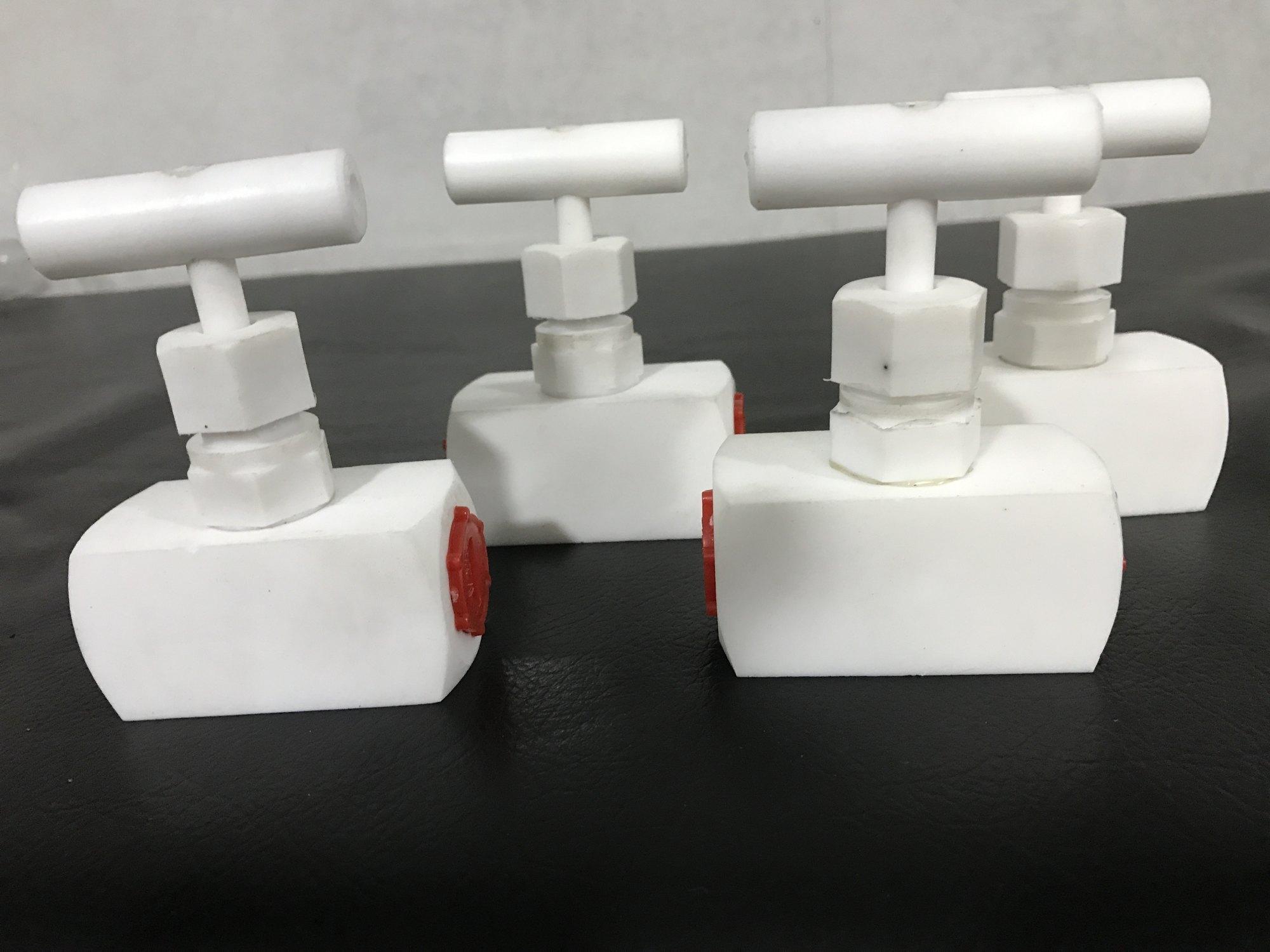
Teflon Needle Valves: Precision Flow Control for Corrosive Applications

Teflon needle valves are specially designed flow control valves used to regulate small and precise flow rates of liquids or gases, particularly in corrosive and chemically aggressive environments. These valves are widely used in chemical processing plants, laboratories, pharmaceutical industries, and water treatment systems where resistance to chemicals and contamination-free performance is essential.
The combination of a fine-threaded stem and a tapered needle-shaped plunger allows accurate flow adjustment, while Teflon (PTFE) components provide exceptional chemical resistance.
What Is a Teflon Needle Valve?
A needle valve is a type of valve with a small port and a threaded, needle-shaped plunger that allows very fine control over flow rate. In Teflon needle valves, either the internal lining, seat, or sealing components are made from PTFE (Polytetrafluoroethylene), commonly known as Teflon.
PTFE offers:
-
Excellent resistance to acids and alkalis
-
Non-reactive surface
-
Low friction coefficient
-
High temperature tolerance
-
Non-stick properties
This makes Teflon needle valves ideal for handling aggressive chemicals without corrosion or contamination.
Key Components of Teflon Needle Valves
A typical Teflon needle valve consists of:
-
Valve body (often stainless steel, PVC, or alloy material)
-
Tapered needle stem
-
PTFE seat or full PTFE lining
-
Packing and sealing system
-
Handwheel for manual adjustment
The fine-threaded stem allows gradual opening and closing, ensuring precise control over fluid flow.
Applications of Teflon Needle Valves
Teflon needle valves are widely used in industries where chemical resistance and precision control are required:
1. Chemical Processing Plants
Used for handling acids, solvents, and corrosive fluids safely.
2. Pharmaceutical Industry
Ideal for sterile systems due to non-reactive and clean surfaces.
3. Water Treatment Plants
Suitable for dosing chemicals and controlling treated water flow.
4. Laboratory Equipment
Provides accurate control in analytical and testing systems.
5. Oil & Gas and Petrochemical
Used in low-flow instrumentation lines.
Advantages of Teflon Needle Valves
-
High chemical resistance
-
Excellent sealing performance
-
Smooth and precise flow regulation
-
Minimal maintenance requirements
-
Long service life
-
Corrosion resistance even in harsh environments
Because PTFE does not easily react with most chemicals, these valves reduce the risk of contamination and material degradation.
Temperature and Pressure Considerations
Teflon needle valves typically operate effectively in temperatures ranging from -50°C to +200°C, depending on design and body material. However, pressure ratings may vary based on valve size and construction material. It is important to verify specifications before installation.
Types of Teflon Needle Valves
-
PTFE-lined needle valves
-
Full PTFE body needle valves
-
Instrumentation needle valves with PTFE seat
-
High-pressure Teflon-seated needle valves
Each type is selected based on application requirements such as pressure, temperature, and fluid type.
Conclusion
Teflon needle valves are essential components in industries requiring accurate flow control and high resistance to corrosive chemicals. With their precise adjustment capability and PTFE sealing properties, these valves provide reliable performance in demanding environments.
Selecting the right valve material, pressure rating, and design ensures safe, efficient, and long-term operation in chemical, pharmaceutical, and industrial systems.


