
How a Box Can Make or Break Your Toy Sales: The Hidden Cost of Poor Packaging

How a Box Can Make or Break Your Toy Sales: The Hidden Cost of Poor Packaging
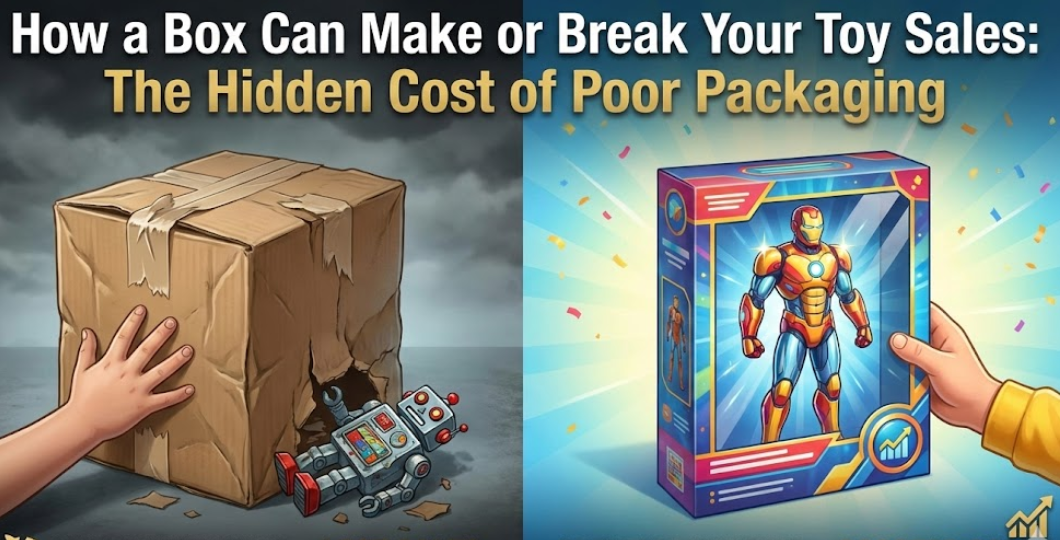
Standing in the toy aisle’s chaos, my niece did not reach for the loudest box. She chose the one that felt special. A sturdy box with a clean finish. That moment reveals everything. In the toy business, your packaging is not just a box. It’s your brand’s first handshake. Flimsy, confusing packaging whispers the wrong story, hurting sales before play even begins. It’s not a cost, It’s your silent salesperson. Miss that connection and you miss the sale. In a crowded market, the right packaging makes your product the one a child cannot put down.
Why Branding Consistency for Toys Is Not a Child's Play
For toys, branding consistency for toys is about more than just a logo. It's a visual and emotional language that children and parents learn to recognize and trust. Inconsistency, however, creates confusion. If your packaging design changes wildly from product line to product line, you lose that instant recognition.
The Messy Reality of Toy Packaging
Designing a toy box is a high-wire act. You are trying to thrill a five-year-old while convincing their skeptical parents. The toy packaging challenges are real and often contradictory. The box needs to be a fortress to survive shipping and store handling, but a joy for a child to open. It needs to explode with excitement to grab attention, yet be clear enough for a busy parent to understand in three seconds. Is it an interactive playset or a simple doll? The box should answer that instantly.
The worst offender? The "clamshell" is an impenetrable plastic shell sealed with welds of steel and secured by a small army of twist ties. We have all wrestled with one, scissors slipping, frustration rising. That moment of parental frustration becomes part of your brand’s memory. It’s a terrible first experience. Conversely, I have seen the magic of a box designed to be part of the play. A simple spaceship box that becomes a hangar or a doll box that unfolds into a little backdrop scene. That’s not packaging; that’s the first five minutes of play and it’s priceless.
Why Your Toy Brand Should Look Like a Family
Think of the most iconic toy brands. Whether it’s the primary-colored burst of LEGO or the distinctive pink of Barbie, you can spot them from across the store. That’s the power of branding consistency for toys. It's a visual shorthand that tells a child, “This is from the same world as that other toy you love.”
When your branding is all over the map, a cartoon font here, a photographic style there, clashing color schemes everywhere. You look like a garage sale, not a trusted brand. You force the customer to re-learn who you are with every product. Consistency builds a home for your brand in a child’s mind. A new toy that fits the "family look" feels like a familiar friend, making the purchase decision easy and safe for parents. It’s the difference between being a one-hit-wonder and building a legacy.
The Silent Salesperson on the Shelf
Let’s talk numbers. The impact of packaging on toy sales is not theoretical; it’s visceral. In those critical three seconds a parent’s eyes scan the shelf, your box is your entire sales pitch. A cheap, flimsy box with blurry graphics screams, “The toy inside is probably cheap and blurry, too.” It erodes trust. A sturdy, well-designed box with clean lines and clever copy signals quality and care. It justifies a higher price point. This is especially true for collectors. A standard action figure in a blister card is a toy. The same figure in exquisite, museum-style custom action figure packaging with original artwork and a descriptive story on the back is a collectible. The perceived value and the price tag can double or triple. The package doesn’t just hold the product; it defines its entire market position.
How to Win the Battle for Attention
So, how do you cut through the visual noise? Winning at competitive toy branding means being strategic, not just loud.
First, solve a problem. Be the brand with easy-open, frustration-free packaging. That alone will earn you a loyal following of grateful parents.
Second, design for the "unboxing." Make the reveal an event. Layer in tissue, use a ribbon pull-tab or have the toy posed in a dynamic scene. Create a moment worth sharing.
Third, use every square inch. The back of the box is not for legal disclaimers (well, not just for that). Use it to show the toy in action, suggest play patterns or tell a short story. Show the potential, don’t just list the features.
Most importantly, be authentic. If your brand is about organic, Montessori-style play, your packaging should use natural textures, muted colors and simple typography. Don’t try to look like the flashy electronic toy next to you. Your toy market differentiation is your greatest strength. Own it completely.
From "Oops" to "Wow": Turning Your Packaging Around
Fixing this starts with brutal honesty. Go to a store, find your product and watch people. Do they pick it up? How long do they look at it? What do they say? Then, take it home and try to open it yourself. Is it a pleasure or a chore?
Next, get your team together and lay out every product line you have. Does it look like a cohesive collection? If not, it’s time for a brand “family meeting.” Establish non-negotiable rules: our logo always goes here, we use these three fonts, this is our color palette for preschool lines, this is for our tech toys. Create a visual bible.
Finally, invest where it counts. For your flagship line or collector series, don’t settle for off-the-shelf solutions. Commissioning custom action figure packaging or a unique box structure for a premium playset isn’t an expense. It’s a statement. It tells the world and your customer. Exactly what you think your product is worth.
To Conclude: Your Box Is Part of the Toy
In the end, we are in the business of wonder. We are selling the promise of adventure, the spark of creativity, the joy of play. That magic should not start after the box is in the recycling bin. It should start the moment a child’s eyes light up on the shelf. Poor packaging and inconsistent branding create doubt, devalue your hard work and hand the sale to the competitor whose box simply feels more special.
So, look at your packaging not as a cost of doing business, but as the opening chapter of your toy’s story. Make it sturdy. Make it beautiful. Make it a joy to open. Because in a world full of forgettable stuff, the things that feel special. From the very first touch are the things that get loved, played with and most importantly, bought.


