
Coffee Beans & Brewing: Expert Tips for a Perfect Cup Every Time

For many, coffee isn’t just a drink — it’s a ritual, a morning necessity, and a comforting companion throughout the day. To truly enjoy a perfect cup, understanding the nuances of Coffee Beans & Brewing methods is essential. Whether you’re a seasoned coffee lover or a casual drinker, mastering the selection of beans and brewing techniques can elevate your coffee experience to new heights. In this guide, we will share expert tips on choosing the right Coffee Beans & Brewing methods to ensure that every cup is brewed to perfection.
The Importance of Quality Coffee Beans
The foundation of a perfect cup of coffee begins with the beans. Coffee beans are the heart of the drink, and the quality, freshness, and type of bean you choose will directly influence the taste. Let’s delve into the different aspects of selecting the best coffee beans for your brew.
Types of Coffee Beans
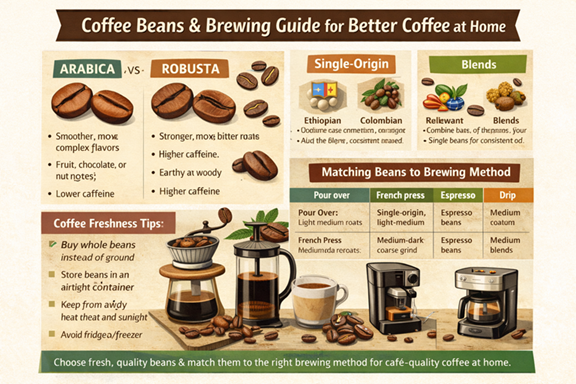
There are two primary types of coffee beans that dominate the market: Arabica and Robusta. Each has its own distinct flavor profile and characteristics.
- Arabica Beans: Arabica beans are known for their smooth, mild flavor and are typically less bitter than Robusta beans. They tend to have a higher acidity, which provides a brighter, more complex flavor profile. Arabica is the more popular choice for specialty coffee, often found in cafes and high-end coffee shops.
- Robusta Beans: Robusta beans have a stronger, more bitter taste with a higher caffeine content than Arabica. They are typically used in espresso blends to provide a fuller, bolder flavor. Robusta is also more affordable than Arabica and is commonly used in instant coffee.
While both types of beans have their place in the world of coffee, the choice between Arabica and Robusta ultimately depends on your taste preferences. If you prefer a smooth, mild coffee, Arabica is the way to go. However, if you enjoy a more robust, intense flavor, Robusta might be a better fit.
Coffee Bean Origin
The origin of coffee beans plays a significant role in the flavor profile of your coffee. Beans grown in different regions of the world have unique characteristics influenced by the local climate, soil, and elevation. Here are some popular coffee-growing regions:
- Ethiopia: Known for producing beans with fruity, floral, and bright notes, Ethiopian coffee is often considered the birthplace of coffee. The beans are usually light to medium roast, preserving their natural, complex flavors.
- Colombia: Colombian coffee beans are often medium-bodied with a well-balanced flavor profile. They are known for their mild acidity, nutty undertones, and sweet, caramel-like finish.
- Brazil: As one of the largest coffee producers in the world, Brazil is known for its nutty, chocolatey flavors. Brazilian coffee is often used in blends and is ideal for those who enjoy a smooth, mild cup.
- Kenya: Kenyan coffee beans are famous for their bright acidity and bold, fruity flavors. The beans often have citrus, berry, and wine-like notes, making them a favorite for those who prefer a more vibrant cup.
By selecting beans from specific regions, you can enjoy a coffee experience that reflects the unique flavors of the area. Don’t hesitate to experiment with beans from different countries to discover what suits your taste best.
Freshness of Coffee Beans
Freshness is a key factor in achieving the best-tasting coffee. Coffee beans lose their flavor quickly after being roasted, so it’s essential to buy beans that are freshly roasted. Always look for the roast date on the packaging and try to purchase beans that have been roasted within the past two weeks.
To maintain freshness, store your coffee beans in an airtight container away from light, heat, and moisture. Grinding your beans just before brewing will also help preserve their natural oils and flavors, ensuring a more aromatic and flavorful cup of coffee.
Brewing Methods: Choosing the Right Technique
Once you’ve selected the best coffee beans, the next step is brewing. There are many brewing methods to choose from, and each one brings out different qualities in your coffee. The right brewing technique can help you unlock the full potential of your coffee beans. Here’s an overview of the most popular brewing methods and expert tips on how to get the perfect cup every time.
1. Drip Coffee Maker
The drip coffee maker is one of the most common and convenient brewing methods. It works by pouring hot water over ground coffee, which then drips through a filter and into a carafe. This method produces a clean, smooth cup of coffee, making it ideal for those who enjoy a well-balanced, moderate-strength brew.
- Expert Tip: Use medium-ground coffee for the drip coffee maker to ensure optimal extraction. Experiment with the coffee-to-water ratio to adjust the strength of your brew. A general guideline is to use one to two tablespoons of ground coffee for every six ounces of water.
2. French Press
The French press is a popular manual brewing method that produces a rich, full-bodied cup of coffee. In this method, coarsely ground coffee is steeped in hot water for several minutes before being pressed through a mesh filter.
- Expert Tip: Use coarsely ground coffee to prevent over-extraction and ensure a smooth, balanced brew. Let the coffee steep for four to five minutes before pressing down the plunger. If you prefer a stronger cup, allow the coffee to steep for an extra minute.
3. Espresso
Espresso is the base for many coffee drinks, such as lattes, cappuccinos, and Americanos. It is made by forcing hot water through finely-ground coffee at high pressure, resulting in a small, concentrated shot of coffee with a rich crema on top.
- Expert Tip: Use a fine grind for espresso and make sure your espresso machine is properly calibrated to ensure consistent pressure. The key to a perfect espresso is even tamping and a consistent grind. Aim for a brewing time of around 25 to 30 seconds for a balanced shot.
4. Pour-Over
Pour-over brewing is a manual method that gives you complete control over the brewing process. In this technique, hot water is poured over ground coffee in a filter, allowing it to drip through into a carafe or mug.
- Expert Tip: Use freshly ground, medium-fine coffee for pour-over brewing. Pour the water in a slow, circular motion to evenly saturate the grounds. Start by pouring just enough water to wet the grounds and allow them to bloom, then continue pouring in a steady stream to complete the brew.
5. AeroPress
The AeroPress is a portable brewing device that uses air pressure to force hot water through coffee grounds, resulting in a rich, full-bodied cup with a smooth finish. It’s ideal for making single servings of coffee quickly and easily.
- Expert Tip: Use medium to medium-fine ground coffee for AeroPress brewing. Adjust the coffee-to-water ratio to suit your taste, and experiment with different brewing times for the perfect cup. The AeroPress is also great for making iced coffee or espresso-style drinks.
6. Cold Brew
Cold brew coffee is made by steeping coarsely ground coffee in cold water for 12 to 24 hours, resulting in a smooth, mellow brew with low acidity. It’s perfect for those who enjoy a refreshing, slightly sweet coffee.
- Expert Tip: Use coarsely ground coffee and steep it in the refrigerator for 12 to 24 hours. Once brewed, strain the coffee through a fine mesh or cheesecloth to remove the grounds. Cold brew concentrate can be diluted with water or milk to your preferred strength.
Achieving the Perfect Cup Every Time
Achieving the perfect cup of coffee isn’t just about the beans and brewing methods; it’s also about paying attention to the finer details. Here are some additional tips to help you brew the perfect cup every time:
- Use Clean, Filtered Water: The quality of the water you use plays a crucial role in the flavor of your coffee. If your tap water has a strong taste or odor, it can affect the flavor of the coffee. Consider using filtered or bottled water for the best results.
- Grind Your Beans Fresh: Grinding your coffee beans just before brewing helps preserve the natural oils and flavors, resulting in a more aromatic and flavorful cup. Use a burr grinder for a consistent grind size, which is essential for even extraction.
- Experiment with Ratios: The coffee-to-water ratio is a personal preference, and slight adjustments can make a big difference in the strength and flavor of your brew. Start with a standard ratio and then tweak it based on your taste preferences.
Conclusion
Coffee Beans & Brewing methods are essential components in creating the perfect cup of coffee. By choosing high-quality beans, experimenting with different brewing techniques, and paying attention to the finer details, you can ensure that every cup of coffee is brewed to perfection. Whether you prefer a rich, full-bodied French press or a bright, nuanced pour-over, there’s a brewing method and bean type for every taste. With these expert tips, you’ll be able to enjoy a perfect cup of coffee every time, no matter how you brew it.


