
How Aluminum Barge Builders Improve Operational Efficiency

In today’s marine transport industry, efficiency is no longer optional. Rising fuel prices, tighter delivery schedules, and increasing environmental pressure have pushed vessel operators to look for smarter solutions. One of the most effective changes has been the growing role of aluminum barge builders in modern marine operations. Aluminum barges are now widely recognized for their ability to reduce operating costs while improving performance and reliability.
Companies such as VU Marine focus on advanced aluminum construction techniques that help operators achieve better results without increasing operational complexity.
Lightweight Design and Its Impact on Fuel Efficiency
The most important factor behind aluminum barges is weight reduction. Aluminum is significantly lighter than steel, yet strong enough for demanding marine applications. On average, aluminum structures are around 60 percent lighter than steel equivalents.
This reduction in weight has a direct impact on fuel consumption. Marine performance data shows that a 10 percent reduction in vessel weight can lead to a 5 to 7 percent decrease in fuel usage. In real-world operations, aluminum barges often achieve weight savings of 30 to 40 percent, resulting in fuel savings that can exceed 15 percent annually.
Lower fuel consumption also improves voyage planning. Operators can cover longer distances with the same fuel capacity or reduce refueling frequency, both of which improve operational efficiency.
Increased Payload Capacity Without Larger Vessels
Because aluminum barges are lighter, they allow more cargo to be carried within the same draft limits. This advantage is especially important for inland waterways and shallow ports where draft restrictions limit loading capacity.
Industry studies indicate that aluminum barges can carry 10 to 20 percent more usable payload compared to steel barges of similar size. This means fewer trips are required to transport the same volume of cargo.
Fewer trips lead to:
-
Reduced fuel use
-
Lower crew and labor costs
-
Less engine wear
Over a full operating year, increased payload efficiency can improve fleet productivity by up to 15 percent, depending on route length and cargo type.
Improved Speed and Power Efficiency
Lighter vessels require less power to move through water. Aluminum barges can either travel faster using the same engines or maintain standard speeds with reduced engine load.
Performance testing shows that aluminum barges can achieve 8 to 12 percent higher speeds with identical propulsion systems. For operators who prioritize fuel savings, engines can be run at lower output while still maintaining schedule requirements.
This efficiency is particularly valuable in time-sensitive operations such as construction logistics, offshore supply, and port services.
Lower Maintenance and Reduced Downtime
Maintenance is a major operational expense for barge operators. Steel barges require continuous protection against corrosion, including coatings, blasting, and frequent inspections.
Aluminum naturally resists corrosion, especially in freshwater and controlled marine environments. As a result, maintenance costs for aluminum barges are typically 20 to 30 percent lower over the vessel’s lifecycle.
Less maintenance also means reduced downtime. Barges spend more time in service and less time in dry dock. Operational availability can improve by 10 percent or more, which directly affects revenue generation.
Long-Term Durability and Asset Value
Aluminum barges are known for their long service life. With proper design and fabrication, aluminum vessels can remain operational for 30 to 40 years, compared to 20 to 25 years for many steel barges.
This longer lifespan improves long-term planning and lowers replacement frequency. In addition, aluminum vessels retain higher resale value. Market data suggests aluminum barges often command 15 to 25 percent higher resale prices than comparable steel vessels.
This makes aluminum barges not only operationally efficient but also financially attractive as long-term assets.
Environmental and Regulatory Advantages
Operational efficiency today also includes environmental performance. Lighter vessels burn less fuel, which directly reduces emissions.
Studies show that aluminum barges can reduce carbon dioxide emissions by 10 to 20 percent per voyage. This helps operators comply with environmental regulations and corporate sustainability goals.
Aluminum is also fully recyclable. Recycling aluminum requires about 95 percent less energy than producing new aluminum from raw materials. This makes aluminum barges more sustainable across their entire lifecycle.
Role of Modern Aluminium Barge Manufacturers
Modern aluminium barge manufacturers focus heavily on design optimization. Aluminum allows greater flexibility in hull shaping, deck layout, and structural reinforcement.
Builders can tailor barges for:
-
Shallow water operations
-
Heavy equipment transport
-
Modular deck systems
Custom-built aluminum barges eliminate unnecessary weight and unused capacity. This results in vessels that perform efficiently in real operating conditions rather than just on paper.
Regional Expertise and Local Operating Conditions
In regions with demanding climates and busy waterways, vessel efficiency becomes even more critical. Experienced barge builders in UAE understand the importance of designing barges that perform reliably in high temperatures, saline waters, and heavy commercial use.
Aluminum’s resistance to corrosion and heat-related expansion makes it suitable for such environments. Proper fabrication techniques further enhance durability and efficiency under continuous operation.
Faster Construction and Lower Total Ownership Costs
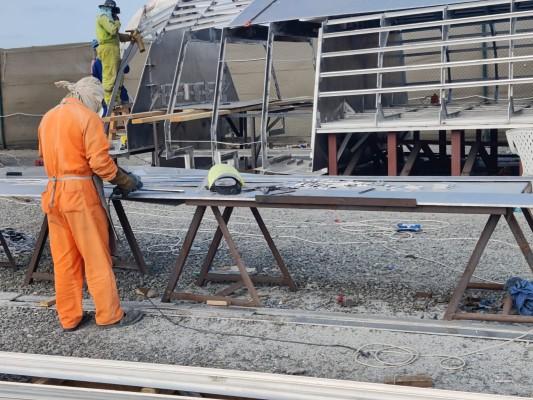
Aluminum fabrication allows for faster construction due to prefabricated sections and precision welding methods. Build times are often 15 to 25 percent shorter than traditional steel construction.
Although aluminum may have higher initial material costs, lifecycle cost analysis often shows overall savings. When fuel, maintenance, downtime, and resale value are considered, aluminum barges can deliver 10 to 18 percent lower total ownership costs over a 25-year period.
A forward-looking barge building company focuses on these long-term efficiencies rather than only upfront expenses.
Safety and Crew Efficiency
Operational efficiency also depends on safety and ease of handling. Aluminum barges offer improved maneuverability due to reduced mass and better balance.
Lower vibration levels reduce crew fatigue, which can improve productivity and reduce operational errors. Safer vessels experience fewer incidents, resulting in fewer delays and lower repair costs.
Conclusion
Aluminum barges have become a practical solution for operators seeking higher efficiency, lower costs, and better long-term performance. Through lightweight construction, improved fuel economy, increased payload capacity, and reduced maintenance, aluminum barge builders are reshaping modern marine operations.
With advanced design approaches and efficient fabrication methods, companies like VU Marine demonstrate how aluminum construction can support reliable, cost-effective, and sustainable marine transport.
As operational demands continue to grow, aluminum barges are no longer just an alternative. They are becoming a smart standard for efficient marine logistics.


