
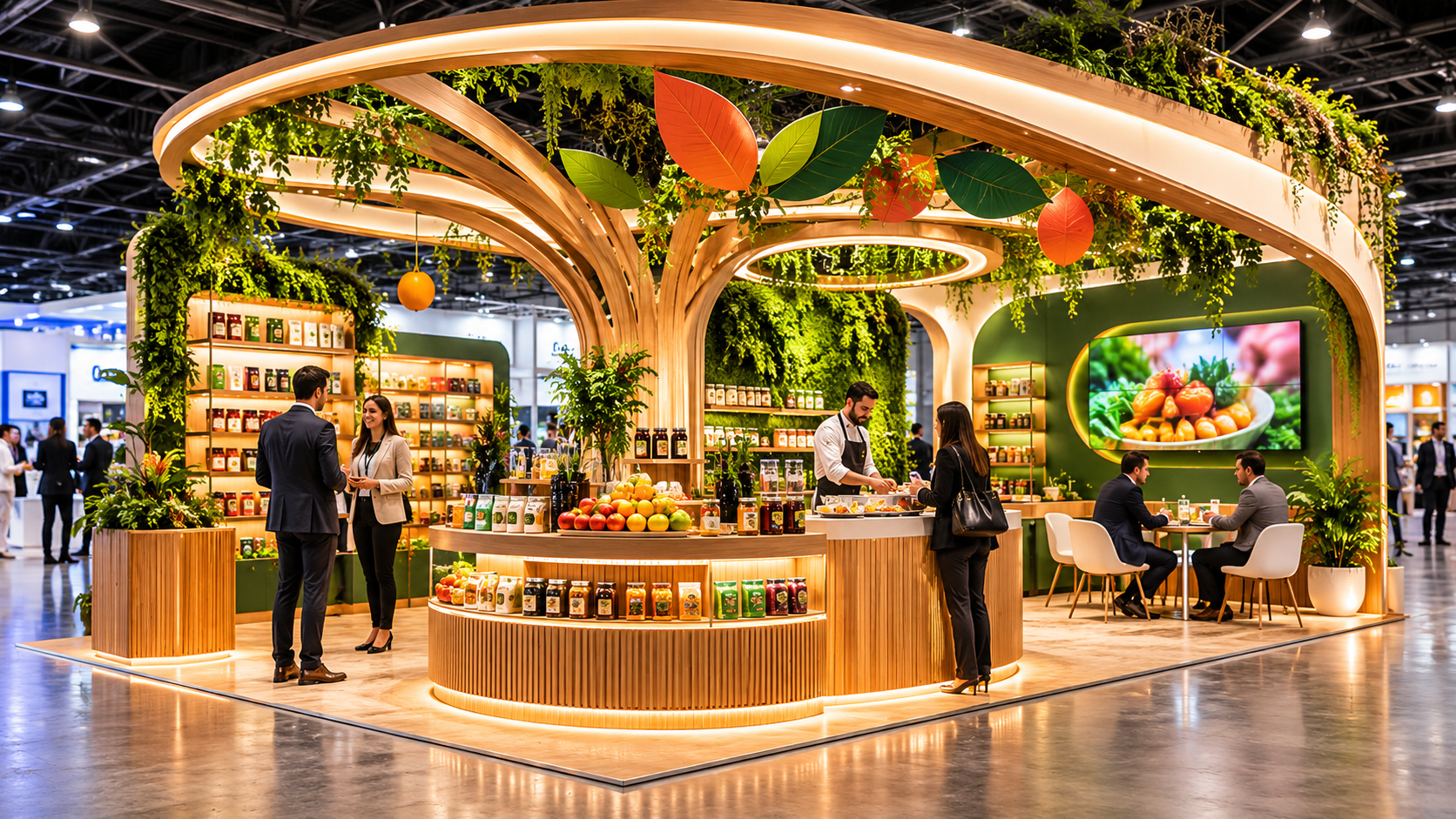
Food Industry Trade Show Booth Design Trends That Will Shape Future Exhibitions

The food and beverage industry continues to evolve as businesses introduce new products, adopt innovative technologies, and respond to changing consumer expectations. Trade shows have become important platforms for food manufacturers, distributors, suppliers, and retailers to discover opportunities and develop valuable business relationships. However, as exhibition environments become increasingly competitive, brands need more creative ways to attract attention and communicate their value. Modern Food industry trade show booth design is moving beyond traditional product displays by incorporating interactive experiences, sustainable materials, digital technology, and customer-focused layouts. Understanding these emerging trends can help businesses create engaging exhibition spaces that improve brand visibility and support their marketing objectives.
1. Minimalist Booth Designs With Strong Visual Impact
Minimalist exhibition design is becoming an attractive option for businesses that want to communicate their brand message clearly.
Instead of filling every available space with promotional graphics and product displays, companies are focusing on clean layouts, simple colour combinations, and carefully selected visual elements.
A minimalist booth can feature a prominent company logo, attractive product shelves, organized messaging, and comfortable visitor areas.
This approach helps visitors understand the brand without being distracted by excessive decoration.
For food businesses, a clean presentation can also make product packaging and ingredient visuals more noticeable.
2. Sustainable and Reusable Exhibition Structures
Sustainability is an increasingly important consideration for businesses across the food industry.
Companies are exploring exhibition materials that can be reused, recycled, or sourced responsibly.
Modular booth structures, reusable display units, recyclable graphics, and durable furniture can help reduce unnecessary exhibition waste.
These solutions can also be practical for businesses participating in several trade shows throughout the year.
Instead of constructing an entirely new booth for every event, companies can adapt existing structures according to different floor spaces and branding requirements.
Sustainable design should consider material production, transportation, storage, and end-of-life disposal.
3. Interactive Digital Product Displays
Digital technology is changing the way brands present their products at exhibitions.
Touchscreen catalogues, digital product presentations, and interactive displays allow visitors to explore information at their own pace.
A food manufacturer can use digital screens to explain ingredients, manufacturing processes, packaging formats, and product applications.
Distributors and retailers can also access detailed product information without requiring printed catalogues for every interaction.
Digital displays should be easy to navigate and provide information that genuinely supports the visitor experience.
4. Immersive Product Experiences
Visitors increasingly expect exhibition booths to offer more than static displays.
Food businesses can create immersive experiences through product demonstrations, interactive presentations, themed environments, and tasting activities.
For example, a beverage company could create a dedicated tasting experience that introduces visitors to different product flavours.
A packaged food manufacturer might use visual storytelling to explain how its products are sourced, processed, and packaged.
These experiences encourage visitors to spend more time at the booth and create stronger connections with the brand.
5. Live Cooking and Product Demonstration Areas
Live demonstrations are particularly valuable for food and beverage exhibitors.
Companies can arrange cooking sessions, recipe demonstrations, preparation activities, and product usage presentations.
These activities allow visitors to understand how products can be incorporated into different applications.
For example, a sauce manufacturer could demonstrate its products in multiple recipes, while a food ingredient supplier could showcase how its ingredients perform in commercial food preparation.
Dedicated demonstration counters should include suitable equipment, storage, ventilation, and cleaning facilities.
Businesses must also consider venue permissions and applicable food safety requirements.
6. Attractive Product Sampling Stations
Product sampling remains an important feature of food industry exhibitions.
A dedicated tasting station allows visitors to experience products directly and provides brands with opportunities to introduce new flavours and product varieties.
Modern sampling counters are being designed with greater attention to accessibility, hygiene, organization, and visual presentation.
Businesses should provide sufficient serving space and ensure that sampling activities do not obstruct visitor movement.
Clear ingredient information, allergen details, and proper food-handling arrangements can further improve the experience.
7. Flexible Modular Booth Designs
Modular exhibition structures provide flexibility for businesses with changing exhibition requirements.
A modular system can be adapted to different booth sizes, layouts, and event specifications.
Companies can reuse display walls, shelving units, counters, and signage across multiple exhibitions.
This approach can help manage long-term exhibition costs while maintaining a consistent brand identity.
Modular designs are especially useful for food manufacturers and suppliers that participate in regional and international trade shows.
8. Creative Lighting and Illuminated Displays
Lighting is becoming an important design feature in modern exhibition environments.
Illuminated shelves, backlit graphics, focused spotlights, and integrated lighting systems can highlight products and improve brand visibility.
Food brands can use lighting to draw attention to new launches, premium collections, and important promotional messages.
However, lighting should be selected carefully to maintain accurate product colours and create a comfortable environment.
A balanced lighting arrangement can make even a relatively simple exhibition stand look professional and attractive.
9. Natural Textures and Organic Design Elements
Brands focusing on organic food, natural ingredients, and sustainable sourcing can use nature-inspired design elements.
Wooden finishes, natural textures, green colour palettes, and ingredient-focused graphics can support their positioning.
These materials can help create a welcoming atmosphere while communicating the company's product philosophy.
However, businesses should ensure that decorative elements do not interfere with hygiene requirements, product storage, or booth functionality.
The overall design should connect the brand's visual identity with its actual business values.
10. Smart Lead Collection and Visitor Engagement Tools
Technology is also improving the way exhibitors collect and manage business enquiries.
Digital lead capture tools allow companies to record visitor details, categorize enquiries, and organize follow-up activities.
QR codes can direct visitors to online catalogues, product specifications, company profiles, and enquiry forms.
Sales representatives can also use digital systems to record visitor interests and identify potential business opportunities.
These tools make lead management more organized and reduce dependence on manual paperwork.
11. Dedicated Spaces for B2B Networking
Food industry exhibitions attract professional buyers who often need more than a quick product introduction.
Retail buyers, distributors, importers, and wholesalers may want to discuss pricing, supply arrangements, packaging options, and distribution opportunities.
Modern booth layouts increasingly include dedicated meeting spaces for these conversations.
Comfortable seating, presentation screens, product catalogues, and well-organized tables can make business discussions more convenient.
A good meeting area should remain accessible without interfering with the main exhibition experience.
12. Personalized Product Presentation
Personalization can help businesses create more relevant interactions with different visitor groups.
For example, a manufacturer may present different product ranges to retail buyers, restaurant operators, distributors, and food service companies.
Digital catalogues can make it easier to explore specific categories based on visitor interests.
Companies can also organize product displays according to market segments or applications.
This approach helps visitors find relevant information quickly and allows sales teams to communicate more effectively.
13. Larger Product Graphics and Creative Signage
Large-scale graphics and distinctive signage can improve visibility across busy exhibition halls.
Food brands can use oversized product images, prominent logos, illuminated signs, and attractive promotional messages.
The most important information should be visible from a distance.
However, businesses should avoid overcrowding the booth with unnecessary text and graphics.
Clear signage and strong visual hierarchy make it easier for visitors to identify the company and understand its product offerings.
14. Technology-Enabled Product Storytelling
Modern exhibition booths increasingly use technology to communicate brand stories.
Videos, animated presentations, digital maps, and interactive screens can explain manufacturing facilities, ingredient sourcing, quality standards, and distribution capabilities.
For example, an international food supplier could use a digital presentation to explain its sourcing network and production operations.
These presentations help visitors understand the company's capabilities beyond the products displayed on shelves.
Digital storytelling is most effective when it provides useful information rather than functioning only as background entertainment.
15. Flexible Storage and Functional Booth Layouts
An attractive booth must also support the operational requirements of the exhibiting company.
Food businesses often need storage for additional products, packaging materials, serving supplies, promotional items, and equipment.
Modern layouts increasingly integrate storage into display counters, cabinets, and modular structures.
This helps keep the exhibition area organized and prevents unnecessary clutter.
Businesses should plan storage, electrical access, staff movement, and product handling before finalizing the design.
16. Preparing for International Food Industry Exhibitions
International exhibitions provide opportunities to connect with buyers from different markets.
Companies participating in such events should consider cultural preferences, product information requirements, language needs, and international business expectations.
A booth should communicate the company's offerings clearly to visitors who may not be familiar with its domestic market.
Multilingual product information, clear graphics, and digital catalogues can make communication easier.
Businesses should also ensure that their product samples, promotional materials, and exhibition activities comply with applicable event and regulatory requirements.
17. Food Industry Trade Show Booth Design Trends for the Americas Food & Beverage Show 2026
Businesses preparing for the Americas Food & Beverage Show 2026 should consider how modern exhibition trends can support their objectives.
The event can provide opportunities to showcase food products, introduce new offerings, connect with distributors, and develop relationships with industry professionals.
Companies should focus on an exhibition concept that combines attractive product displays, clear branding, practical sampling facilities, and dedicated meeting areas.
Digital technology and interactive experiences can further improve visitor engagement.
Before finalizing the booth, exhibitors should review the event's technical requirements, available floor space, installation schedules, and relevant venue regulations.
Early planning makes it easier to coordinate the design, fabrication, and installation process.
18. Choosing a Booth Builder Who Understands Modern Trends
Bringing modern exhibition ideas to life requires the right design and construction partner.
Businesses should compare booth builders based on their creative portfolios, fabrication capabilities, industry experience, and understanding of current exhibition requirements.
A suitable partner should be able to recommend practical materials, develop functional layouts, and coordinate installation requirements.
Companies should also discuss project budgets, timelines, transportation, storage, and dismantling services.
Reviewing previous projects can help businesses understand whether a booth builder has the experience needed to deliver their preferred exhibition concept.
19. Measuring the Effectiveness of Modern Booth Features
Adopting new design trends should contribute to measurable business outcomes.
Companies can evaluate visitor engagement, product sampling participation, qualified enquiries, business meetings, and lead conversion opportunities.
They can also identify which digital displays, product demonstrations, and interactive activities generated the most interest.
Collecting this information helps businesses understand which design elements are worth incorporating into future exhibitions.
An effective booth should combine visual creativity with practical marketing results.
20. Preparing for the Future of Food Industry Exhibitions
Future exhibition environments are likely to place greater emphasis on visitor experiences, flexible structures, digital communication, and responsible material selection.
Food businesses should remain open to new ideas while maintaining a clear understanding of their target audiences and marketing goals.
Not every trend will be suitable for every company. A small food manufacturer may benefit more from a practical modular booth than an expensive immersive installation.
The best approach is to select design features that support the company's products, brand identity, and business objectives.
Conclusion
Modern exhibition design is changing the way food and beverage companies present their products and connect with potential buyers. Sustainable materials, interactive technology, modular structures, creative lighting, live demonstrations, and personalized product experiences are shaping new possibilities for food industry exhibitions.
Businesses that combine these trends with clear branding and practical planning can create more engaging exhibition environments. Selecting an experienced booth-building partner is equally important for turning design concepts into functional spaces. If your company is preparing for the Americas Food & Beverage Show 2026, explore Food industry trade show booth design opportunities to compare professional booth builders and create an exhibition presence that reflects your brand, attracts industry buyers, and supports long-term business growth.


