
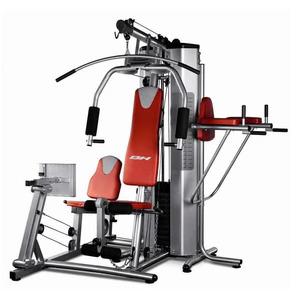
Multi Station Gyms in the UAE: How to Build a Complete Workout Around One Setup

Creating a home gym often starts with one simple goal: having enough equipment to train effectively without turning an entire room into a fitness centre.
The challenge comes when your workout needs expand. You may want to train your chest, back, arms, and legs, but buying a separate machine for every exercise can quickly become expensive and take up too much space.
A multi-station gym offers a way to bring several resistance-training functions together in one integrated setup.
For homeowners and fitness enthusiasts in Dubai, Abu Dhabi, Sharjah, Ajman, Ras Al Khaimah, Fujairah, and across the UAE, the right system can help organise strength training around a single piece of equipment. However, choosing wisely means understanding how the stations work together, what exercises they support, and whether the machine matches your long-term goals.
What Can You Train on a Multi Station Gym?
A multi-station gym combines several exercise functions into one structure. The exact configuration depends on the model, but some machines may include stations for:
-
Chest presses
-
Lat pulldowns
-
Seated rows
-
Leg extensions
-
Leg curls
-
Cable-based arm exercises
-
Shoulder movements
-
Abdominal exercises
Some models use dedicated exercise arms and padded supports, while others rely on cables and pulleys to provide different movement options.
Before purchasing, check the manufacturer's exercise guide. Two machines may both be described as multi-station gyms but offer very different training possibilities.
Think About Your Weekly Training Plan First
Instead of choosing equipment based on the number of stations, consider how you intend to train throughout the week.
For example, your routine might include upper-body sessions, lower-body exercises, and a full-body workout.
A machine with suitable pressing, pulling, and leg-training functions may support this structure. Another model might focus mainly on upper-body exercises, making it less suitable if you want a balanced routine.
Write down your main exercises before comparing machines. This simple step helps you avoid paying for functions that do not contribute much to your training.
Build a Balanced Upper-Body Routine
Many multi-station gyms are particularly useful for combining pushing and pulling movements.
Depending on the available stations, your workout might include a chest press, lat pulldown, seated row, and triceps exercise.
These movements train different parts of the upper body and can be organised into a straightforward session.
However, the machine's design determines the movement options. Do not assume that every model includes a suitable chest press or rowing station.
Don't Overlook Lower-Body Training
If you want a more complete home workout, consider the machine's lower-body capabilities.
Some systems include leg-extension and leg-curl stations, while others offer different leg-training arrangements.
These exercises can complement movements such as squats, lunges, and hip hinges performed with free weights or body weight.
If lower-body strength is a priority, check the available stations carefully rather than selecting a machine based mainly on its upper-body features.
Understand How the Stations Share Resistance
One important specification is the resistance arrangement.
Many multi-station gyms use a shared weight stack, while others use separate stacks or plate-loaded mechanisms.
A shared stack can make the machine more compact and reduce the need for multiple collections of weights. However, the way resistance is distributed depends on the cable routing and station design.
Some machines may allow users to switch between exercises quickly, while others require specific adjustments.
Check the product documentation to understand how the resistance works at each station.
Is a Larger Weight Stack Always Better?
Not necessarily.
The useful resistance range depends on your strength level, exercise selection, and the machine's mechanical design.
Look at the starting resistance, adjustment increments, maximum stack capacity, and effective resistance delivered during each movement.
A larger advertised weight does not automatically mean a machine will feel heavier at the handle, because pulley ratios and lever systems can change the resistance experienced by the user.
Choose a system that provides manageable starting loads and enough room for progression.
Consider How Quickly You Can Change Exercises
One benefit of an integrated gym is the ability to move between different exercises without travelling between separate machines.
However, the actual workout flow depends on how the equipment is designed.
Check whether you need to move a cable, change a pin, reposition a seat, attach a handle, or adjust a support before switching movements.
If you plan to use the machine frequently, straightforward adjustments can make workouts easier to organise.
This is especially useful when several people share the same home gym.
Make Sure the Machine Fits Different Users
A household may include users of different heights, strengths, and training experience.
The machine should provide suitable adjustment ranges for its intended exercises.
Review the seat height, backrest position, handle placement, foot supports, cable positions, and starting range of motion.
If several people will use the equipment, ask whether each person can establish a comfortable position without complicated adjustments.
A machine that suits only one user may become less useful in a shared household.
One Person at a Time or Shared Training?
The term multi-station can suggest that several people can train simultaneously, but this is not guaranteed.
Some machines are designed mainly for one user moving between stations. Others may allow independent stations to be used at the same time.
If you and another household member want to train together, verify this capability with the manufacturer.
Also consider how much clearance each station needs. Even if simultaneous use is technically possible, the layout must provide enough space for safe movement.
Measure the Complete Installation Area
Multi-station gyms can be substantial pieces of equipment.
Before ordering, measure:
-
Overall width
-
Overall depth
-
Total height
-
Space required to access each station
-
Clearance for moving parts
-
Space for changing settings
-
Room needed for additional equipment
The listed footprint is only the starting point. You also need enough room to enter the machine, move between stations, and exercise without hitting walls or nearby objects.
Plan for Ceiling Height and Delivery Access
Ceiling height is particularly important for machines with tall frames or overhead pulleys.
Measure the room before buying and check the manufacturer's installation requirements.
You should also measure the route from the entrance to the final installation location. Doorways, corridors, lifts, and staircases can make delivery difficult even when the machine fits comfortably inside the gym room.
For apartments in Dubai and other UAE cities, confirm building access arrangements and delivery restrictions before placing an order.
Multi Station Gyms for Apartments
A multi-station gym can work in a larger apartment or dedicated fitness room, but it should not make the rest of the space difficult to use.
Think about where you will place the machine, how you will store accessories, and whether other household activities need access to the same room.
Noise also deserves attention. Weight stacks and moving components may produce sound during use, so follow the manufacturer's operating instructions and avoid uncontrolled weight movement.
Appropriate flooring may help protect the surface beneath the machine during normal use.
Multi Station Gyms for Villas
A villa or dedicated workout room may offer more flexibility for a larger setup.
You could combine the machine with dumbbells, an adjustable bench, kettlebells, a barbell, or cardio equipment.
The goal should be a practical layout rather than filling every available corner.
Keep clear walkways and leave enough space to handle weights, adjust the equipment, and move safely between exercises.
UAE Climate and Equipment Care
If your gym is located in a garage or another non-air-conditioned space, consider the effects of heat, dust, humidity, and direct sunlight.
These conditions can affect upholstery, exposed metal surfaces, cables, and moving components over time.
Where possible, install the machine in a protected indoor environment. Clean it regularly, inspect metal parts for corrosion, and follow the manufacturer's care recommendations.
Routine maintenance is especially important for equipment used by several people.
Combine Machines With Free Weights
A multi-station gym does not have to provide every exercise in your programme.
You can use the machine for its available stations and supplement your routine with dumbbells, kettlebells, or other suitable equipment.
For example, you might use the machine for pulldowns, rows, and chest presses while using dumbbells for lunges, curls, or additional pressing movements.
This can provide more flexibility without requiring another large machine for every exercise.
What Beginners Should Look For
Beginners should prioritise clear instructions, manageable starting resistance, comfortable positioning, and straightforward adjustments.
A machine with many stations may appear attractive, but learning how to use every function correctly takes time.
Start with a few appropriate exercises and focus on controlled movement. Increase resistance gradually as your technique and strength develop.
If you are unsure how to set up a station or perform an exercise, seek guidance from a qualified fitness professional.
What Experienced Lifters Should Consider
Experienced users may want a wider resistance range, durable construction, smooth cable operation, and enough adjustability to support their preferred exercises.
Think about whether the machine will complement your existing training rather than duplicate equipment you already own.
If your programme relies heavily on free-weight compound movements, a multi-station gym may be most useful for accessory work. If you prefer machine-based training, the available stations become even more important.
Maintenance Should Be Part of the Buying Decision
A multi-station system contains several components that need regular inspection.
Check the manufacturer's maintenance instructions for guidance on:
-
Cables and pulleys
-
Weight-stack movement
-
Adjustment pins
-
Handles and attachments
-
Bolts and frame connections
-
Upholstery and padding
-
Moving joints
Stop using a damaged cable or unstable component until it has been inspected and repaired appropriately.
Also check whether replacement parts and service support are available for the model you intend to buy.
What to Check Before Buying Online in the UAE
When comparing multi station gyms, review the complete specification sheet rather than relying only on product photographs.
Confirm the exercise stations, overall dimensions, resistance arrangement, starting and maximum loads, adjustment range, user weight limit, frame construction, installation requirements, warranty, and delivery arrangements.
Compare these details with your weekly training plan and the space available at home.
A machine that supports your most-used exercises and fits comfortably into your room is generally a more practical choice than one selected simply because it has more features.
Frequently Asked Questions
What exercises can a multi-station gym support?
Depending on its design, it may support chest presses, lat pulldowns, rows, leg exercises, arm movements, and other resistance exercises.
Is a multi-station gym suitable for home use?
Yes, if you have sufficient floor space, ceiling clearance, delivery access, and a suitable installation area.
Can beginners use a multi-station gym?
Yes. Beginners should start with manageable resistance, learn each station's settings, and focus on proper technique.
Can multiple people use one machine at the same time?
Some models allow simultaneous use of independent stations, while others are designed primarily for one user at a time. Check the manufacturer's specifications.
Should I choose a machine with a heavier weight stack?
Choose based on your current needs, future progression, and the effective resistance available at each station. Maximum stack weight alone is not enough to compare models.
How do I maintain a multi-station gym?
Follow the manufacturer's maintenance schedule, clean the equipment regularly, and inspect cables, pulleys, fasteners, adjustment mechanisms, and upholstery.
Final Thoughts
A multi-station gym can bring several resistance-training functions together in one organised setup, making it useful for people who want more exercise variety at home.
Before choosing one, consider your weekly workout plan, the exercises you use most, resistance progression, adjustment options, and whether the machine suits everyone who will train on it.
For UAE homes, remember to account for the complete installation area, ceiling height, delivery access, and environmental conditions if the equipment will be kept in a garage.
Choose a system that supports your real training needs and fits comfortably into your space. For more fitness equipment and home workout solutions, visit Athletix.


