
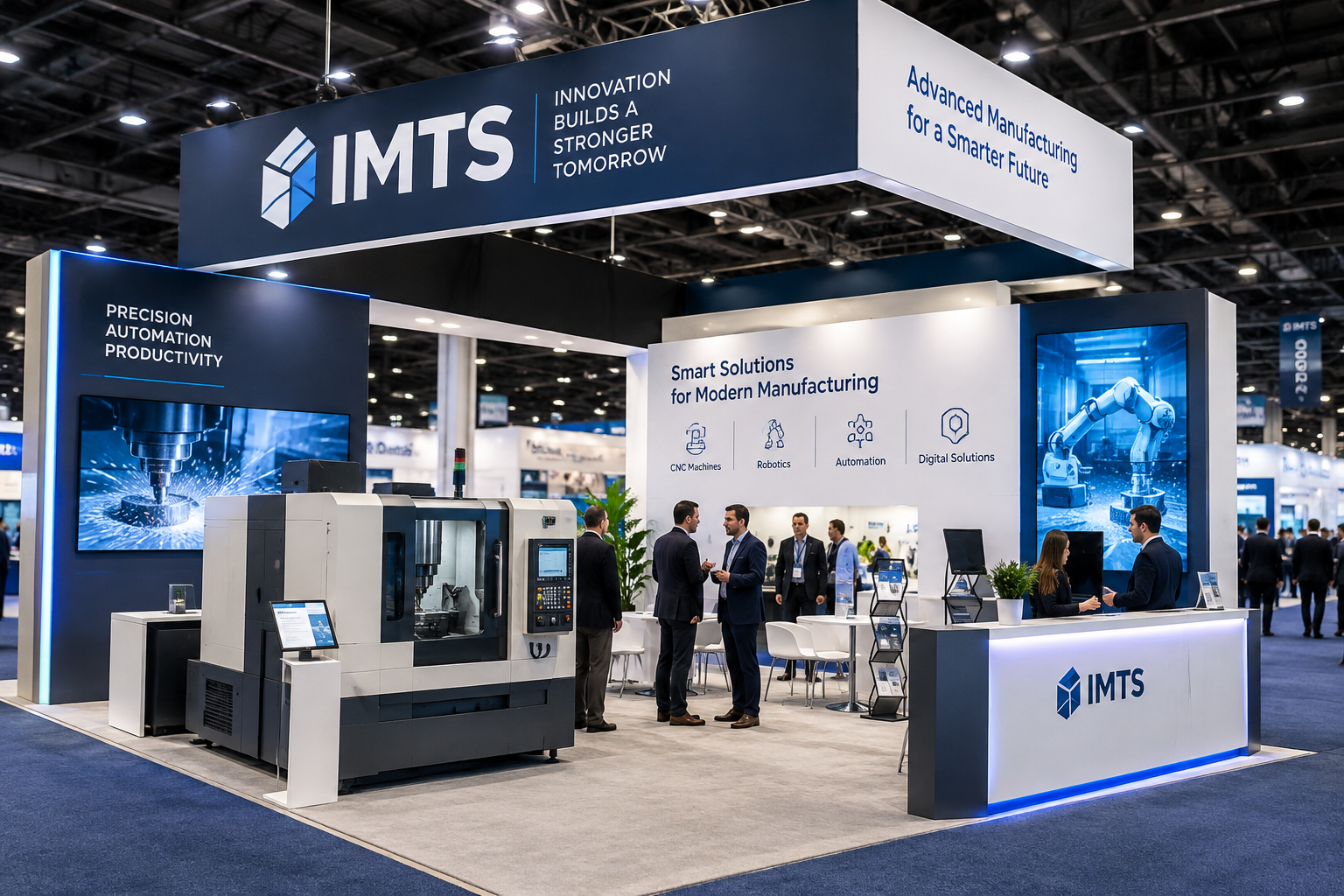
Top 10 Things to Consider When Hiring IMTS Booth Builders

Participating in the International Manufacturing Technology Show (IMTS) provides manufacturing companies, industrial equipment suppliers, automation specialists, and technology brands with an excellent opportunity to showcase their innovations and connect with industry professionals. However, creating a successful exhibition presence requires careful planning, professional design, and reliable execution. Choosing the right IMTS booth builders can help you transform your exhibition space into an engaging environment that attracts visitors, highlights your products, and supports your business objectives. Before hiring a booth construction company, it is important to evaluate several factors to ensure your investment delivers practical value and a professional brand presentation.
Why Choosing the Right IMTS Booth Builder Matters
An exhibition booth is more than a temporary structure. It serves as a physical representation of your brand and creates opportunities to engage with potential customers, demonstrate products, and build valuable business relationships.
At a manufacturing technology exhibition, visitors may be interested in machinery, robotics, industrial automation, precision engineering, software solutions, and production technologies. Your booth must communicate your expertise while providing enough space for demonstrations, product displays, and meaningful conversations.
A reliable booth builder can help coordinate design, fabrication, graphics, installation, and other essential services. The right partner also understands that an effective exhibition stand must balance visual appeal with functionality, safety, budget, and project deadlines.
Here are ten important factors to consider when selecting an exhibition booth construction company for IMTS.
1. Experience in Manufacturing and Industrial Exhibitions
The first factor to consider is the booth builder's experience with industrial exhibitions and manufacturing technology events. Although many contractors offer exhibition design services, not all have experience handling the specific needs of machinery manufacturers and industrial technology companies.
Manufacturing exhibitors may require specialized product displays, demonstration areas, technical presentation spaces, and layouts that accommodate large equipment. These requirements demand careful coordination between the design team, fabrication specialists, logistics providers, and installation crew.
When evaluating a potential contractor, review its portfolio to identify projects involving manufacturing, engineering, automation, or industrial equipment. Look for examples that demonstrate practical layouts, effective branding, and well-organized product presentation.
Ask the company about its previous projects, the challenges it encountered, and how it addressed them. Relevant experience can help you assess whether the contractor understands the operational requirements of your exhibition.
However, do not evaluate experience based solely on the number of years a company has been operating. Consider the relevance and quality of its completed work, the complexity of projects it has handled, and its ability to meet client expectations.
2. Booth Design and Customization Capabilities
Your booth should reflect your company's identity while communicating your products and services clearly. A generic design may not adequately demonstrate what makes your business different from competing exhibitors.
Before hiring a contractor, evaluate its ability to develop customized concepts that align with your brand guidelines, exhibition goals, and available floor space.
A professional design team should consider several elements, including:
-
Brand colors, logos, graphics, and messaging.
-
Product display areas and demonstration zones.
-
Visitor circulation and accessibility.
-
Lighting, digital screens, and audiovisual equipment.
-
Meeting areas for customer discussions.
-
Storage for promotional materials and personal belongings.
-
Safety and operational requirements for displayed machinery.
Ask whether the contractor provides three-dimensional booth renderings before fabrication. These visualizations allow you to review the proposed layout, understand how visitors will interact with the space, and request adjustments before construction begins.
You should also discuss the balance between creativity and practicality. An impressive architectural feature may attract attention, but it should not obstruct product visibility or make the booth difficult to navigate.
The best design is one that supports your marketing objectives while creating a comfortable and engaging experience for visitors.
3. Budget Transparency and Cost Breakdown
Budget is one of the most important considerations when selecting an exhibition booth contractor. However, the lowest quotation does not necessarily represent the best value.
The overall cost of an exhibition booth depends on several factors, including booth size, materials, structural complexity, graphics, lighting, technology, transportation, installation, and dismantling.
For industrial exhibitors, additional requirements may include machinery handling, specialized electrical connections, technical support, and equipment positioning.
Request a detailed quotation that clearly identifies the services included in the proposed price. Ask the contractor to explain any exclusions, optional features, and circumstances that could result in additional expenses.
Your cost comparison should consider:
-
Design and consultation fees.
-
Fabrication and construction costs.
-
Furniture, lighting, and audiovisual equipment.
-
Graphic production and installation.
-
Transportation and material handling.
-
On-site labor and technical assistance.
-
Dismantling, storage, and potential reuse.
-
Contingency allowances for unexpected expenses.
It is also useful to establish a payment schedule linked to clearly defined project milestones.
A transparent pricing structure helps you compare proposals accurately and reduces the likelihood of unpleasant surprises. Instead of choosing a company based only on its initial estimate, assess the overall value, quality, reliability, and services offered.
4. Project Management and Communication
Exhibition booth construction involves multiple stages, from the initial consultation to the final installation. Delays or misunderstandings at any stage can affect the entire project.
This makes project management and communication essential factors when choosing a booth builder.
During your initial discussions, ask how the company organizes projects and who will serve as your main point of contact. You should understand how design approvals, revisions, fabrication updates, and installation arrangements will be communicated.
A well-managed project typically includes a detailed timeline, clear responsibilities, regular progress updates, and documented approval milestones.
For example, your team should know when the design must be finalized, when graphics need approval, when production will begin, and when the completed booth will be ready for installation.
It is equally important to understand how the contractor handles unexpected changes. If a product demonstration requires additional space or a graphic needs revision, the company should explain the potential effect on cost and schedule before proceeding.
Choose a contractor that communicates proactively and provides realistic commitments. Strong coordination can help your team prepare for the exhibition without unnecessary last-minute pressure.
5. Quality of Materials and Construction
The quality of materials and construction directly affects your booth's appearance, durability, and functionality.
A visually appealing design will not deliver the desired results if the finished structure contains poor-quality graphics, unstable components, damaged surfaces, or unreliable lighting.
Before selecting a contractor, ask about the materials it uses for structural elements, wall panels, flooring, counters, display fixtures, and signage. The appropriate materials will depend on your booth design, intended reuse, budget, and technical requirements.
Review photographs or physical examples of previous projects whenever possible. Look for consistent finishing, clean graphics, well-integrated lighting, and carefully assembled components.
For booths displaying industrial machinery, construction quality also includes the suitability of display platforms, equipment clearances, cable management, and any required protective barriers.
Ask the contractor how quality checks are conducted before transportation and installation. Clarify who will inspect the completed booth and how defects will be addressed.
You should also verify that the design and construction meet applicable venue rules, structural requirements, and safety standards.
Investing in quality can help create a professional impression and reduce the risk of avoidable problems during the exhibition.
6. Installation, Logistics, and On-Site Support
A successful booth project requires more than good design and fabrication. The finished structure must arrive at the venue on time and be installed according to the approved specifications.
Before hiring a contractor, confirm that it has a realistic logistics and installation plan.
Discuss who will arrange transportation, coordinate deliveries, manage material handling, supervise installation, and complete the final inspection. If multiple suppliers are involved, establish who is responsible for coordinating their activities.
Manufacturing companies displaying heavy machinery should pay particular attention to equipment movement and placement. Depending on the equipment, the project may require specialized lifting arrangements, floor-loading verification, electrical planning, or approval from the exhibition organizer.
Do not assume that every contractor automatically includes these services in its quotation. Confirm the scope of work in writing.
You should also ask whether on-site support will be available if problems occur during installation or while the exhibition is running.
A dependable contractor should identify potential risks in advance and explain how delays, damaged components, missing materials, or technical issues will be handled.
Planning these details early gives your team more time to prepare product demonstrations, train booth staff, and organize meetings before the show opens.
7. Understanding of IMTS Requirements and Venue Regulations
Every major trade show operates under specific guidelines covering booth construction, installation schedules, safety, electrical services, signage, and permitted structures.
Before hiring a booth builder, determine whether the company is prepared to review and comply with the requirements applicable to your exhibition space.
These requirements may vary according to booth size, configuration, location, equipment, and the services being provided. Therefore, exhibitors should confirm current rules directly with the event organizer and relevant venue authorities.
Ask your prospective contractor how it manages compliance and which responsibilities fall to the exhibitor.
For example, you may need to coordinate approvals for structural elements, electrical connections, hanging signs, machinery demonstrations, or other specialized installations. Large equipment may also require advance planning for delivery and positioning.
Your contractor should identify relevant requirements during the design stage rather than waiting until the installation period.
It is also wise to maintain copies of approved drawings, technical specifications, and relevant documentation.
A company that understands the importance of venue compliance can help you organize the project more efficiently. Nevertheless, the final responsibilities should be clearly documented so that both parties understand what must be completed before the exhibition begins.
8. Integration of Technology and Interactive Features
Modern exhibition booths increasingly use digital tools to explain products, demonstrate capabilities, and encourage visitor participation.
Depending on your business objectives, you might consider interactive touchscreens, large-format displays, product videos, digital presentations, augmented reality demonstrations, or live equipment monitoring interfaces.
For example, a robotics manufacturer could demonstrate automated production processes through a combination of physical equipment and digital content. A software provider serving manufacturing companies might use interactive displays to explain its production planning or monitoring platform.
When evaluating a booth builder, examine its ability to integrate these features into the overall design.
Technology should be positioned where visitors can use it comfortably without blocking walkways or interfering with product demonstrations. Electrical connections, connectivity, equipment mounting, sound levels, and technical support should also be considered.
Ask whether the contractor provides the equipment directly or coordinates with specialist technology suppliers.
It is important to avoid adding technology simply because it appears impressive. Every feature should support a clear purpose, such as explaining a product, improving engagement, or helping visitors understand a complex solution.
When technology is integrated thoughtfully, it can make your exhibition presentation more informative and memorable.
9. Reputation, Client Reviews, and Previous Projects
A booth builder's reputation can provide useful insight into its reliability, communication, workmanship, and ability to meet deadlines.
Before signing a contract, review the company's portfolio, client testimonials, case studies, and available references. Focus on projects that resemble your own in terms of industry, booth size, technical complexity, and intended visitor experience.
If possible, speak directly with previous clients. Ask whether the contractor delivered the project on schedule, communicated effectively, maintained the agreed budget, and responded appropriately when challenges occurred.
You can also ask about the quality of post-installation support and whether the client would consider working with the company again.
When reviewing portfolios, distinguish between projects the contractor actually completed and conceptual designs that may not have been constructed.
Photographs can demonstrate visual quality, but they do not always reveal how well a project was managed or how the booth performed operationally.
For this reason, combine visual portfolio reviews with practical questions about delivery, coordination, and service quality.
Conducting these checks helps you make a more informed decision and reduces the uncertainty involved in selecting an exhibition partner.
10. Flexibility, Sustainability, and Long-Term Value
The final consideration is whether the booth builder can provide a solution that remains valuable beyond a single exhibition.
Companies that regularly attend trade shows may benefit from modular components, reusable display structures, adaptable graphics, and flexible layouts.
For example, a business exhibiting at several manufacturing events may be able to reuse counters, display fixtures, lighting systems, and selected structural elements while changing graphics and configurations to suit different spaces.
This approach can reduce material waste and potentially lower long-term costs, depending on storage, transportation, maintenance, and reuse requirements.
Ask your contractor whether the proposed design can be adapted for future exhibitions. Discuss which components can be reused, which elements require replacement, and how the booth can accommodate future product launches.
Sustainability is another important factor. Reusable materials, energy-efficient lighting, durable construction, and responsible material selection may help reduce the environmental impact of your exhibition activities.
However, reusability should not compromise safety, functionality, or brand presentation.
Evaluate long-term value by considering the total cost of ownership rather than focusing exclusively on the initial construction price.
A flexible solution may be particularly beneficial if your company has a regular exhibition calendar and wants to maintain a consistent brand identity across multiple events.
Additional Tips for Making the Right Choice
After evaluating the ten main factors, create a shortlist of contractors that meet your essential requirements. Compare their proposals using the same criteria so you can identify meaningful differences in design, pricing, services, and delivery capabilities.
Arrange consultations with your preferred candidates and provide each company with the same project brief. Include your booth dimensions, objectives, product requirements, budget, technical specifications, and expected timeline.
Ask each contractor to explain its proposed approach and identify any assumptions that could affect the project.
Before making your final decision, confirm the following:
-
The design and deliverables are documented.
-
The quotation clearly identifies inclusions and exclusions.
-
Project milestones and approval deadlines are agreed upon.
-
Installation and dismantling responsibilities are defined.
-
Relevant safety and venue requirements are addressed.
-
Payment terms and change-order procedures are understood.
-
On-site support and contingency arrangements are clarified.
A structured evaluation process makes it easier to compare companies objectively and select a partner that aligns with your business needs.
Conclusion
Hiring the right exhibition contractor is an important investment in your IMTS participation. The quality of your booth can influence how visitors perceive your brand, interact with your products, and engage with your team.
By evaluating industrial exhibition experience, design capabilities, pricing transparency, project management, construction quality, logistics, venue compliance, technology integration, reputation, and long-term value, you can make a more informed hiring decision.
Start planning early, communicate your objectives clearly, and compare detailed proposals before committing to a contractor. A well-planned exhibition booth should do more than look attractive; it should support product demonstrations, encourage meaningful conversations, and contribute to measurable business outcomes.
To simplify your research, compare qualified IMTS booth builders and review their services, portfolios, and capabilities before choosing a partner. The right booth-building team can help you create a professional exhibition presence that reflects your brand, serves your visitors, and supports your goals for IMTS.


