
Business District Dubai: A Guide to Building Connections and Growing Your Business in the UAE

Introduction
Dubai has established itself as one of the world's most attractive destinations for entrepreneurs, investors, startups, and established companies. With its modern infrastructure, international business environment, and strong connections to global markets, the city offers countless opportunities for people who want to start a business, expand an existing company, or build valuable professional relationships. From technology startups and financial services to real estate, consulting, and international trade, Dubai continues to attract ambitious professionals from around the world.
Choosing the right business district in Dubai can make a meaningful difference to a company's growth. A suitable business location provides more than a professional address. It can improve accessibility, bring a company closer to potential clients, and create opportunities to connect with other business owners, investors, and industry professionals.
However, business success in Dubai is not determined by location alone. Building relationships, understanding the local market, identifying the right opportunities, and developing a reliable professional network are equally important. Entrepreneurs who combine these elements are often better positioned to establish a strong presence in the competitive business landscape.
Understanding the Business Environment in Dubai
Dubai has developed a reputation as a major international business hub because of its strategic location, modern infrastructure, and diverse economy. Businesses operating in the city can connect with markets across the Middle East, Africa, Asia, and Europe, making it an appealing destination for companies with international ambitions.
The city's business environment includes multinational corporations, independent consultants, emerging startups, family-owned businesses, and investment-focused organizations. This diversity creates an environment where professionals from different industries can exchange ideas, explore partnerships, and discover new ways to grow.
Another important advantage is the range of business districts available. Some areas are particularly associated with financial services and professional consulting, while others are known for technology, trade, logistics, hospitality, or creative industries. This variety allows businesses to consider their operational needs, customer base, and long-term plans when selecting a location.
For entrepreneurs entering the market, understanding these differences is a practical first step. A business that depends on frequent investor meetings may prioritize proximity to financial and professional services, whereas a trading company may focus on transport links and access to commercial infrastructure.
Beyond the physical location, business owners should also consider the quality of the professional community around them. A strong network can help entrepreneurs find suppliers, learn from experienced founders, understand customer expectations, and identify potential collaborators.
In a fast-moving market such as Dubai, these relationships can become an important part of a company's long-term development.
Exploring Popular Business Districts in Dubai
Dubai offers several prominent commercial areas, each with its own character and advantages. Understanding these locations can help entrepreneurs make informed decisions about where to establish their businesses and develop professional relationships.
Dubai International Financial Centre (DIFC)
DIFC is widely recognized for its financial services ecosystem, professional offices, and international business community. It attracts financial institutions, investment firms, legal professionals, consulting companies, and businesses serving corporate clients.
The district also offers an established professional environment where companies can interact with organizations across finance and related industries. For businesses seeking connections with financial professionals and corporate decision-makers, DIFC can be an attractive location to explore.
Business Bay
Business Bay is another prominent commercial destination, featuring modern office buildings, hotels, residential developments, and a wide range of professional services. Its central location makes it convenient for businesses that need to meet clients, host meetings, and maintain connections across different parts of Dubai.
The area attracts companies in real estate, consulting, technology, marketing, finance, and other service-oriented sectors. Its diverse business community can create opportunities for collaboration between organizations with different areas of expertise.
Dubai Internet City
Dubai Internet City has developed into an important technology and innovation hub. It is associated with technology companies, digital businesses, telecommunications, and organizations working on innovative products and services.
For startups and technology entrepreneurs, being close to other businesses in the same industry can encourage knowledge sharing and professional collaboration. It may also help companies connect with potential partners, suppliers, and experienced professionals.
Dubai Media City
Dubai Media City is particularly relevant to businesses in advertising, marketing, communications, publishing, broadcasting, and digital content creation.
Companies operating in these industries often depend on strong professional relationships. Creative agencies may collaborate with production teams, brands, technology providers, and marketing specialists to deliver projects for their clients.
Being part of an established industry community can help businesses discover potential collaborators and stay informed about developments in their field.
Jumeirah Lakes Towers (JLT)
JLT is a mixed-use commercial and residential district that accommodates businesses across several industries. Its office spaces, restaurants, transport connections, and professional services make it a practical option for companies seeking a convenient working environment.
The district attracts consultancies, trading companies, technology businesses, and independent professionals. Its diverse commercial community can also create opportunities for cross-industry networking.
Ultimately, the best business district depends on a company's requirements, budget, target audience, and long-term objectives. Entrepreneurs should evaluate these factors before making a decision rather than choosing a location based solely on its reputation.
Why Business Networking Matters in Dubai
Finding an office in a prominent business district is only one part of establishing a successful company. Equally important is developing relationships with people who understand the market and can offer useful professional insights.
Business networking provides opportunities to meet potential clients, suppliers, investors, strategic partners, and fellow entrepreneurs. These connections can be especially valuable for companies entering a new market or exploring opportunities beyond their existing customer base.
For example, a technology startup might benefit from meeting an experienced business owner who understands corporate purchasing decisions. A consulting company could connect with a complementary service provider to explore joint projects. A founder expanding into a new industry might gain practical insights from someone who has already faced similar challenges.
However, meaningful networking involves more than exchanging business cards or collecting contacts on social media.
The most valuable relationships often develop through repeated conversations, mutual respect, and a genuine willingness to help. Professionals who listen carefully, share relevant information, and follow up consistently are more likely to build lasting connections.
This is why entrepreneurs should look for networking environments that encourage meaningful discussions instead of focusing exclusively on the number of attendees.
A smaller gathering with relevant participants can sometimes offer more value than a much larger event where conversations remain superficial.
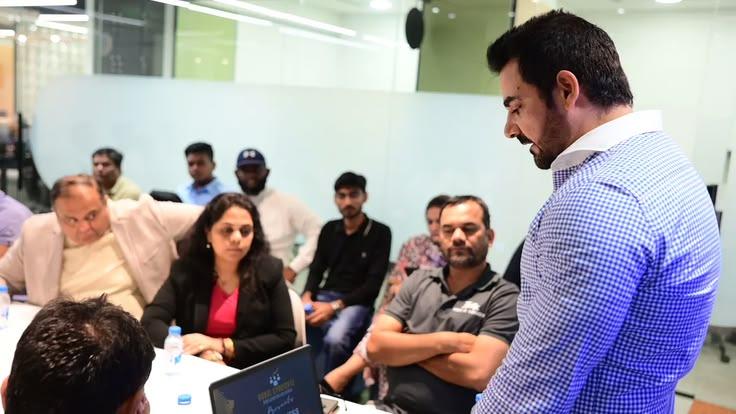
Global Syndicate: Creating More Meaningful Business Connections
The organization describes itself as a curated founder ecosystem designed to bring together growth-stage founders, strategic leaders, and selected investors. Its approach emphasizes trust, relevant introductions, and conversations that can support practical business outcomes.
This approach addresses a familiar challenge for business owners. Dubai has a wide range of professional gatherings, conferences, and networking opportunities, but attending more events does not automatically lead to better business results.
Entrepreneurs need opportunities to meet people whose experience, interests, and professional goals align with their own.
Global Syndicate structures its activities around different stages of professional engagement, including weekly circles, a monthly forum, and a planned execution-focused Founders Board. These formats are designed to support focused conversations, deeper relationships, and progress toward business goals. Availability and participation requirements may vary by program.
For a founder, the value of this kind of environment can extend beyond an immediate commercial opportunity.
A conversation with another entrepreneur might provide a fresh perspective on hiring, marketing, customer retention, operational challenges, or expansion planning. An introduction to a relevant professional could help a company identify a potential supplier or explore a new partnership.
Of course, networking does not guarantee investment, sales, or business growth. Results depend on the people involved, the quality of their relationships, and the actions they take afterward.
Nevertheless, a thoughtful approach to building connections can help business owners make better use of their time and professional resources.
How to Choose the Right Business Networking Community
Not every networking group serves the same purpose. Before joining a community, entrepreneurs should consider whether its format and membership align with their business objectives.
Look for relevant participants. Consider whether the community includes founders, professionals, investors, or business owners whose experience is useful to your goals. Industry relevance can make conversations more productive.
Prioritize genuine interaction. A useful networking environment should provide enough time for participants to explain their businesses, discuss challenges, and understand one another's work.
Check the membership process. Some communities are open to a broad range of professionals, while others review applications and limit participation. Choose the format that suits your preferences and objectives.
Consider follow-up opportunities. A first meeting can create an introduction, but continued communication helps relationships develop. Look for communities that encourage relevant introductions and constructive follow-up.
Understand the commitment. Review meeting frequency, membership requirements, participation fees, and the time involved before joining. This helps ensure that networking fits comfortably into your business schedule.
Focus on mutual value. Strong professional communities are not simply places to find customers. They work best when participants contribute knowledge, share useful connections, and help others where appropriate.
By considering these factors, entrepreneurs can identify communities that offer a more practical and sustainable approach to professional networking.
Making the Most of Business Opportunities in Dubai
Dubai's commercial environment rewards preparation, adaptability, and relationship building. Entrepreneurs who want to benefit from its opportunities should approach networking with a clear strategy.
Start by defining your goals. You may want to find new customers, understand a particular industry, meet potential collaborators, recruit experienced professionals, or explore investment opportunities. Clear objectives make it easier to identify the right events and conversations.
Next, prepare a simple introduction to your business. Explain what your company does, whom it serves, and the problem it solves. Avoid overwhelming people with technical details or an extended sales pitch. A clear explanation encourages more natural conversations.
It is equally important to ask thoughtful questions. Learning about another person's experience can reveal shared interests and opportunities for collaboration. It also demonstrates that you value the relationship rather than viewing every interaction as a sales opportunity.
After a meeting, follow up when there is a genuine reason to do so. You might share a resource that came up during the discussion, introduce two professionals who could benefit from knowing each other, or arrange another conversation about a potential project.
Finally, remain consistent. Building a strong professional network takes time. Not every introduction will lead to a partnership, and some conversations may not produce an immediate result. However, maintaining a reputation for reliability and professionalism can strengthen relationships over the long term.
The Role of Community in Long-Term Business Growth
Running a business can be challenging, particularly for founders who are entering a new market or managing a growing team. Entrepreneurs must make decisions about finances, customers, employees, operations, and future strategy, often while working under considerable pressure.
Having access to a community of experienced professionals can provide a useful source of perspective.
Other business owners may have encountered similar challenges and can share lessons from their own experiences. These conversations can help founders consider different approaches, avoid common mistakes, and think more carefully about their decisions.
A strong community can also create a sense of connection. Instead of trying to solve every problem independently, entrepreneurs have opportunities to discuss their experiences with people who understand the responsibilities of building a business.
This is one reason founder-focused communities can complement traditional business districts. While a commercial location provides physical proximity to other companies, a professional network creates opportunities for deeper engagement.
The two can work together. An entrepreneur may establish an office in Business Bay, attend industry events in DIFC, and participate in a founder community to develop relationships across different sectors.
The objective is not to attend every available event. It is to build a network that supports the company's actual needs.
Choosing the Right Path for Your Business in Dubai
Selecting a business district in Dubai requires careful consideration of location, operating costs, accessibility, customer requirements, and industry relevance. Areas such as DIFC, Business Bay, Dubai Internet City, Dubai Media City, and JLT each offer different commercial environments.
Yet the physical location is only part of the bigger picture. Business owners also need relationships that help them understand their market, exchange knowledge, identify relevant opportunities, and navigate challenges.
This is where professional networking can become a valuable part of a broader business strategy.
Final Thoughts
Dubai continues to attract entrepreneurs who want to build companies, explore new markets, and develop international business relationships. Its varied commercial districts provide options for businesses across industries, while its diverse professional community creates opportunities for collaboration and learning.
However, lasting business success usually requires more than a prestigious office address. It depends on understanding customers, making informed decisions, delivering consistent value, and developing relationships based on trust.
Choosing the right business district is an important starting point. Building the right professional network can help make that decision more valuable over time.
For founders and business owners, the most productive approach is to combine a suitable location with meaningful connections, clear objectives, and a willingness to contribute to the wider business community. In a competitive market like Dubai, strong relationships can become an important foundation for sustainable growth.


