
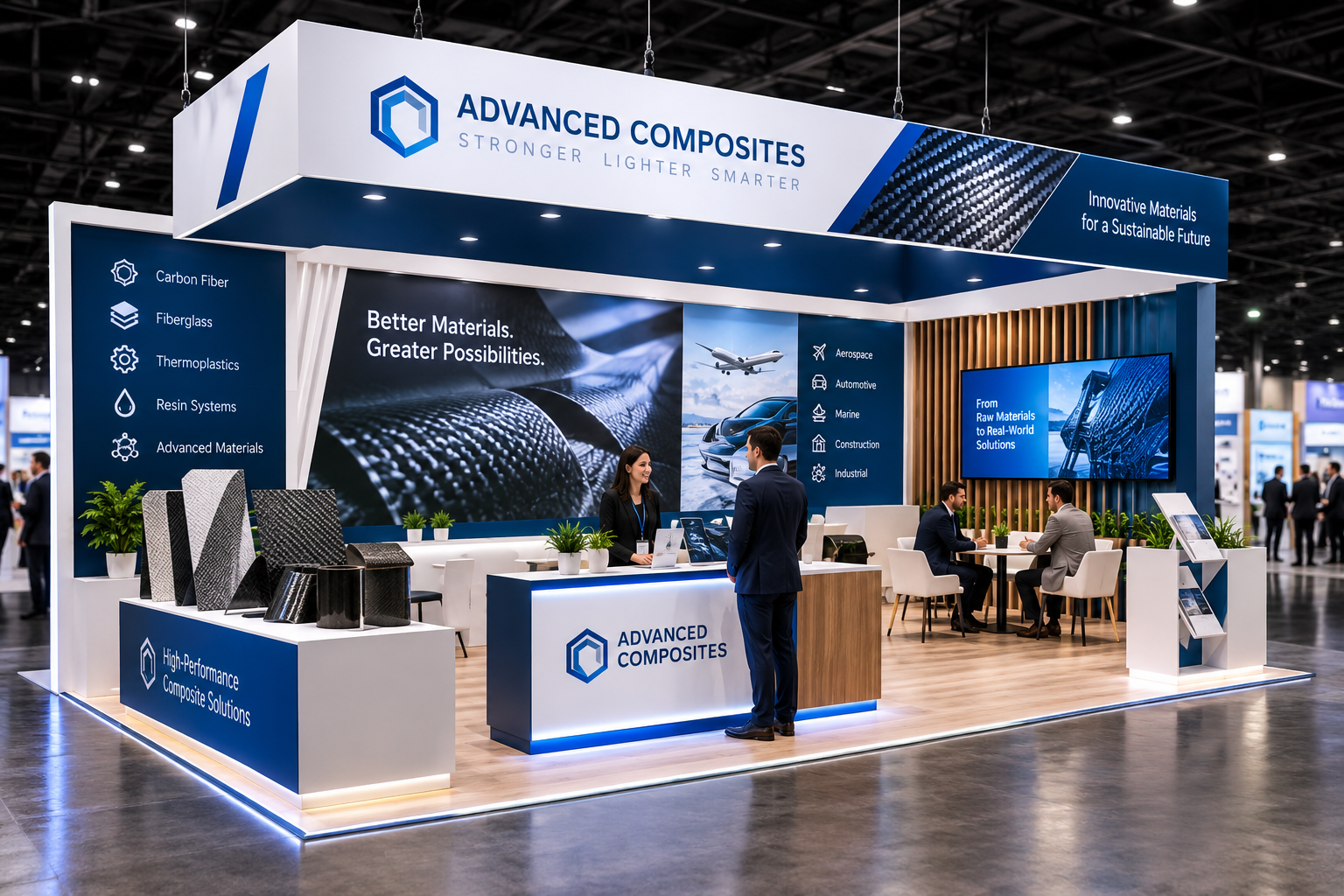
How to Design a Composites Trade Show Booth That Attracts More Visitors

A successful exhibition starts with a booth that makes people stop, look, and engage. For companies operating in the composites industry, booth design must do more than display a logo. It should communicate technical expertise, product value, innovation, and practical applications within seconds. Working with a professional Composites trade show exhibit builder can help transform complex products into an engaging visitor experience. A well-planned booth can attract qualified prospects, support product demonstrations, encourage conversations, and create a stronger brand presence throughout the exhibition.
Why Booth Design Matters in the Composites Industry
Trade shows bring together manufacturers, engineers, researchers, distributors, suppliers, and purchasing professionals. Many exhibitors may offer similar materials or technologies, making differentiation essential.
A booth should immediately answer three questions:
-
Who is the company?
-
What does it offer?
-
Why should visitors care?
If visitors cannot understand the value of the exhibit quickly, they may continue walking.
Good design creates an immediate visual connection while giving visitors a reason to explore further.
Start With Clear Exhibition Goals
Before selecting colors, graphics, furniture, or technology, determine what the booth needs to accomplish.
Possible goals include:
-
Generate qualified leads
-
Introduce a new composite material
-
Demonstrate manufacturing capabilities
-
Meet existing customers
-
Attract distributors
-
Showcase engineering expertise
-
Promote sustainable materials
-
Build brand recognition
-
Schedule technical meetings
-
Enter new markets
Each goal can influence the layout.
For example, a company focused on product demonstrations may need large open areas. A company focused on private business discussions may need additional meeting space.
Create a Strong Visual Identity
The booth should look immediately recognizable from the aisle.
A consistent visual identity can include:
-
Brand colors
-
Logo placement
-
Typography
-
Product photography
-
Technical illustrations
-
Industry-specific imagery
-
Clear headlines
-
Consistent graphic styles
However, branding should not overwhelm the visitor.
The objective is to make the company memorable while keeping the message easy to understand.
Use a Powerful Main Message
A visitor walking past a booth may only spend a few seconds looking at it.
That means the primary headline needs to be concise.
Instead of using a generic statement such as:
“Advanced Composite Solutions”
a company could communicate a more specific benefit, such as:
“Lightweight Composite Solutions for High-Performance Applications”
The second message gives visitors a clearer reason to investigate.
The headline should be visible from the aisle and supported by simple secondary messages.
Make the Booth Open and Inviting
An enclosed booth can unintentionally create a barrier between staff and visitors.
An open layout usually encourages people to enter naturally.
Consider:
-
Open corners
-
Clear entrances
-
Unobstructed product displays
-
Comfortable seating
-
Visible demonstrations
-
Low-profile counters
-
Well-positioned signage
The goal is to create a welcoming environment without sacrificing meeting space.
Design for Visitor Flow
A successful booth should guide visitors through a logical experience.
One effective structure is:
Attract → Discover → Understand → Discuss → Connect
The attraction zone communicates the primary message.
The discovery zone presents products and applications.
The education zone provides technical information.
The conversation zone allows visitors to speak with representatives.
The final area supports lead capture or meeting scheduling.
This approach reduces confusion and helps staff manage conversations more effectively.
Highlight Products With Purpose
Composites products can be highly technical. Simply placing samples on a table may not communicate their value.
Instead, products should be presented in context.
For example, a display could show:
Material → Manufacturing Process → Application → Performance Benefit
A carbon fiber component could be displayed alongside information about weight reduction, strength, durability, or its application in a specific industry.
This approach helps visitors understand not only what the product is but also why it matters.
Build an Effective Demonstration Area
Live demonstrations can be one of the strongest attractions at a technical trade show.
Depending on the company, demonstrations might include:
-
Material comparisons
-
Manufacturing processes
-
Product assembly
-
Structural samples
-
Surface finishes
-
Engineering simulations
-
Application testing
-
Product customization
The demonstration area should be visible from the aisle but positioned so that visitors can safely gather without blocking the main walkway.
Use Large-Scale Graphics Strategically
Large graphics can attract attention from a distance.
However, they should not become walls of text.
A strong graphic might include:
-
One primary headline
-
One compelling image
-
Two or three key benefits
-
A simple call to action
Technical details can be provided through brochures, touchscreens, QR codes, or conversations with staff.
The main booth should create curiosity rather than attempt to explain every product specification at once.
Incorporate Technical Visuals
Composites companies often have complex products that benefit from visual explanation.
Technical illustrations can show:
-
Material layers
-
Fiber orientation
-
Manufacturing processes
-
Cross-sections
-
Product construction
-
Performance characteristics
-
Application environments
Exploded diagrams and cutaway displays can turn complicated engineering information into something visitors can understand quickly.
Add Interactive Technology
Technology can increase engagement when it provides useful information.
Potential options include:
-
Touchscreen product catalogs
-
Interactive product selectors
-
Digital configurators
-
Large-format video screens
-
QR codes
-
Augmented reality
-
Virtual product demonstrations
-
Interactive technical diagrams
For example, a touchscreen could allow visitors to select an industry and immediately see relevant composite solutions.
Technology should support human interaction rather than replace it.
Use Lighting to Create Attention
Lighting has a major influence on booth visibility.
Effective lighting can highlight:
-
Product samples
-
Brand logos
-
Key messages
-
Demonstration areas
-
Architectural features
-
Meeting spaces
LED lighting can also help create a modern appearance while improving visibility.
Avoid excessive lighting effects that distract from products.
The best lighting strategy directs attention toward the areas that matter most.
Create Comfortable Meeting Areas
Attracting visitors is only the first step.
Once qualified prospects enter the booth, they need a comfortable place to talk.
Meeting areas can range from informal high-top tables to private rooms.
The right choice depends on the type of conversations expected.
For short introductions, standing counters may work well.
For technical discussions, comfortable tables and chairs can provide a better environment.
For confidential negotiations, a private meeting room may be appropriate.
Keep Staff Areas Organized
A booth should also work for the people operating it.
Staff need easy access to:
-
Marketing materials
-
Personal belongings
-
Product information
-
Charging points
-
Lead collection tools
-
Refreshments
-
Storage
Hidden storage areas can keep the booth clean and professional.
Visitors should see the brand presentation rather than bags, boxes, cables, or unused materials.
Choose Furniture Carefully
Furniture contributes to the overall visitor experience.
Furniture should match the booth's design while remaining practical.
Possible options include:
-
Bar-height counters
-
Lounge seating
-
Demonstration tables
-
Product display tables
-
Meeting tables
-
Stools
-
Lockable counters
Too much furniture can make a booth feel crowded.
A good rule is to use only what supports the intended visitor experience.
Make Sustainability Part of the Design
Sustainability can be especially relevant for composites companies exploring lightweight and environmentally conscious material solutions.
Exhibitors can reflect sustainable values through:
-
Reusable booth components
-
Recyclable graphics
-
Energy-efficient lighting
-
Rental furniture
-
Modular structures
-
Digital brochures
-
Reusable displays
Sustainability messaging should also be specific.
Instead of simply saying “eco-friendly,” companies can explain measurable benefits such as reduced material consumption, recyclability, durability, or manufacturing efficiencies where applicable.
Design for Different Visitor Types
Not every visitor arrives with the same interests.
An engineer may want technical specifications.
A purchasing manager may care about cost, availability, and scalability.
A distributor may want to understand market opportunities.
An executive may focus on business value.
The booth can accommodate different audiences through layered information.
Level One: Quick Message
A large headline communicates the main value proposition.
Level Two: Product Information
Graphics and displays explain key products and applications.
Level Three: Technical Detail
Brochures, digital content, and staff discussions provide deeper information.
This layered approach keeps the booth accessible without removing technical depth.
Use Color to Improve Navigation
Color can help visitors understand different sections of the exhibit.
For example, one area might focus on materials while another highlights applications.
Consistent visual cues can make a larger booth easier to navigate.
However, branding should remain the primary visual system.
Too many colors can make the exhibit look disconnected.
Make the Booth Visible From the Aisle
Visibility is critical.
Visitors should be able to identify the company from several meters away.
Important elements include:
-
Overhead signs
-
Large logos
-
Tall structures
-
Clear headlines
-
Strong lighting
-
High-quality graphics
The booth should communicate its identity before visitors reach it.
Avoid Information Overload
One of the most common booth design mistakes is trying to communicate everything at once.
A composites company may have dozens of products, industries, certifications, technologies, and applications.
Displaying all of them can overwhelm visitors.
Instead, identify the most important messages for the specific event.
Then provide deeper information through:
-
Product literature
-
Digital content
-
QR codes
-
Demonstrations
-
Staff conversations
-
Follow-up resources
A simple booth message can create a much stronger first impression.
Create a Memorable Feature
A distinctive feature can help visitors remember the booth after the event.
Possible ideas include:
-
Large composite structures
-
Oversized product models
-
Cutaway materials
-
Interactive displays
-
Suspended architectural elements
-
Live demonstrations
-
Immersive digital presentations
-
Artistic applications of composite materials
The feature should connect directly to the company's brand or products.
A gimmick may attract attention temporarily but may not create meaningful business conversations.
Integrate Lead Capture Into the Experience
Lead generation should not feel like an afterthought.
Staff can use digital forms, QR codes, badge scanning, or other lead management systems.
The booth should help staff capture useful information such as:
-
Visitor name
-
Company
-
Role
-
Product interest
-
Application
-
Purchase timeline
-
Follow-up requirements
Quality matters more than quantity.
Ten highly relevant conversations may be more valuable than hundreds of unqualified scans.
Train Staff Before the Exhibition
Even the best booth cannot compensate for poor visitor engagement.
Staff should understand:
-
The booth's primary message
-
Key products
-
Target customer profiles
-
Common visitor questions
-
Demonstration procedures
-
Lead qualification criteria
-
Follow-up processes
Staff should also avoid standing together in groups or looking at phones when visitors approach.
A welcoming attitude can make a significant difference.
Use Data to Improve Future Booths
After the event, evaluate what worked.
Useful measurements include:
-
Total visitors
-
Qualified leads
-
Product demonstrations
-
Meetings scheduled
-
New opportunities
-
Customer conversations
-
Content downloads
-
QR code scans
Visitor feedback can also reveal which displays attracted the most attention.
These insights can guide future booth improvements.
Common Design Mistakes to Avoid
Several mistakes can reduce booth performance.
Too Much Text
Visitors rarely stop to read large paragraphs.
Poor Visibility
A booth that looks attractive only from a close distance may struggle to attract traffic.
Limited Open Space
Crowded layouts can discourage visitors.
Weak Product Presentation
Products should be displayed in a way that explains their value.
Excessive Technology
Screens should serve a purpose rather than simply fill space.
Unclear Messaging
Visitors should quickly understand what the company does.
No Conversation Strategy
Attracting people without qualifying or engaging them wastes valuable opportunities.
Custom or Modular: Which Is Better?
The right booth format depends on exhibition requirements.
A custom booth may be appropriate when a company wants a distinctive architectural experience, specialized demonstrations, or a major product launch.
A modular booth can be ideal for companies attending multiple events and needing flexible configurations.
A hybrid exhibit can combine reusable components with custom branding, displays, and technology.
The important factor is not simply choosing a booth category. It is creating a design that supports the company's business objectives.
How Professional Exhibit Builders Add Value
Professional exhibit builders can help translate business goals into physical booth experiences.
They can support:
-
Concept development
-
3D booth design
-
Graphic production
-
Product displays
-
Lighting
-
Furniture
-
Technology integration
-
Installation
-
Dismantling
-
Logistics
-
Storage
For composites companies, this expertise can be especially valuable because technical products often require thoughtful presentation.
A skilled builder can help ensure that engineering information remains accurate while the booth stays visually engaging.
Final Checklist for a High-Impact Composites Booth
Before approving the final design, ask:
-
Is the brand visible from the aisle?
-
Is the primary message immediately clear?
-
Are products easy to understand?
-
Is there enough space for demonstrations?
-
Can visitors move comfortably?
-
Are meeting areas practical?
-
Is technical information layered effectively?
-
Is lighting highlighting important areas?
-
Is storage available?
-
Does the booth support lead capture?
-
Can the exhibit be reused?
-
Does the design support the company's event goals?
If the answer is yes to these questions, the booth is more likely to provide a strong foundation for successful exhibition participation.
Conclusion
A successful composites trade show booth combines strong branding, clear messaging, practical product presentation, visitor-friendly layouts, and meaningful interaction. The goal is not simply to build the largest or most expensive exhibit. It is to create an environment that attracts the right audience and gives them a clear reason to engage. From graphics and lighting to demonstrations and meeting areas, every design decision should support the company's objectives. With the right strategy and an experienced Composites trade show exhibit builder, composites companies can create a memorable booth that attracts visitors, communicates technical value, and generates stronger business opportunities.


