
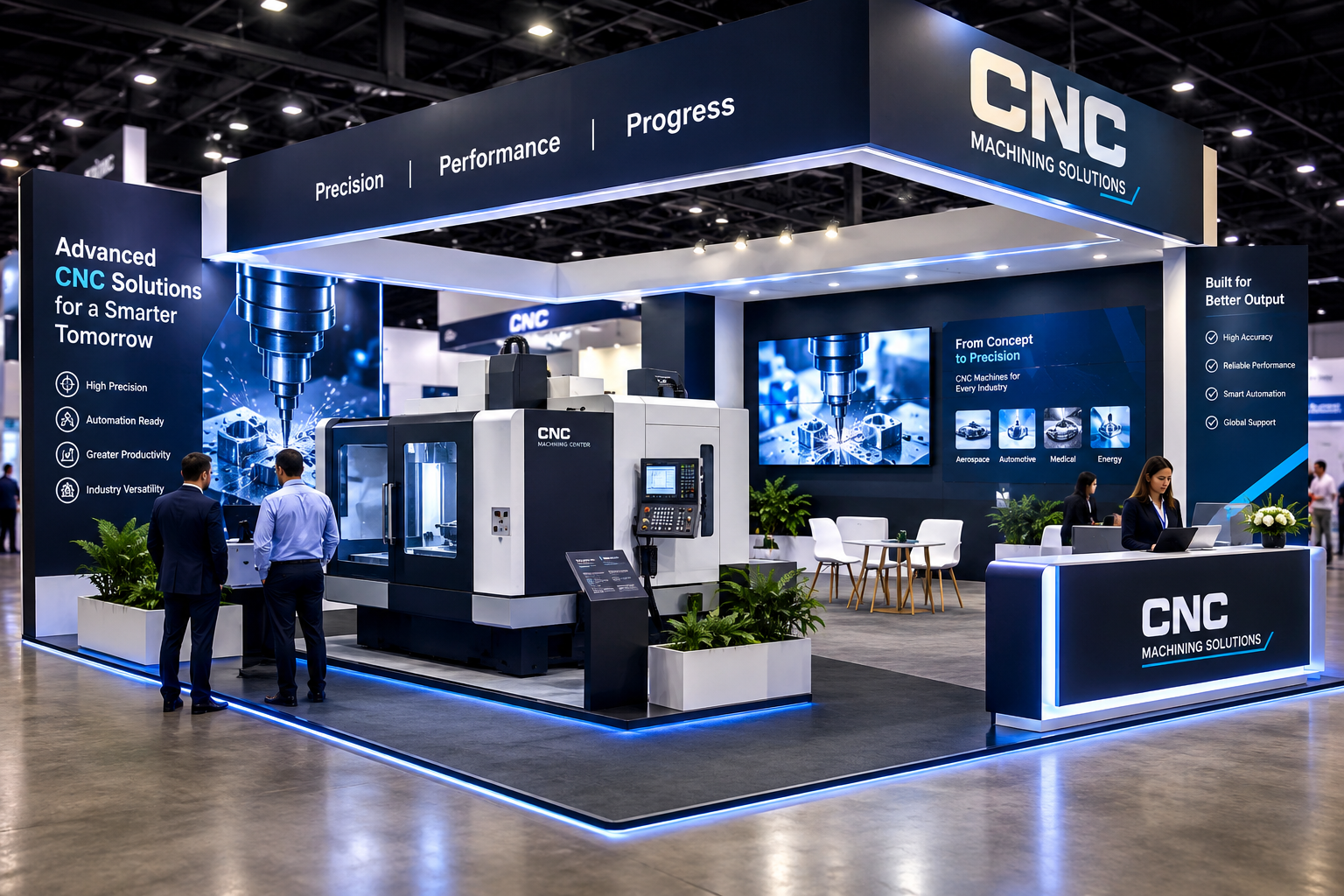
How to Design CNC Machinery Display Booths for Live Machine Demonstrations

Live machine demonstrations can transform an industrial trade show booth from a static product display into an engaging experience. For manufacturers exhibiting CNC equipment, visitors often want to see how a machine works, understand its capabilities, and discuss real-world applications. Well-planned CNC machinery display booths can provide the right environment for these demonstrations by combining machine positioning, visitor flow, safety, branding, technology, and meeting areas into one practical exhibition space.
Why Live Demonstrations Matter at Industrial Trade Shows
CNC machines are highly technical products. Specifications, brochures, and product images can communicate important information, but they cannot always show how equipment performs in a real production environment.
A live demonstration gives visitors an opportunity to observe machine movement, precision, controls, speed, automation, and other capabilities directly.
For manufacturers, this can also create a natural starting point for conversations with potential customers. A visitor may initially stop to watch a demonstration and then speak with a technical representative about applications, production requirements, or machine specifications.
Because of this, the booth should be designed around the demonstration rather than treating it as an additional feature.
Start With the Machine and Its Requirements
Before deciding on colors, graphics, or decorative elements, exhibitors should understand the requirements of the equipment being demonstrated.
The size and weight of the CNC machine can significantly affect the booth layout. Manufacturers may also need to consider electrical connections, operating clearance, access points, ventilation, flooring, control stations, and equipment movement.
These requirements should be identified during the initial design stage.
When the machine is treated as the foundation of the booth layout, other elements such as graphics, visitor areas, screens, and meeting spaces can be positioned around it more effectively.
Create a Clear Demonstration Zone
A dedicated demonstration zone helps visitors understand where the main activity is taking place.
The machine should be visible from multiple angles whenever possible. Visitors should not have to enter a crowded area or stand directly in front of other people to see the demonstration.
The demonstration zone can also include product information, screens, technical diagrams, or application graphics that explain what visitors are seeing.
A clear separation between operating equipment and visitor areas is especially important when machines are running during the event.
Plan Visitor Movement Carefully
Large CNC machines can quickly create congestion if visitor movement is not considered.
People may gather around the equipment during demonstrations, while others may be entering the booth, leaving meetings, or speaking with sales representatives.
A good booth layout should create natural movement paths around the machine. Entry and exit points should remain accessible, and important visitor areas should not interfere with demonstration zones.
The objective is to allow people to watch the machine comfortably without blocking other parts of the booth.
Make the Machine Visible From the Aisle
The first opportunity to attract visitors often begins before they enter the booth.
Large machinery should therefore be positioned so that it can be seen from the exhibition aisle. If the most important equipment is hidden behind walls, storage structures, or excessive graphics, its impact may be reduced.
Open booth designs can provide strong visibility while allowing visitors to understand the main product offering immediately.
Strategic positioning can also make a moving machine naturally attract attention from people walking past the booth.
Use Graphics to Explain the Demonstration
Watching a machine operate is valuable, but visitors may not immediately understand what makes the demonstration important.
Graphics can provide context.
For example, a booth can use concise messages to explain the machine's application, production capabilities, automation features, or key technical advantages.
Large graphics can communicate the main message, while smaller panels near the machine can provide additional details.
The information should be easy to read without overwhelming visitors with long technical paragraphs.
Integrate Digital Displays
Digital technology can expand the value of a live machine demonstration.
Large screens can show close-up footage of the machining process, application videos, production workflows, or technical animations. This is particularly useful when certain machine components are difficult to see from the visitor area.
A screen can also display information while the machine is operating, helping visitors understand what is happening during the demonstration.
Touchscreens can provide another interactive layer, allowing visitors to explore specifications, applications, accessories, or related equipment.
Consider Different Viewing Heights
Not every visitor will stand at the same position during a demonstration.
Some may watch from the aisle, while others may stand close to the machine. If the booth is designed only for people standing at one specific point, visibility can become limited.
The layout should therefore consider different viewing positions.
Screens can be elevated where appropriate, while important product information can be placed at comfortable reading heights. The machine itself should remain the visual focal point.
Build Safety Into the Booth Design
Safety should be a central consideration whenever industrial equipment is operated at an exhibition.
Visitors need to remain at a suitable distance from moving components and operating areas. Barriers, markings, controlled access points, and clearly defined visitor zones may be required depending on the equipment and venue rules.
The booth design should also allow technical staff to operate the machine without unnecessary interference from visitors.
Safety considerations should be addressed during planning rather than added after the booth design has been finalized.
Make Demonstrations Easy to Understand
A live demonstration does not automatically create an effective visitor experience.
The demonstration should have a clear purpose.
Instead of simply running the machine, exhibitors can explain what the equipment is doing and why the process matters. A representative can highlight specific features during the operation and answer questions afterward.
This turns the demonstration into a guided learning experience.
Short, repeatable demonstrations can also work well at busy exhibitions because visitors may arrive at different times.
Schedule Demonstration Sessions
When a machine has multiple functions or complex operating procedures, scheduled demonstrations can help manage visitor interest.
A visible schedule can tell visitors when the next demonstration will take place. This gives people a reason to return to the booth and can help sales teams prepare for periods of higher visitor activity.
Scheduled demonstrations can also be promoted through event communications, social media, email campaigns, and invitations to existing customers.
Design for Technical Conversations
A demonstration may attract visitors, but meaningful business conversations often happen afterward.
The booth should therefore include spaces where visitors can discuss what they have seen.
A nearby meeting area allows representatives to move naturally from demonstration to conversation. Depending on the available space, this could be an open discussion table or a more private meeting area.
The transition should feel natural rather than forcing visitors to cross the entire booth after watching the machine.
Use Product Information Strategically
Technical buyers may want detailed information about the machine, but the main demonstration area should not become overloaded with specifications.
A better approach is to organize information into layers.
The first layer can communicate the machine's main purpose. The second can highlight important capabilities. Detailed specifications can then be provided through brochures, digital displays, QR-based resources, or conversations with technical staff.
This keeps the booth visually clean while still supporting detailed product research.
Keep Branding Consistent
A live machine should remain the star of the demonstration, but branding should make it clear which company is presenting the equipment.
Logos, brand colors, messaging, graphics, staff clothing, digital screens, and product signage should work together.
Branding can also be positioned above or behind the machine so that the company remains identifiable in photographs and videos taken during the event.
Consistency across the physical and digital elements can create a more professional presentation.
Highlight Real-World Applications
Visitors often want to understand how CNC equipment can be used in their own operations.
Application-focused demonstrations can therefore be particularly useful.
Instead of focusing only on machine specifications, exhibitors can show how the equipment handles specific manufacturing processes or materials. Supporting graphics can explain the type of industries or production environments where the machine may be relevant.
This helps visitors connect the technology with practical manufacturing needs.
Create Space for Multiple Visitors
A successful demonstration may attract a crowd.
The booth should be designed so that several people can watch the machine without creating an uncomfortable or unsafe environment.
Open viewing areas, clear pathways, and carefully positioned screens can help accommodate larger groups.
If the booth is expected to host frequent demonstrations, visitor capacity should be considered during the early design stage.
Plan Storage and Technical Support Areas
Storage is easy to overlook when designing a visually attractive exhibition booth.
However, live machine demonstrations may require tools, cables, promotional materials, spare components, cleaning supplies, technical equipment, and personal belongings.
A dedicated storage area can keep these items away from the main visitor environment.
Technical staff should also have sufficient access to the equipment for setup, maintenance, and troubleshooting.
Keeping operational areas organized helps maintain a clean booth throughout the event.
Prepare for Noise and Activity
Industrial equipment can create noise during demonstrations. This may affect conversations in other areas of the booth.
When planning CNC machinery display booths, exhibitors should consider how machine operation will interact with meeting areas and hospitality spaces.
Meeting areas can be positioned farther from the operating machine where possible. Digital communication can also help visitors understand the demonstration without requiring every conversation to happen directly beside the equipment.
This creates a better experience for both technical demonstrations and business meetings.
Make the Demonstration Photogenic
Trade show demonstrations often generate photographs and videos.
A well-designed background can reinforce branding whenever visitors or company representatives record the machine in operation.
Branding should remain visible without distracting from the equipment.
Manufacturers can also create designated areas for product photography, interviews, or short demonstration videos. These assets can later be used in digital marketing and social media campaigns.
Design for Both Experts and General Visitors
Industrial exhibitions attract visitors with different levels of technical knowledge.
An experienced engineer may want detailed specifications, while a business decision-maker may be more interested in productivity, efficiency, and applications.
The demonstration should accommodate both audiences.
Simple visual explanations can provide an introduction, while technical representatives can answer detailed questions for specialists.
Digital displays can provide additional layers of information for visitors who want to explore the technology independently.
Measure Visitor Engagement
A booth can be designed with measurable objectives.
Manufacturers can track the number of demonstration attendees, product inquiries, meetings, leads, and follow-up opportunities generated during the exhibition.
These insights can help companies understand which machines and demonstrations attract the most attention.
The information can also influence future exhibition strategies and booth designs.
Prepare Staff for Live Demonstrations
Even an excellent booth design requires well-prepared staff.
Representatives should understand the demonstration process, safety procedures, machine capabilities, and common visitor questions.
Staff should also know when to provide a technical explanation and when to allow visitors to explore independently.
A coordinated team can make demonstrations feel professional and organized.
Plan the Booth Before the Event
Successful live demonstrations require coordination between booth designers, machine manufacturers, technical teams, exhibition organizers, and logistics providers.
Machine dimensions, shipping requirements, electrical needs, demonstration schedules, graphics, digital content, safety requirements, and visitor flow should be discussed early.
Last-minute planning can create unnecessary complications, especially when large industrial machinery is involved.
Early planning provides more time to test the visitor experience and make improvements.
Why Custom Booths Work Well for Machine Demonstrations
Every CNC machine manufacturer has different equipment, products, audiences, and exhibition objectives.
A custom booth allows the physical environment to be developed around those specific requirements.
Instead of trying to fit a machine into a generic exhibition structure, the booth can be designed around the equipment, demonstration area, visitor flow, branding, technology, and business conversations.
This makes the exhibition environment more purposeful and easier for visitors to navigate.
Final Thoughts
Live machine demonstrations can give industrial exhibitors an effective way to show the practical value of their technology. However, the quality of the demonstration depends heavily on the surrounding environment. Well-designed CNC machinery display booths can provide clear viewing areas, safe machine operation, strong branding, digital support, technical information, and comfortable spaces for business conversations. By planning the booth around the machine and the visitor experience from the beginning, manufacturers can create an organized exhibition environment that makes complex CNC technology easier to see, understand, and discuss.


