
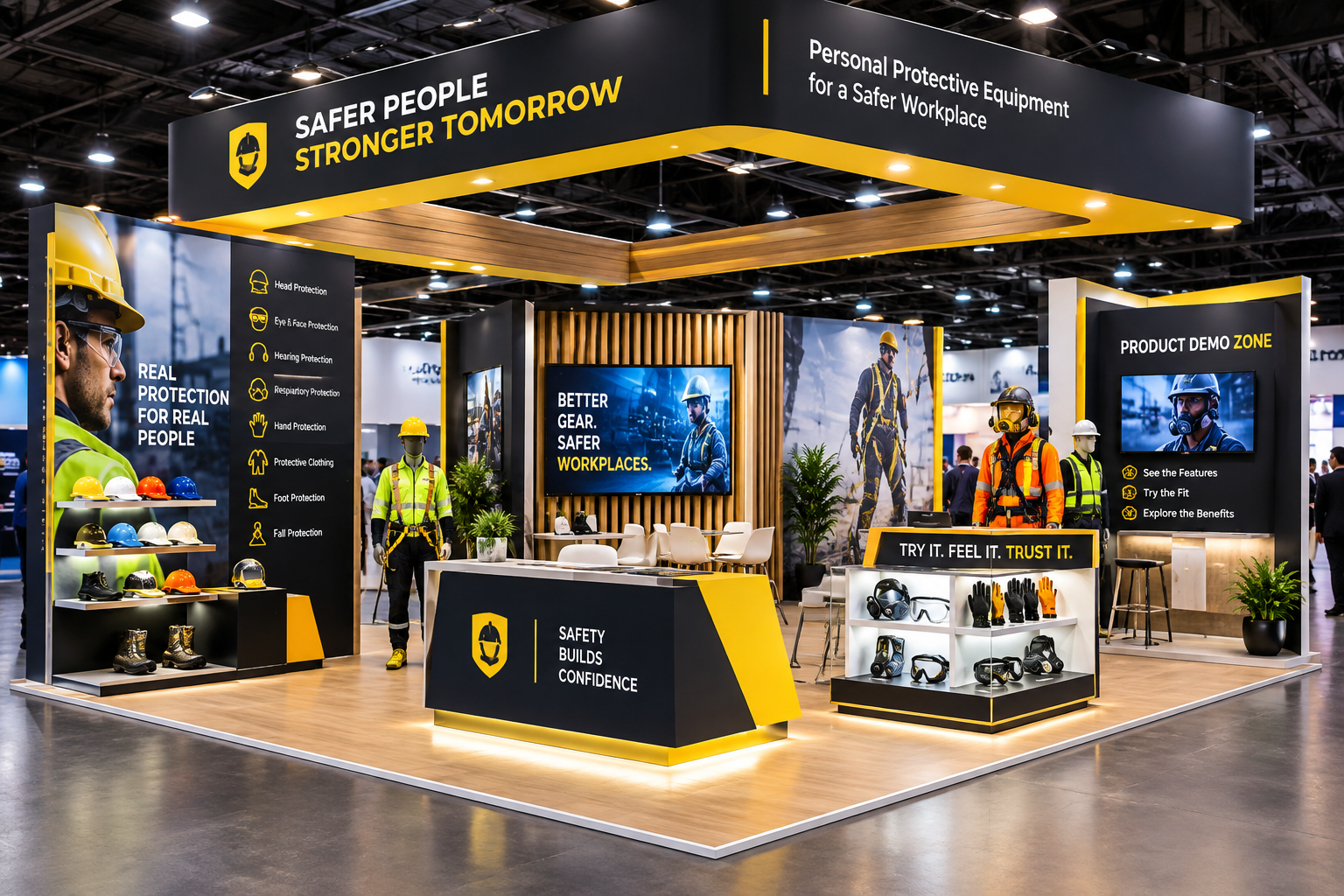
Why PPE Booth Contractors Matter for a Successful Safety Equipment Trade Show

Trade shows give safety equipment companies a valuable opportunity to showcase products, connect with industry professionals, meet prospective buyers, and strengthen brand visibility. However, competing for attention in a crowded exhibition hall requires more than simply bringing products to an event. Professional PPE booth contractors can help transform an ordinary exhibition space into a purposeful environment that reflects a safety brand's identity and supports meaningful visitor interactions.
Understanding the Role of PPE Booth Contractors
PPE booth contractors are responsible for much more than constructing physical exhibition structures. Their role can involve understanding the exhibitor's objectives, planning the booth layout, developing design concepts, producing graphics, coordinating installation, and supporting dismantling after the event.
For a personal protective equipment company, the booth must accommodate several requirements simultaneously. Products need to be visible, technical information should be accessible, branding should be recognizable, and visitors should have enough room to interact with representatives.
A professional contractor can coordinate these elements into a unified exhibition experience.
Why PPE Companies Need Specialized Booth Planning
Personal protective equipment covers a broad range of products. Depending on the company, an exhibition display may include safety helmets, gloves, protective footwear, eyewear, respirators, harnesses, protective clothing, hearing protection, and other workplace safety solutions.
Each category may require different display methods.
For example, protective clothing may need mannequins or hanging displays, while small safety products may work better on shelves or illuminated product panels. A fall-protection company may require a demonstration area, while a technology-focused safety brand may depend more heavily on interactive screens.
This variety makes strategic planning particularly important.
Creating a Strong First Impression
Visitors often make quick decisions about which booths to explore. A clear visual identity can help a company communicate its presence from the exhibition aisle.
Contractors can use:
-
Large brand graphics
-
Illuminated signage
-
Product-focused visuals
-
Strategic lighting
-
Distinctive architectural elements
-
Clear messaging
-
Open entrances
The objective is to make the booth easy to identify without overwhelming visitors with too much information.
A strong first impression can encourage visitors to step inside and discover more.
Aligning Booth Design With Brand Identity
Every safety equipment company has a different market position.
Some brands may focus on industrial workers, while others specialize in construction, healthcare, manufacturing, logistics, energy, or specialized workplace applications.
The exhibition booth should reflect this positioning.
Colors, typography, imagery, materials, product displays, and messaging can all contribute to brand consistency.
When visitors recognize the brand immediately, the booth becomes more than a temporary display. It becomes an extension of the company's broader marketing identity.
Organizing PPE Products Effectively
Product organization is one of the most important functions of a safety equipment booth.
Visitors should be able to understand what is being displayed without having to search through a crowded arrangement.
Products can be organized by:
-
PPE category
-
Workplace application
-
Industry
-
Product range
-
Technology
-
Safety function
-
New product launches
Clear labels and concise descriptions can make the display easier to navigate.
A well-organized product presentation also helps booth representatives start conversations naturally.
Making Product Demonstrations More Effective
Many PPE products are easier to understand through demonstrations.
A visitor may want to see how a harness is adjusted, how protective eyewear fits, how a respirator is assembled, or how a particular safety system works.
A dedicated demonstration area gives staff an organized place to conduct these presentations.
Contractors can consider:
-
Demonstration counters
-
Product testing areas
-
Open presentation spaces
-
Digital demonstration screens
-
Mannequin displays
-
Interactive product stations
The demonstration area should be positioned where visitors can observe without disrupting general booth traffic.
Designing for Visitor Flow
Visitor movement is another important consideration.
If a booth has narrow entrances, poorly positioned displays, or too much furniture, visitors may hesitate to enter.
An effective layout can provide clear movement from the aisle toward product displays and meeting areas.
For example, the layout could include:
Entry area: Brand introduction
Product zone: Featured PPE solutions
Demonstration zone: Product education
Interaction zone: Digital or hands-on engagement
Meeting zone: Business conversations
Storage zone: Hidden operational space
This approach creates a logical visitor journey.
Using Graphics to Communicate Clearly
Exhibition graphics should communicate the most important information quickly.
Instead of filling large walls with lengthy descriptions, companies can highlight:
-
Main product categories
-
Key applications
-
Company capabilities
-
Product innovations
-
Industry solutions
-
Brand statements
Large headlines can capture attention from a distance, while supporting graphics provide additional context once visitors approach.
High-quality graphics also contribute to a professional appearance.
Incorporating Digital Experiences
Digital technology can complement physical PPE displays.
Large screens can present product videos, company presentations, customer applications, or safety education content.
Touchscreens can allow visitors to browse product catalogs and technical specifications.
QR codes can provide access to:
-
Product brochures
-
Technical documents
-
Catalogs
-
Product videos
-
Contact forms
-
Website pages
Digital content can reduce the amount of printed material required while giving visitors access to detailed information.
The Importance of Lighting
Lighting can influence both visibility and atmosphere.
A PPE booth may contain small technical components that visitors need to inspect closely. Targeted lighting can draw attention toward these details.
Common options include:
-
LED spotlights
-
Backlit graphics
-
Illuminated shelves
-
Lightboxes
-
Accent lighting
-
Overhead fixtures
Lighting can also help distinguish product areas from meeting spaces.
The objective should be functional illumination combined with an attractive presentation.
Providing Professional Meeting Areas
Trade shows often generate valuable business discussions.
Potential customers may want to discuss bulk purchasing, distribution, product specifications, partnerships, or future projects. These conversations require a comfortable environment.
Depending on booth size, contractors can create:
-
Open consultation tables
-
Semi-private meeting areas
-
Enclosed meeting rooms
-
Lounge seating
-
Quick discussion counters
Meeting spaces should be positioned so that conversations can take place without interfering with product demonstrations or general visitor movement.
Making the Booth Accessible
Accessibility should be considered during booth planning.
Clear pathways, appropriate furniture placement, readable signage, and sufficient space can make the exhibition environment more comfortable for a broader range of visitors.
An accessible design can also make the booth easier to navigate during busy periods.
The layout should avoid unnecessary obstacles and allow visitors to move naturally through the space.
Integrating Storage Into the Design
Exhibition booths need operational storage.
Sales representatives may bring personal belongings, brochures, product samples, packaging, cleaning supplies, and promotional materials.
If these items remain visible, they can make a professional booth appear disorganized.
Contractors can integrate storage into counters, cabinets, back walls, and other booth structures.
Keeping operational items hidden allows the public-facing areas to remain clean.
Choosing Materials for the Booth
Material selection affects the booth's appearance, functionality, and practical requirements.
Depending on the design, contractors may use:
-
Aluminum frames
-
Fabric graphics
-
Laminated panels
-
Acrylic displays
-
Glass
-
Modular components
-
Wood-based elements
-
Metal structures
For companies attending several events, reusable modular elements can provide flexibility.
The selected materials should also be compatible with the venue's regulations and installation requirements.
Considering Sustainability
Sustainability is increasingly becoming part of exhibition planning.
PPE companies can discuss reusable booth structures and environmentally conscious materials with their contractors.
Potential strategies include:
-
Reusable display structures
-
Modular components
-
Energy-efficient lighting
-
Recyclable graphics
-
Reusable furniture
-
Digital information systems
-
Reduced disposable materials
These measures can support more efficient exhibition programs, particularly for companies participating in multiple events each year.
Managing Installation and Dismantling
The booth's construction process needs careful coordination.
Professional contractors may manage:
-
Design development
-
Production
-
Transportation
-
On-site installation
-
Graphic placement
-
Furniture setup
-
Lighting installation
-
Final inspection
-
Dismantling
-
Packing and removal
This coordinated approach can help exhibitors focus on preparing their products and staff instead of managing every physical detail themselves.
Planning Around Exhibition Regulations
Every venue and event can have its own rules.
These may cover:
-
Booth height
-
Hanging structures
-
Electrical connections
-
Fire safety
-
Materials
-
Signage
-
Lighting
-
Installation schedules
-
Floor protection
-
Demonstration equipment
Experienced contractors can review these requirements during the planning process.
Early compliance planning can help reduce the risk of unexpected changes before the exhibition opens.
Supporting Different Booth Sizes
PPE companies participate in exhibitions with different budgets and floor spaces.
A small inline booth may require a compact product display, branded back wall, counter, and digital screen.
A larger island booth may include:
-
Multiple product zones
-
Demonstration areas
-
Private meeting rooms
-
Storage
-
Hospitality areas
-
Large-format signage
-
Interactive technology
The contractor's role is to adapt the design to the available space rather than simply repeating the same concept at every event.
Designing for Lead Generation
An exhibition booth should support the company's commercial objectives.
Lead-generation systems can be incorporated directly into the visitor experience.
Examples include:
-
QR code forms
-
Digital lead capture
-
Badge scanning
-
Appointment scheduling
-
Product inquiry stations
-
Demonstration registrations
Representatives can also categorize leads based on product interest and purchasing timelines.
This information can make post-event follow-up more structured.
Preparing Booth Staff
Booth design and staff preparation should work together.
Representatives should know how to explain the company's main products and guide visitors through the booth.
Staff can prepare:
-
Product demonstrations
-
Short product presentations
-
Frequently asked questions
-
Lead qualification questions
-
Technical resources
-
Follow-up procedures
A professional booth gives staff the environment they need, but knowledgeable and approachable representatives complete the visitor experience.
Measuring Booth Performance
After an event, companies can evaluate whether the booth supported their objectives.
Useful measurements include:
-
Total booth visitors
-
Qualified leads
-
Product demonstrations
-
Business meetings
-
New inquiries
-
Partnership discussions
-
Distributor contacts
-
Follow-up appointments
Companies can use these results to improve their booth strategy for future exhibitions.
How to Select the Right Booth Contractor
Choosing a contractor should involve more than reviewing attractive booth photographs.
Exhibitors can evaluate:
-
Relevant portfolio experience
-
Understanding of PPE and safety products
-
Design capabilities
-
Project management
-
Graphic production
-
Installation services
-
Dismantling support
-
Communication
-
Ability to meet deadlines
-
Understanding of venue regulations
It is also useful to establish project responsibilities and timelines before production begins.
Planning Early for Better Results
Last-minute booth planning can create unnecessary pressure.
Early planning gives companies more time to:
-
Define exhibition goals
-
Finalize booth size
-
Develop the design
-
Approve graphics
-
Prepare product displays
-
Arrange demonstrations
-
Organize furniture
-
Coordinate logistics
-
Train staff
Starting early can also provide more opportunity to make design changes before production.
Why Professional Booth Expertise Matters
A trade show booth represents a significant investment of time and resources. The physical environment should therefore support the company's marketing and business objectives.
Professional booth contractors can bring together architecture, branding, graphics, lighting, product presentation, technology, visitor flow, and logistics.
For PPE brands, this coordinated approach can create a booth that is not only visually professional but also useful for product education and business conversations.
Conclusion
A successful safety equipment trade show requires thoughtful planning at every stage. The booth must attract attention, communicate the brand, display products clearly, support demonstrations, provide comfortable meeting areas, and make visitor engagement easy.
Experienced PPE booth contractors can help safety equipment companies coordinate these elements into one cohesive exhibition environment. From the initial concept through installation and dismantling, professional booth planning can help exhibitors create a practical space that supports their event objectives and gives visitors a clear understanding of their PPE solutions.


