

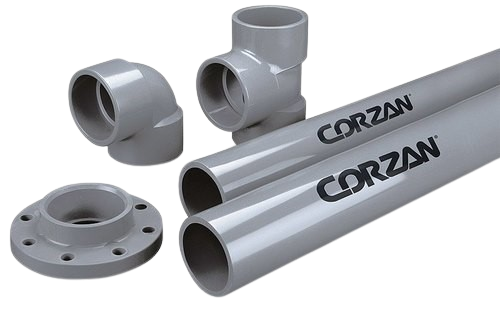
PPH Pipes and Fittings: A Reliable Choice for Modern Industrial Piping
When it comes to selecting a piping system for industrial, commercial, and water-treatment applications, the material matters just as much as the design. Pipes need to withstand pressure, chemicals, temperature changes, moisture, and everyday operational demands without becoming a constant maintenance concern. This is one reason PPH pipes and fittings have become an increasingly practical choice for demanding piping applications.
PPH, or Polypropylene Homopolymer, is a thermoplastic material known for its combination of chemical resistance, mechanical strength, corrosion resistance, and relatively lightweight construction. Unlike conventional metal piping, PPH does not rust or corrode in the same way, making it particularly useful in environments where aggressive fluids or chemicals are involved.
For businesses looking for dependable piping solutions in the UAE and GCC region, AnZ Waters provides a range of pipeline and water-treatment solutions, including PPH pipeline systems. The company has more than two decades of experience supplying plumbing and industrial products and works across areas such as water treatment, chemical processing, energy, municipal, and marine applications.
What Are PPH Pipes and Fittings?
PPH pipes are manufactured from polypropylene homopolymer, a thermoplastic polymer with properties that make it suitable for many industrial fluid-handling applications. PPH belongs to the polypropylene family, which also includes materials such as PP-R, PP-RCT, and PP-B. ISO/TR 10358:2021 specifically includes PP-H among the thermoplastics considered for industrial piping chemical-resistance data.
A piping system is never made up of straight pipes alone. Fittings are equally important because they allow the system to change direction, connect different sections, reduce or increase pipe sizes, and connect equipment. Depending on the project, PPH systems can include elbows, tees, couplings, reducers, adapters, valves, strainers, and other components.
The advantage of using compatible PPH pipes and fittings together is that the complete system can be designed around the properties of the same thermoplastic material rather than relying heavily on different materials and connection methods.
Why Choose PPH Pipes for Industrial Applications?
One of the biggest reasons PPH is selected for industrial piping is its resistance to corrosion. Metal pipes can be vulnerable to rust and chemical attack depending on the fluid being transported and the operating environment. PPH provides a corrosion-resistant alternative that can be particularly useful for chemical processing, water treatment, wastewater applications, and other environments where fluid compatibility is important.
PPH also offers good resistance to many aggressive chemicals. However, chemical compatibility should always be checked against the specific chemical concentration, temperature, pressure, and operating conditions of a project. Material-selection references such as ISO/TR 10358 are useful when evaluating thermoplastic chemical resistance.
Another benefit is its relatively low weight. Compared with many traditional metal systems, thermoplastic piping can be easier to transport, handle, and install. This can make a difference on large projects where hundreds of metres of piping and numerous fittings have to be moved and installed.
Key Benefits of PPH Pipes and Fittings
Excellent Chemical Resistance
PPH is widely valued for its chemical resistance. This makes it a strong candidate for applications involving acids, alkalis, process chemicals, and corrosive fluids, subject to proper chemical compatibility assessment.
For chemical-processing facilities, choosing a piping material that can maintain its integrity in the presence of aggressive fluids is essential. A suitable PPH system can help reduce corrosion-related problems and contribute to dependable operation.
Corrosion-Free Performance
One of the most attractive advantages of thermoplastic piping is that it does not experience conventional metal rusting. This can help reduce maintenance requirements in environments where moisture and corrosive substances are common.
For water-treatment and industrial facilities, reducing corrosion can be particularly valuable because pipe replacement and unplanned maintenance can interrupt operations.
Lightweight Construction
PPH pipes are comparatively lightweight, which makes handling and installation easier. Contractors can benefit from easier transportation and reduced physical effort during installation.
This does not mean installation should be treated casually. Correct joining techniques, supports, alignment, expansion considerations, and pressure requirements remain important for achieving reliable long-term performance.
Good Temperature Resistance
PPH systems can be used across a useful temperature range, depending on the product design, pressure rating, and application conditions. AnZ Waters states that its PPH pipeline information covers applications with operating temperatures from approximately -20°C to +110°C.
Actual operating limits should always be confirmed from the manufacturer's technical documentation for the specific pipe and fitting selected.
Long Service Potential
Durability is another reason engineers consider PPH. Under appropriate temperature, pressure, chemical, and installation conditions, PPH piping can provide a long service life. AnZ Waters describes PPH systems as capable of more than 50 years under rated conditions.
The actual service life of any piping system depends on its environment and how it is designed, installed, and maintained.
Where Are PPH Pipes and Fittings Used?
The versatility of PPH makes it suitable for a wide range of projects.
Chemical Processing
Chemical plants often require piping systems capable of handling aggressive fluids. PPH's chemical resistance makes it a practical material for selected chemical-processing applications.
Water and Wastewater Treatment
Water-treatment facilities deal with different fluids, chemicals, filtration processes, and treatment stages. PPH systems can be considered where chemical resistance and durability are required. AnZ Waters identifies chemical-processing and water-treatment-related solutions among its areas of expertise.
Industrial Process Piping
Manufacturing facilities frequently need piping for moving process liquids, wastewater, chemicals, or other fluids. PPH can provide a lightweight, corrosion-resistant alternative for suitable systems.
Surface Treatment and Hydrometallurgy
Specialized industrial processes can expose piping to aggressive chemicals and challenging operating environments. AnZ Waters lists chemical processing, hydrometallurgy, surface treatment, and mixing and dosing among its chemical-industry solution areas.
Commercial and Plumbing Applications
Although PPH is particularly interesting for industrial environments, thermoplastic piping systems can also be considered for selected commercial and plumbing applications when the material and system specifications are appropriate.
PPH Fittings Are Just as Important as the Pipe
A strong pipe is only one part of a reliable piping network. Poor-quality or incompatible fittings can compromise the performance of an otherwise well-designed system.
PPH fittings help create the connections needed throughout a pipeline. Common components include elbows for directional changes, tees for branch connections, reducers for changing pipe diameter, couplings for joining sections, adapters for connecting different components, and valves for controlling fluid flow.
AnZ Waters lists products such as PPH pipes, couplings, tees, elbows, reducers, Y-strainers, male and female adapters, threaded fittings, valves, ball valves, and diaphragm valves within its PPH offering.
This broad product approach can make sourcing easier for projects that require multiple components from the same piping family.
Why Proper Installation Matters
Even the best piping material can underperform when installation is not carried out correctly. PPH systems require appropriate joining methods and careful attention to alignment, support, temperature, pressure, and expansion.
The connection technique should be selected according to the specific product and manufacturer's installation requirements. Welding equipment and trained installers can play an important role in achieving strong, dependable joints.
A well-planned installation also considers pipe supports and movement. Thermoplastics respond differently to temperature changes than metals, so engineers need to account for thermal expansion and contraction when designing the system.
PPH Compared With Traditional Metal Piping
Traditional metal piping remains appropriate for many applications, but thermoplastic systems offer advantages in environments where corrosion, weight, and maintenance are major concerns.
PPH is lightweight, corrosion resistant, and capable of handling many chemically demanding applications. It can also provide a smooth internal surface and relatively straightforward installation compared with some conventional systems.
However, there is no universal piping material that is ideal for every project. Engineers should consider pressure, temperature, chemical compatibility, fluid characteristics, mechanical loading, installation method, applicable standards, and project-specific requirements before selecting PPH.
Choosing the Right PPH Pipes and Fittings Supplier
Selecting a supplier is about more than simply finding a pipe at the right price. A dependable supplier should understand the application and be able to provide the necessary pipes, fittings, valves, and technical support.
AnZ Waters has been serving customers for more than 20 years and offers a portfolio covering PPH along with CPVC, PVDF, PVC, HDPE, ABS, double-containment systems, and other pipeline solutions.
The company also identifies major application areas including water treatment, chemical industries, swimming pools and spas, and MEP solutions.
For a project manager or contractor, this wider product knowledge can be useful because different sections of a project may require different materials.
Making a Smarter Piping Decision
Before purchasing PPH pipes and fittings, it is worth looking beyond the initial purchase price. Consider the entire lifecycle of the system.
Will the material resist the chemicals involved? Is the temperature within the recommended operating range? What pressure will the pipeline experience? How will the pipes be joined? Are compatible fittings and valves available? Does the supplier offer technical assistance? Can the products be delivered when the project requires them?
Answering these questions early can prevent expensive problems later.
The right piping system should provide a balance of performance, durability, installation practicality, safety, and lifecycle cost.
Final Thoughts
PPH pipes and fittings offer a compelling solution for many modern industrial and water-treatment applications. Their chemical resistance, corrosion-free nature, lightweight construction, durability, and versatility make them a valuable alternative to traditional piping materials in suitable environments.
For companies working on chemical processing, water treatment, wastewater management, industrial utilities, or other demanding projects, choosing the correct material is an important engineering decision. With the right design, compatible fittings, proper installation, and appropriate technical guidance, a PPH pipeline system can deliver reliable performance for years.
AnZ Waters provides PPH pipeline systems alongside a broader portfolio of thermoplastic and industrial solutions. Its experience across water, wastewater, chemical, municipal, energy, and marine markets makes it a practical source for businesses looking to develop dependable piping infrastructure.


