

Hair Transplant Consultation in Delhi: What Happens Before, During and After Your First Appointment?
Hair loss can start with a receding hairline, widening part, thinning crown or gradually decreasing hair density. While many people immediately start searching online for the Best hair transplant clinic in Delhi, an important step is often overlooked: the consultation.
A professional consultation is where your hair loss is assessed, your donor area is examined, possible treatment options are discussed, and a realistic plan is created. It also helps determine whether a hair transplant is actually appropriate for you.
If you are considering a hair transplant in Delhi, understanding the consultation process can help you make a more informed decision.
At Dermalife Skin & Hair Clinic in Green Park Extension, New Delhi, hair restoration planning is based on factors such as the cause of hair loss, donor-area condition, existing hair density and the patient's individual requirements. The clinic offers procedures including FUE and Boosted FUE.
What Is a Hair Transplant Consultation?
A hair transplant consultation is an assessment conducted before surgery to understand your pattern and degree of hair loss and determine whether transplantation may be suitable.
During the appointment, the doctor may evaluate:
Your current hair loss pattern
Hairline recession
Crown thinning
Donor hair density
Scalp condition
Family history of hair loss
Previous hair-loss treatments
General medical history
Existing miniaturised or thinning hairs
Your expectations regarding density and appearance
The purpose is not simply to decide how many grafts you need.
A good consultation should answer a more important question:
What is the most appropriate long-term hair restoration strategy for you?
Why the First Consultation Matters
Choosing a clinic only because it advertises the cheapest hair transplant in Delhi can be risky if important medical and planning factors are ignored.
Two patients can have similar-looking bald patches but completely different treatment requirements.
For example, one person may have:
Strong donor density
Stable hair loss
Good scalp health
A relatively small recipient area
Another person may have:
Advanced hair loss
Limited donor reserves
Ongoing native-hair thinning
Previous transplant scars
Their treatment plans may therefore be very different.
This is why the consultation should come before making decisions based only on a hair transplant in Delhi price list.
Step 1: Understanding Your Hair Loss
The first stage is determining what is causing your hair loss.
Male and female pattern hair loss are common reasons people explore transplantation, but hair loss can also be associated with other factors.
A doctor may consider:
Genetic or androgenetic hair loss
Age-related thinning
Hormonal factors
Nutritional issues
Certain medical conditions
Scalp disorders
Trauma or scarring
Previous cosmetic procedures
Dermalife's hair transplant information lists hereditary factors, ageing, hormonal imbalance, male pattern hair loss, female pattern hair loss and trauma among factors associated with hair loss.
This distinction matters because a hair transplant does not automatically treat every underlying cause of hair shedding.
If active hair loss is continuing, your doctor may recommend stabilising the condition or considering non-surgical treatment alongside or before transplantation.
Step 2: Examining the Donor Area
The donor area is one of the most important parts of a hair transplant assessment.
Usually, the back and sides of the scalp provide the hair follicles used for transplantation.
The doctor may examine:
Hair density
Hair calibre
Follicular-unit characteristics
Distribution of donor hair
Signs of previous extraction
Scalp condition
Potential donor capacity
The objective is to understand how much hair can potentially be redistributed while maintaining a natural appearance in the donor region.
A patient with a large bald area does not necessarily have an unlimited supply of donor grafts.
This is why an experienced hair transplant surgeon in Delhi should consider both the present problem and your possible future hair-loss pattern.
Step 3: Assessing Your Hairline
Hairline design deserves special attention because it is one of the most visible parts of a transplant.
The doctor may consider:
Your age
Facial proportions
Existing hairline
Temple shape
Hair characteristics
Donor availability
Expected future hair loss
A hairline that looks appropriate for a younger person may not necessarily be appropriate for someone older.
The goal should be a design that works with your overall facial appearance rather than simply placing as many grafts as possible in the front.
This is one reason searching only for the top hair transplant center in Delhi based on advertisements may not be enough. The quality of planning and individualisation is important.
Step 4: Estimating Graft Requirements
One of the most common questions during a consultation is:
“How many grafts will I need?”
There is no single number that applies to everyone.
The estimated graft requirement can depend on:
Size of the thinning or bald area
Desired coverage
Existing hair density
Hair thickness
Donor density
Hairline design
Crown involvement
Future hair-loss considerations
A graft may contain more than one follicular unit or hair, so simply comparing graft numbers between two patients can be misleading.
Dermalife's published information explains that graft characteristics and donor density influence the amount of coverage that can be achieved.
A consultation therefore provides more useful information than an online calculator alone.
Step 5: Discussing the Appropriate Technique
Patients often search:
“Which is the best hair transplant technique?”
The answer depends on the individual case.
FUE is a commonly used extraction technique in which individual follicular units are removed from the donor area.
Dermalife also offers Boosted FUE, which the clinic describes as its approach involving techniques intended to minimise the time grafts remain outside the body and avoid direct root touching during handling.
Other approaches may be considered depending on the patient's characteristics and treatment goals.
The important point is that a technique should be selected after assessing the patient rather than choosing a procedure simply because it is heavily advertised.
What Is Boosted FUE?
Boosted FUE is one of the hair restoration techniques promoted by Dermalife.
According to the clinic's published information, the approach focuses on graft handling, extraction-to-implantation time and its “No Root Touch” technique.
For someone researching a hair transplant center in New Delhi, the consultation is the appropriate time to ask the surgeon:
Why is this technique suitable for me?
How many grafts are being considered?
What happens to the grafts after extraction?
Who performs each stage of the procedure?
What are the possible risks?
What should I expect during recovery?
These questions help you understand the actual treatment rather than choosing based solely on a procedure name.
Step 6: Discussing Hair Transplant Cost
Cost is naturally an important part of the consultation.
Many patients search:
What is the cost of hair transplant in Delhi?
How much hair transplant cost in Delhi?
Hair transplant in Delhi price list
Female hair transplant cost in Delhi
Cheapest hair transplant in Delhi
However, there is no universally applicable price because treatment requirements differ between patients.
The final estimate can be influenced by:
Number of grafts
Degree of hair loss
Procedure selected
Complexity of the case
Donor-area characteristics
Number of sessions
Surgical and clinical requirements
Dermalife's published pricing information describes hair transplant cost as dependent on factors including hair-loss severity, graft requirements, technology and expertise. Its website currently publishes indicative pricing rather than one fixed price for every patient.
Therefore, an online price should be treated as a starting point rather than a personalised quotation.
Is Female Hair Transplant Different?
Women can also experience hair thinning and may sometimes consider transplantation.
However, female hair loss requires careful diagnosis because diffuse thinning can have multiple causes.
A consultation may focus on:
Pattern of thinning
Hairline changes
Donor density
Miniaturisation
Hormonal or medical factors
Previous treatments
Whether enough stable donor hair is available
Consequently, the female hair transplant cost in Delhi cannot be accurately determined simply by looking at a generic male hair transplant price.
The treatment plan should be based on the individual's diagnosis and requirements.
What Questions Should You Ask a Hair Transplant Doctor in Delhi?
Before agreeing to surgery, prepare a list of questions.
About the doctor
Ask:
What are your qualifications?
How long have you been performing hair restoration procedures?
Who will perform the important surgical steps?
How do you assess donor capacity?
About the procedure
Ask:
Which technique is recommended for me?
How many grafts are being planned?
Which areas will be treated?
How long will the procedure take?
What type of anaesthesia is used?
What are the possible complications?
About results
Ask:
When should I expect visible growth?
Will my existing hair continue thinning?
Could I require another procedure in the future?
What factors could affect my result?
Can I see relevant before-and-after cases?
The International Society of Hair Restoration Surgery also recommends that patients ask who will actually perform the surgery and verify the qualifications and experience of the medical professional involved.
How to Evaluate a Hair Transplant Clinic in Delhi
When comparing a hair transplant center in Delhi, look beyond promotional claims.
Consider these factors:
1. Doctor's qualifications
Check the medical qualifications and experience of the surgeon rather than relying only on the clinic's branding.
2. Individual treatment planning
Your treatment should be based on your hair loss pattern and donor availability.
3. Transparent pricing
A clinic should explain what is included in the quoted cost.
4. Graft planning
Ask how the number of grafts has been estimated and why.
5. Before-and-after documentation
Look for appropriate patient cases rather than relying only on stock images.
6. Surgical responsibilities
Understand who performs extraction, graft preparation and implantation.
7. Follow-up care
Hair transplantation is not simply about the procedure day. Follow-up and management of existing hair can also be important.
Why Choosing the Cheapest Hair Transplant May Not Be the Best Strategy
Searching for affordable treatment is completely reasonable.
However, comparing clinics only by price can create an incomplete picture.
A very low quotation may not tell you:
Who performs the procedure
How many grafts are actually planned
What technique will be used
How grafts are handled
What aftercare is provided
Whether additional treatment is recommended
Whether the quoted amount includes all relevant services
Instead of asking only:
“Where can I get the cheapest hair transplant in Delhi?”
consider asking:
“Which clinic can provide an appropriate, medically planned treatment for my specific hair-loss condition?”
Cost should be one factor in your decision, not the only factor.
Why Patients From Noida and Gurgaon Consider Delhi Clinics
People researching hair transplant Noida or hair transplant Gurgaon may also compare clinics across the wider Delhi NCR region.
Delhi, Noida and Gurgaon/Gurugram are closely connected within the NCR, so patients may consider clinics based on:
Doctor's experience
Treatment options
Consultation quality
Surgical facilities
Follow-up support
Accessibility
Overall treatment cost
Dermalife is located in Green Park Extension, New Delhi, and its website specifically provides information for patients seeking hair restoration services across Delhi NCR, including Noida and Gurgaon.
Why Experience Matters in Hair Restoration
Hair transplantation combines medical knowledge with planning and surgical precision.
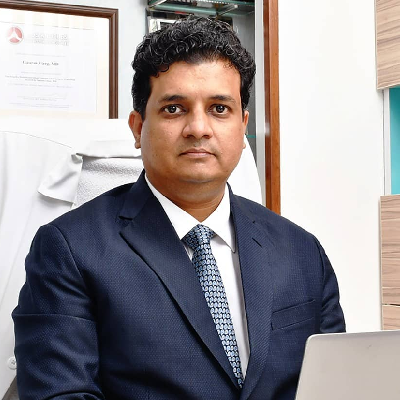
According to Dermalife's published profile, Dr. Gaurav Garg is the founder and director of Dermalife Skin & Hair Clinic and has more than 18 years of hands-on experience, with the clinic profile reporting more than 10,000 hair transplant procedures.
Experience can be particularly relevant when dealing with:
Advanced baldness
Limited donor supply
Difficult hairline design
Previous unsuccessful transplants
Repair procedures
Large graft requirements
Patients concerned about future hair loss
Nevertheless, every patient's outcome depends on individual circumstances, and no ethical clinic should guarantee an identical result for every patient.
What Happens After the Consultation?
If you decide to proceed, the clinic may prepare a surgical plan based on the consultation.
This can include:
Finalising the treatment area
Estimating graft requirements
Discussing the procedure
Reviewing preparation instructions
Explaining medications or precautions
Planning the procedure date
Discussing recovery and follow-up
You should have an opportunity to understand the procedure and its potential risks before giving informed consent.
Do not hesitate to take additional time if you are uncertain.
A hair transplant is an elective procedure, so patients should feel comfortable making a decision after receiving sufficient information.
Hair Transplant Consultation Checklist
Before visiting a hair transplant doctor in Delhi, take this checklist with you:
☑ Bring information about previous hair-loss treatments
☑ Mention any relevant medical conditions or medications
☑ Explain when your hair loss started
☑ Tell the doctor if hair loss is progressing rapidly
☑ Ask about donor-area capacity
☑ Ask how many grafts may be required
☑ Ask which technique is recommended and why
☑ Ask about expected recovery
☑ Ask about potential risks
☑ Ask how future hair loss will be managed
☑ Request a clear treatment estimate
☑ Ask who will perform the surgical steps
This preparation can make your consultation more productive.
Frequently Asked Questions
How much does a hair transplant cost in Delhi?
There is no single fixed cost. The price depends on factors such as graft requirements, degree of hair loss, technique and clinical requirements. Dermalife publishes indicative pricing on its website, but an individual quotation should be confirmed after consultation.
How do I find the best hair transplant surgeon in Delhi?
Look at medical qualifications, experience, surgical involvement, treatment planning, patient-specific recommendations and documented results. Do not select a surgeon solely because a website uses terms such as “best.”
Is FUE suitable for everyone?
Not necessarily. Suitability depends on donor-area quality, hair-loss pattern, scalp condition and other individual factors. A doctor should assess your case before recommending a technique.
What is the difference between FUE and Boosted FUE?
FUE describes a follicular-unit extraction approach. Boosted FUE is a technique promoted by Dermalife that focuses on graft handling and reducing the time grafts remain outside the body. The appropriate approach depends on the individual case.
Can women have hair transplants?
Some women with suitable donor hair and an appropriate diagnosis may be candidates. However, female hair loss can have different causes, so medical assessment is particularly important.
Is hair transplantation permanent?
Transplanted follicles can provide long-term growth, but surrounding non-transplanted hair may continue to thin depending on the underlying condition and individual factors. Long-term hair management should therefore be discussed during consultation.
Should I choose the cheapest hair transplant in Delhi?
Price should not be the only consideration. Compare the doctor's qualifications, treatment plan, graft strategy, surgical process, facilities, follow-up care and total cost before making a decision.
Can people from Gurgaon or Noida visit a Delhi hair transplant clinic?
Yes. Patients from across Delhi NCR may choose a Delhi clinic based on the doctor, treatment approach, accessibility and follow-up requirements. Dermalife is located in Green Park Extension, New Delhi.
Final Thoughts
A successful hair restoration journey starts well before the day of surgery.
If you are searching for a hair transplant surgeon in Delhi, don't begin your decision with price alone. Start with diagnosis, donor assessment, treatment planning and a clear understanding of what the procedure can realistically achieve.
Whether you are researching a hair transplant center in Delhi, comparing a hair transplant center in New Delhi, checking the hair transplant in Delhi price list, or looking for options for hair transplant Noida or hair transplant Gurgaon, a detailed consultation can help you make a better-informed choice.
Dermalife Skin & Hair Clinic in Green Park Extension, New Delhi, provides hair restoration consultations and procedures including FUE and Boosted FUE under the direction of Dr. Gaurav Garg.


