
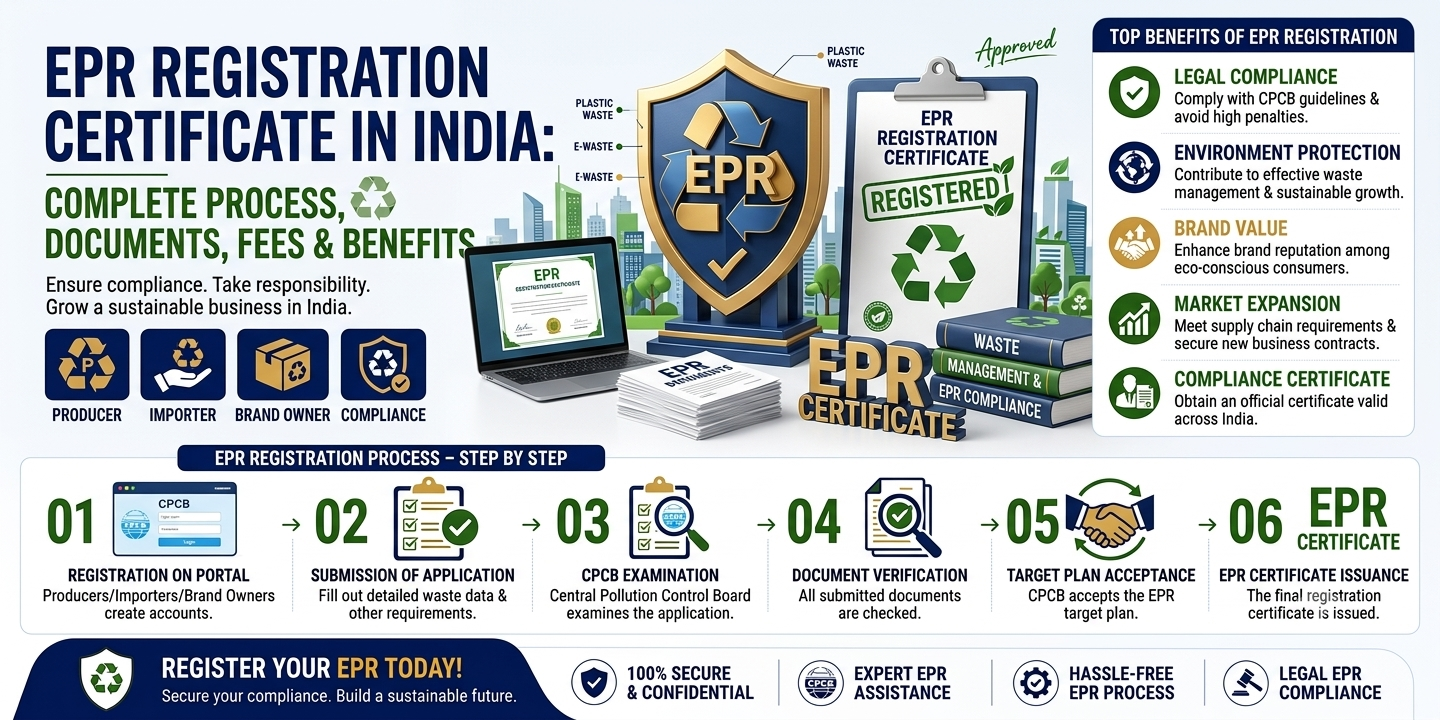
EPR Registration Certificate in India: Complete Process, Documents, Fees & Benefits

Managing waste is becoming a big responsibility for businesses in India. Companies that make, import, or sell products that create waste cannot simply ignore what happens after the product is used. This is where EPR Registration Certificate becomes important.
EPR stands for Extended Producer Responsibility. It means that producers and importers have a responsibility to help manage the waste created by their products.
What is an EPR Registration Certificate?
An EPR Registration Certificate is an approval that allows eligible producers, importers, and certain other entities to meet their waste-management responsibilities under applicable EPR rules.
The registration is generally handled through the concerned government authority, such as the Central Pollution Control Board (CPCB), depending on the type of waste.
For example, businesses dealing with plastic packaging may need to obtain plastic waste authorization and comply with the applicable Plastic Waste Management rules.
Simply put, EPR makes businesses think about the waste their products may create and take responsibility for its proper collection, recycling, or disposal.
Who Needs EPR Registration?
EPR requirements depend on the type of product and waste involved. EPR registration may apply to businesses such as:
-
Producers and manufacturers
-
Importers
-
Brand owners
-
Businesses introducing covered products or packaging into the Indian market
-
Entities covered under specific waste-management rules
The exact requirement depends on the category of waste and the business activity. Therefore, it is important to check the rules applicable to your business before applying.
EPR Registration Process in India
The application process can be completed online. While the exact requirements may differ according to the type of EPR registration, the general process is as follows:
Step 1: Identify the Applicable EPR Category
First, understand which EPR rules apply to your business. For example, plastic packaging, electronic waste, batteries, and other waste categories can have different requirements.
Step 2: Collect the Required Documents
Prepare the business, product, manufacturing, and waste-management details required for the application.
Step 3: Submit the Online Application
The applicant needs to register on the relevant government portal and submit the required information and documents.
Step 4: Pay the Applicable Fees
Government or processing charges may apply depending on the type of registration and category.
Step 5: Application Review
The concerned authority checks the application and supporting documents. If clarification or additional information is required, the applicant may need to respond.
Step 6: Receive the EPR Certificate
Once the application is approved, the EPR Registration Certificate is issued. The business must then follow the applicable EPR compliance requirements.
Documents Required for EPR Registration
The documents can vary depending on the type of EPR registration. Commonly required information may include:
-
PAN and Aadhaar details of the applicant or authorised person
-
Certificate of Incorporation or business registration proof
-
GST registration certificate, where applicable
-
Address proof of the business
-
Details of directors or authorised representatives
-
Product and packaging details
-
Details of production or import activities
-
Details of waste generated or handled
-
Agreements or details related to recyclers, collection agencies, or other authorised entities, where applicable
-
Other documents requested by the concerned authority
It is always better to prepare accurate information because incorrect details can delay the application.
EPR Registration Fees
There is no single fixed fee for every EPR application. The applicable charges can depend on the type of EPR category, business activity, quantity or capacity, and government requirements.
Apart from government fees, businesses may also have costs related to documentation, professional assistance, waste collection, recycling, and ongoing compliance.
Therefore, businesses should check the applicable fee structure before submitting their application.
Benefits of EPR Registration
Getting an EPR Registration Certificate can provide several important benefits:
1. Helps Meet Legal Requirements
Registration helps businesses meet their responsibilities under the applicable waste-management regulations.
2. Supports Proper Waste Management
EPR encourages businesses to participate in the collection, recycling, and responsible management of waste.
3. Builds Customer Trust
Customers are increasingly interested in businesses that take environmental responsibility seriously.
4. Supports Sustainable Business Practices
EPR encourages companies to think about what happens to their products after customers finish using them.
5. Reduces Compliance Problems
Following the required EPR process can help businesses avoid problems caused by non-compliance with applicable regulations.
Is EPR Registration Only for NGOs?
No. EPR registration is not the same as NGO registration.
An NGO may work in areas such as education, social welfare, health, or environmental protection. Depending on its activities and legal structure, an NGO may consider options such as 12A and 80G registration to obtain applicable tax benefits and donor-related advantages.
EPR, on the other hand, is related to specific waste-management responsibilities. An NGO does not automatically need EPR registration simply because it is an NGO.
Why Professional Help Can Be Useful
EPR rules can sometimes feel confusing because the requirements differ according to the waste category and type of business.
A professional consultant can help you understand the applicable requirements, prepare documents, submit the application correctly, and handle compliance-related requirements.
Corpbiz helps businesses with regulatory registrations and compliance services, including assistance related to EPR requirements.
Conclusion
An EPR Registration Certificate is an important compliance requirement for businesses covered by India's EPR framework. It helps ensure that producers, importers, and other covered entities take responsibility for the waste associated with their products.
From checking eligibility and preparing documents to submitting the application and maintaining compliance, every step should be completed carefully.
If your business deals with plastic packaging or other products covered by EPR rules, understanding your responsibilities early can make compliance much easier.
About the Author
Gaurav Sharma is a Legal Consultant at Corpbiz with over 10 years of experience in helping startups and businesses handle legal registrations and regulatory compliance in India. He specializes in business compliance, licensing, registrations, and related legal services. Gaurav focuses on explaining complex compliance requirements in simple language so business owners can make informed decisions.


