
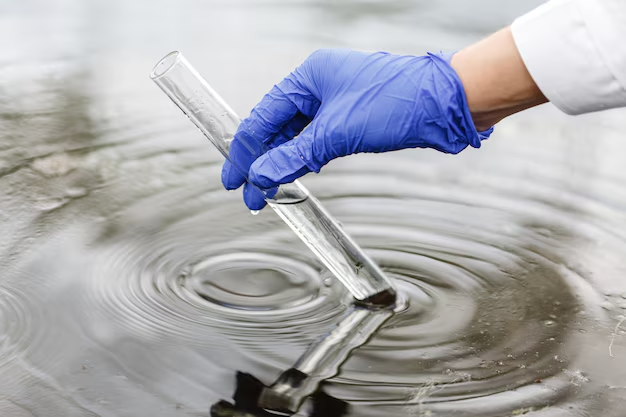
India Strengthens Water Treatment with Advanced Chemical Solutions

India’s water infrastructure is evolving as urbanization, industrial activity, population growth, and increasing attention to water quality create stronger requirements for effective treatment solutions. Water and wastewater treatment chemicals are used across municipal facilities, industrial plants, commercial establishments, and other applications to support processes such as coagulation, flocculation, disinfection, pH adjustment, and contaminant removal. The growing focus on water conservation and environmental management is also encouraging investment in treatment infrastructure.
A recent study by MarkNtel Advisors states that the India water & wastewater treatment chemicals industry was valued at USD 2.38 billion in 2025 and is projected to reach USD 2.49 billion in 2026 and USD 3.65 billion by 2032, registering a CAGR of 6.6% during 2026–2032. The sector’s development is being influenced by expanding water infrastructure, industrial wastewater management, urbanization, sanitation requirements, environmental regulations, and increasing demand for reliable treatment technologies.
Urbanization Increases Water Treatment Requirements
India’s expanding urban population is increasing demand for reliable drinking-water and wastewater infrastructure. Cities require treatment systems that can process water from different sources and maintain appropriate quality before distribution or discharge.
Treatment chemicals support several stages of these systems. Coagulants can help separate suspended particles, flocculants can improve settling, disinfectants can control microorganisms, and pH-adjustment chemicals can help maintain appropriate treatment conditions.
The Central Pollution Control Board highlights the importance of systematic water-quality management, including monitoring, identification of pollution sources, and assessment of pollution-control requirements in its Guidelines for Water Quality Management. These requirements can support demand for treatment chemicals and associated equipment.
Industrial Wastewater Creates New Opportunities
Industrial facilities generate wastewater containing different types of contaminants depending on the manufacturing process. Food processing, chemicals, pharmaceuticals, textiles, metals, pulp and paper, and other industries may require specialized treatment processes before water can be reused or discharged.
Chemical treatment can help operators manage suspended solids, organic contaminants, metals, color, microorganisms, and other pollutants. As industrial production expands, treatment facilities may require more consistent chemical dosing and monitoring to maintain performance.
Drinking Water Safety Remains Important
Reliable drinking-water treatment is essential for protecting public health. Treatment facilities use combinations of physical, chemical, and biological processes to improve water quality before distribution.
The Jal Jeevan Mission provides a dedicated Handbook on Water Quality covering water-quality monitoring, contaminants, testing, and management approaches. Such national-level guidance reflects the importance of maintaining water quality across drinking-water systems.
Increasing investment in piped-water infrastructure can therefore create opportunities for treatment chemicals, dosing equipment, monitoring systems, and related services.
Coagulants Support Efficient Clarification
Coagulation and flocculation are widely used processes for removing suspended and colloidal particles from water. Chemicals such as alum, ferric salts, and polymer-based products can help destabilize particles and encourage their aggregation into larger flocs.
These flocs can then be separated through sedimentation or filtration. The selection of treatment chemicals depends on water characteristics, contaminant levels, temperature, pH, dosage requirements, and the design of the treatment plant.
Disinfection Strengthens Public Health Protection
Disinfection is another important application for water-treatment chemicals. Chlorine-based products, chlorine dioxide, ozone, and other technologies can be used to control microorganisms under appropriate treatment conditions.
Effective disinfection requires careful control because treatment levels need to be sufficient for microbial control while remaining compatible with water-quality requirements. Automated dosing and monitoring technologies can help treatment operators maintain consistent chemical application.
Wastewater Reuse Encourages Treatment Investment
Water scarcity and increasing demand from cities and industries are encouraging greater attention to wastewater reuse. Treated wastewater can potentially support applications such as industrial processes, landscaping, cooling, construction, and other non-potable uses when treated to appropriate standards.
Greater reuse can reduce pressure on freshwater resources while helping organizations manage wastewater more efficiently. Advanced chemical treatment can form part of broader treatment trains that include filtration, biological treatment, membrane processes, and disinfection.
Chemical Efficiency Gains Greater Attention
Treatment operators are increasingly focused on optimizing chemical consumption. Excessive dosing can increase operating costs and generate additional residuals, while insufficient dosing may reduce treatment performance.
Online sensors, automated dosing systems, laboratory testing, and process-control technologies can help operators adjust chemical requirements based on changing water conditions. This can improve treatment consistency while supporting more efficient resource use.
Environmental Compliance Shapes Demand
Environmental regulations are influencing how industrial facilities and municipal authorities manage wastewater. Organizations need to monitor discharge quality and implement appropriate treatment processes to meet applicable requirements.
This environment can encourage investment in modern treatment plants, chemical dosing systems, monitoring equipment, and specialized treatment formulations. Suppliers that can provide reliable products alongside technical support and application expertise may benefit from increasing demand.
Advanced Technologies Expand Applications
Treatment systems are becoming more sophisticated as operators combine conventional chemical processes with membrane filtration, biological treatment, ultraviolet technologies, advanced oxidation, and digital monitoring.
Chemical suppliers can participate in this development by offering products compatible with integrated treatment systems. Customized formulations and application-specific dosing strategies can help facilities address different water-quality challenges.
Future Growth Remains Water-Focused
India’s water and wastewater treatment chemicals sector is developing alongside urbanization, industrial expansion, sanitation infrastructure, water-quality management, and increasing interest in water reuse. The projected increase from USD 2.49 billion in 2026 to USD 3.65 billion by 2032 indicates continued opportunities across municipal and industrial applications.
Future development is likely to remain connected with advanced coagulation, efficient disinfection, wastewater reuse, automated chemical dosing, digital monitoring, industrial wastewater treatment, and improved treatment efficiency. As India continues strengthening its water infrastructure, chemical solutions that support reliable treatment, resource efficiency, and environmental compliance are expected to remain important across the country.


