
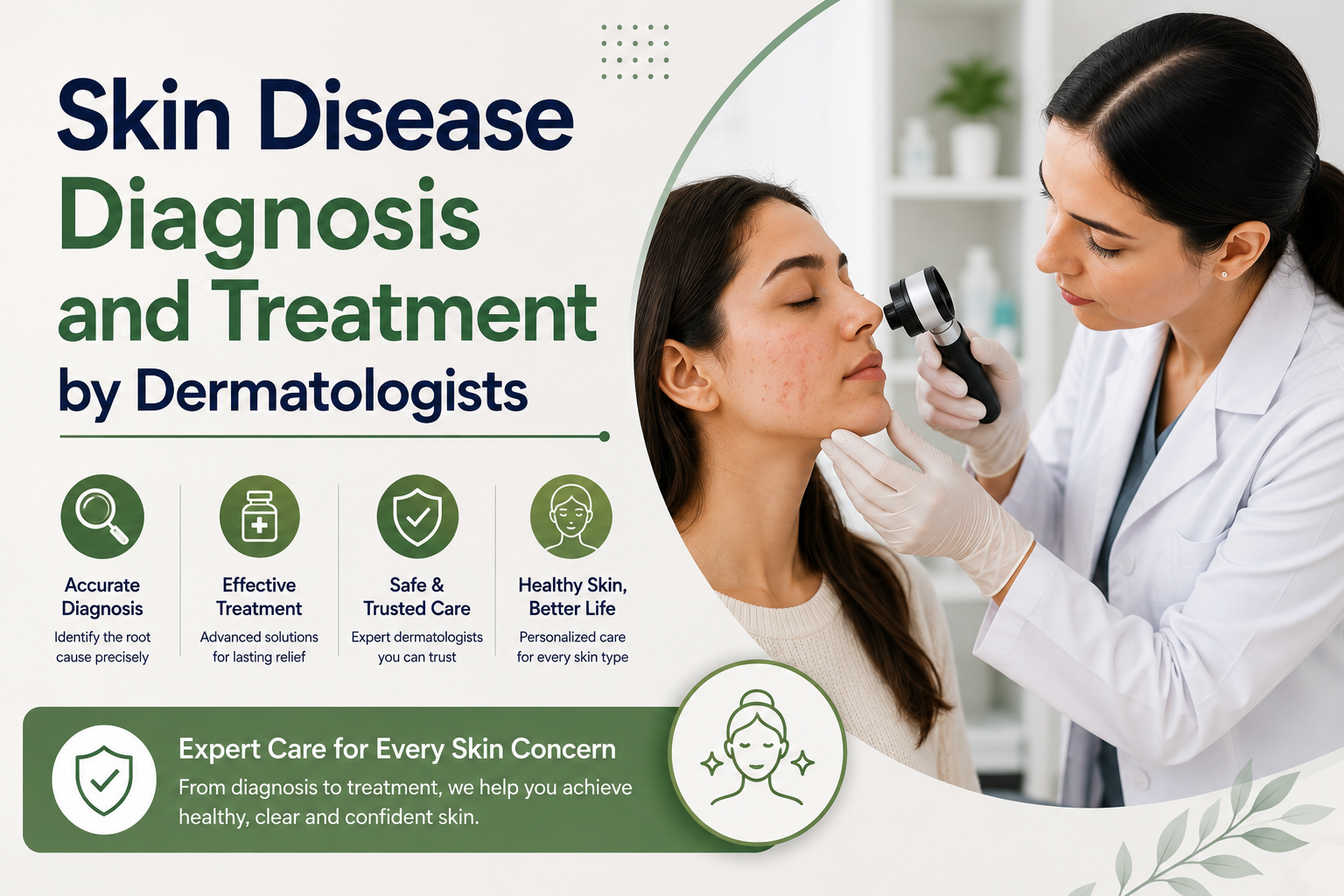
Skin Disease Diagnosis and Treatment by Dermatologists

Skin problems can affect people of all ages. Some concerns are mild and temporary, while others continue for weeks, repeatedly return, or become more uncomfortable over time. Acne, persistent rashes, itching, infections, pigmentation changes, and scalp problems can also have different underlying causes even when their symptoms appear similar.
This is why professional skin disease diagnosis and treatment begins with understanding the condition rather than simply treating what is visible on the skin.
Clinical dermatology focuses on diagnosing and managing medical conditions affecting the skin, hair, scalp, and nails. A dermatologist evaluates symptoms, medical history, possible triggers, and the pattern of the condition before recommending appropriate treatment.
Why Is Correct Skin Disease Diagnosis Important?
Many skin conditions share common symptoms.
Redness and itching, for example, may occur with eczema, contact dermatitis, fungal infections, allergic reactions, and several other conditions. Similarly, dark patches can develop because of previous inflammation, sun exposure, hormonal influences, or other skin disorders.
This makes self-diagnosis difficult.
Using treatment intended for the wrong condition may not provide the expected improvement. In some situations, it can also irritate the skin or temporarily change the appearance of the problem.
A diagnosis-first approach allows treatment to address the likely cause rather than only controlling visible symptoms.
How Does a Dermatologist Diagnose a Skin Condition?
A dermatology consultation usually begins with a discussion about the symptoms.
The dermatologist may ask when the problem started, whether it has changed, what makes it better or worse, which treatments have already been tried, and whether similar problems have occurred previously.
Relevant medical history, medications, skincare products, allergies, family history, and lifestyle factors may also be considered.
The affected area is then examined carefully. Dermatologists look at characteristics such as the location, colour, shape, texture, borders, distribution, and pattern of the skin changes.
Many conditions can be identified through medical history and clinical examination. When the diagnosis is uncertain, additional investigations may sometimes be recommended.
Tests Used to Diagnose Skin Diseases
Not every skin problem requires laboratory testing.
When additional information is necessary, a dermatologist may recommend a specific test depending on the suspected condition.
Skin scrapings, for example, may help investigate certain fungal infections. Patch testing may be considered when allergic contact dermatitis is suspected. Blood tests can sometimes provide useful information when symptoms may be associated with an underlying medical issue.
A skin biopsy may also be recommended in selected cases. This involves removing a small sample of skin for microscopic examination.
The tests used depend on the individual symptoms and suspected diagnosis rather than being routinely required for every patient.
Diagnosis and Treatment of Acne
Acne is one of the most common skin conditions and can affect both teenagers and adults.
It may appear as blackheads, whiteheads, inflamed pimples, or deeper painful lesions. Persistent acne can sometimes result in dark marks or scarring.
A dermatologist assesses the type and severity of acne before deciding on treatment. Depending on the individual case, management may include topical medicines, oral medication, appropriate skincare, or certain dermatological procedures.
Treatment usually requires consistency and time. Frequently switching products without understanding the type of acne may make it more difficult to establish an effective routine.
Eczema and Dermatitis Treatment
Eczema and dermatitis can cause dryness, itching, redness, irritation, and inflammation.
Different types of dermatitis can have different triggers. Some may be associated with an impaired skin barrier, while others occur after exposure to irritants or allergens.
Treatment therefore depends on the diagnosis.
Management may include regular moisturising, avoiding identified triggers, prescribed topical treatments, or additional medication when appropriate.
Because some forms of eczema are chronic, treatment may focus on controlling flare-ups and maintaining healthier skin between episodes rather than expecting a one-time cure.
Psoriasis Diagnosis and Long-Term Management
Psoriasis is a chronic immune-mediated condition that can cause inflamed, raised, or scaly areas of skin. It may affect the scalp, elbows, knees, and other parts of the body.
Symptoms can vary considerably between individuals.
Treatment depends on the severity, affected areas, and impact on everyday life. Options can include topical medicines, phototherapy, oral medication, or injectable treatments when clinically appropriate.
Since psoriasis can improve and flare again, ongoing dermatological management may sometimes be necessary.
Identifying and Treating Skin Infections
Skin infections can be caused by fungi, bacteria, viruses, and other organisms.
Depending on the cause, symptoms may include itching, redness, scaling, swelling, pain, blisters, sores, or discharge.
Correct diagnosis is particularly important because different infections require different treatments. An antifungal medicine, for example, will not treat a bacterial infection.
A dermatologist may assess the infection through examination and recommend additional testing when necessary. Treatment is then selected according to the identified or suspected cause.
Persistent, spreading, painful, or rapidly worsening infections should receive appropriate medical evaluation.
Managing Persistent Rashes and Skin Allergies
A rash is a symptom rather than a single disease.
Eczema, allergic reactions, contact dermatitis, infections, and other conditions can all cause rashes. Understanding where the rash appears, when it started, whether it returns, and what may trigger it can help narrow down the cause.
A dermatologist may recommend topical treatment, moisturisers, avoidance of suspected triggers, or further investigation depending on the diagnosis.
For recurring reactions, identifying the trigger can become an important part of long-term management.
Pigmentation Problems
Changes in skin colour are another common dermatological concern.
Dark spots, uneven pigmentation, post-acne marks, melasma, and areas of reduced pigmentation can develop for different reasons.
Treatment should therefore be based on the cause rather than simply trying to lighten or change the affected area.
Depending on the diagnosis, management may involve sun protection, topical medicines, appropriate skincare, or dermatological procedures.
Unsupervised use of aggressive products may irritate the skin and can sometimes make pigmentation concerns more noticeable.
Hair and Scalp Disorders
Dermatologists also diagnose and treat medical conditions involving the hair and scalp.
Hair loss may occur because of genetics, hormonal influences, nutritional deficiencies, medications, stress, scalp disease, or other health factors.
Similarly, persistent dandruff, itching, redness, or scaling may sometimes be related to seborrhoeic dermatitis, psoriasis, infection, or another scalp condition.
A dermatologist can examine the scalp, assess the pattern of hair loss, review relevant history, and recommend investigations when needed.
Treatment is then based on the identified cause.
Nail Disorders
Changes in nail colour, thickness, texture, or shape can occur because of infections, injury, inflammatory skin conditions, or other factors.
Not every abnormal-looking nail is caused by a fungal infection.
A dermatologist can examine the nails and surrounding skin and may collect a sample for laboratory testing when necessary.
Correct diagnosis helps avoid unnecessary treatment and ensures that management is directed toward the actual condition.
Treatment for Chronic Skin Diseases
Some skin conditions resolve after appropriate treatment, while others require long-term management.
Eczema, psoriasis, and certain other chronic skin diseases can go through periods when symptoms improve and periods when they become more noticeable.
Treatment may therefore involve more than medication during a flare-up. Patients may also receive guidance about skincare, known triggers, sun protection, and maintaining the skin barrier.
Follow-up appointments allow the dermatologist to assess progress and adjust treatment when necessary.
Why Follow-Up Care Matters
Skin conditions do not always improve immediately after treatment begins.
Some medicines require consistent use before noticeable changes occur, while chronic conditions may need periodic treatment adjustments.
Follow-up care allows a dermatologist to assess how the skin is responding, review any side effects, and determine whether the original treatment plan remains appropriate.
Patients should also discuss concerns about medication or treatment rather than stopping or changing prescribed treatment without medical guidance.
When Should You See a Dermatologist?
Professional evaluation may be useful when a skin condition persists for several weeks, repeatedly returns, spreads, becomes painful, causes significant itching, or does not improve with appropriate basic care.
You may also consider seeing a dermatologist for unexplained hair loss, persistent scalp problems, recurring infections, unusual nail changes, or pigmentation concerns.
A new or changing mole or skin growth should also be professionally assessed, particularly when there are changes in its size, shape, colour, border, or behaviour.
Severe or rapidly worsening symptoms may require prompt medical attention.
Conclusion
Effective skin disease diagnosis and treatment by dermatologists begins with identifying what is causing the problem.
Acne, eczema, psoriasis, infections, pigmentation changes, recurring rashes, hair loss, scalp problems, and nail disorders can require very different treatment approaches. A dermatologist combines medical history, physical examination, and diagnostic tests when necessary to determine an appropriate course of care.
Some skin conditions can be treated over a relatively short period, while chronic conditions may require ongoing management. When symptoms persist, repeatedly return, or begin affecting daily life, professional clinical dermatology services can help establish a diagnosis and determine suitable treatment options.
Frequently Asked Questions
What skin diseases can a dermatologist diagnose?
Dermatologists diagnose a wide range of conditions, including acne, eczema, psoriasis, infections, pigmentation disorders, hair and scalp problems, and nail conditions.
Does every skin problem require diagnostic tests?
No. Many conditions can be diagnosed through medical history and physical examination. Additional tests are generally considered when more information is needed.
Can chronic skin diseases be treated?
Many chronic conditions can be effectively managed, although some may periodically return. Treatment generally focuses on controlling symptoms and reducing flare-ups.
When should I consult a dermatologist?
Consider professional evaluation when a skin problem persists, repeatedly returns, spreads, worsens, or causes significant discomfort.


