
What Is Payment as a Service in 2026? FSS Tech Explains
Banks and businesses are under pressure today. Customers want instant cards. Customers want smooth checkout. Customers want every payment to just work.
This is true whether they are tapping a card at an ATM, paying online, or checking out in a store. Building all of this in-house is expensive. It is also slow.
This is exactly why more banks, fintechs, and merchants are turning to payment as a service. Companies like FSS Tech are combining payment as a service, ATM card issuance, and digital commerce solution offerings.
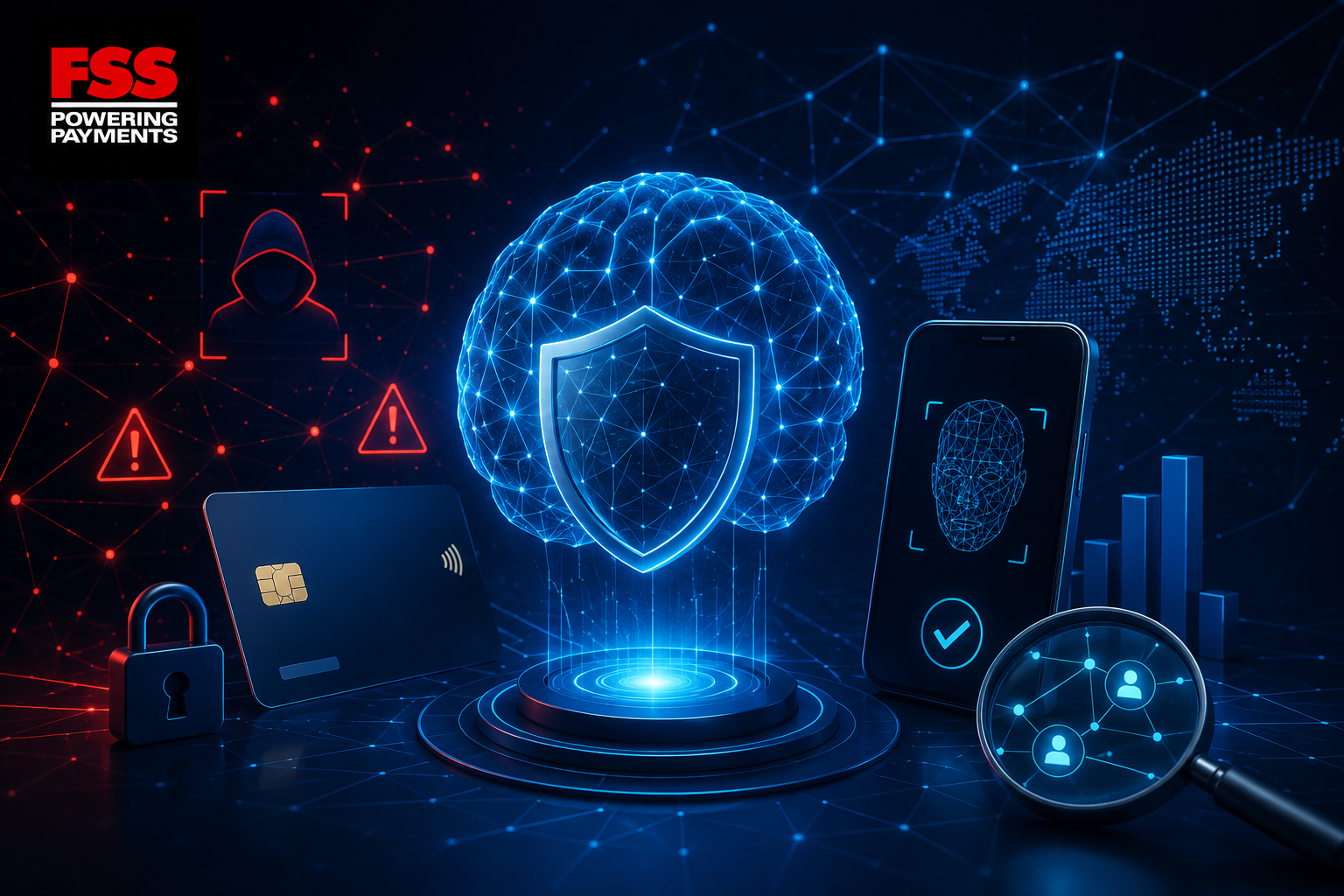
All of this is powered by AI. It helps businesses move faster without building everything from scratch.
In this article, we will explain what payment as a service actually means. We will look at how ATM card issuance works today.
We will also explain why a digital commerce solution matters more than ever. Along the way, we will share real numbers, real use cases, and show how FSS Tech is helping banks and merchants across India, USA, South Africa, and UAE.
What Is Payment as a Service?
Payment as a service is often called PaaS in the payments world. It means a bank or business does not have to build its own payment infrastructure from the ground up.
Instead, it uses a ready-made platform. That platform handles processing, compliance, fraud checks, and settlement. It works much like renting a fully furnished office instead of constructing a building.
This model is growing fast. The global payment as a service market is expected to cross 25 billion dollars in 2026. It is projected to keep growing at a strong pace over the next several years.
More than seven out of ten enterprises are now shifting toward platform-based payment systems instead of building their own. This shows how big the shift toward payment as a service has become.
Why Are Banks and Merchants Choosing Payment as a Service Over Building In-House?
Building payment infrastructure from scratch takes years. It also needs constant investment in security, compliance, and upgrades.
Payment as a service solves this problem in a simple way. Launch time for new payment products becomes faster. Upfront cost stays lower compared to building infrastructure from scratch.
Compliance and security updates come built in. Scaling becomes easy as transaction volumes grow. Access to AI based fraud checks comes ready-made, without needing to build AI in-house.
Because of these benefits, payment as a service has become the practical choice. Banks, fintechs, and merchants can grow quickly without taking on heavy technical risk.
How Does ATM Card Issuance Work Today?
ATM card issuance is the process of creating and activating a debit or ATM card for a customer. In the past, this process was slow.
A customer would apply for a card. Then they would wait for it to be printed. Then they would wait again for it to be delivered by post. This could take days or even weeks.
Today, ATM card issuance looks very different. Modern platforms support instant card issuance. A customer can get a virtual card the moment their account is approved. The physical card can follow later.
AI plays a big role here too. AI based systems check the customer's risk profile instantly. They verify identity documents. They flag suspicious applications before a card is even issued. This makes the whole process faster and safer at the same time.
Why Does Instant ATM Card Issuance Matter for Banks in India, USA, South Africa, and UAE?
Customers today expect speed. If a bank takes too long to issue a card, the customer may simply choose another bank. This is true across all four markets.
In India, customers expect instant UPI-linked debit cards. AI helps by verifying KYC and flagging fraud within seconds.
In the USA, customers expect fast virtual card access for online use. AI checks credit risk and identity in real time there.
In South Africa, banks need reliable card issuance as digital banking keeps growing. AI helps by cutting down manual review time.
In the UAE, customers expect a premium and secure card experience. AI adds an extra layer of fraud protection for high-value transactions.
This shows why ATM card issuance is no longer just about printing plastic. It has become a technology-driven process, and AI sits right at the center of it.
What Is a Digital Commerce Solution and Why Does It Matter?
A digital commerce solution is the technology that allows a business to accept payments across different channels. This includes online stores, mobile apps, in-store terminals, and even QR code payments.
A good digital commerce solution connects all of these channels into one system. A business does not have to manage separate tools for each payment method this way.
Read More at FSS Tech


