

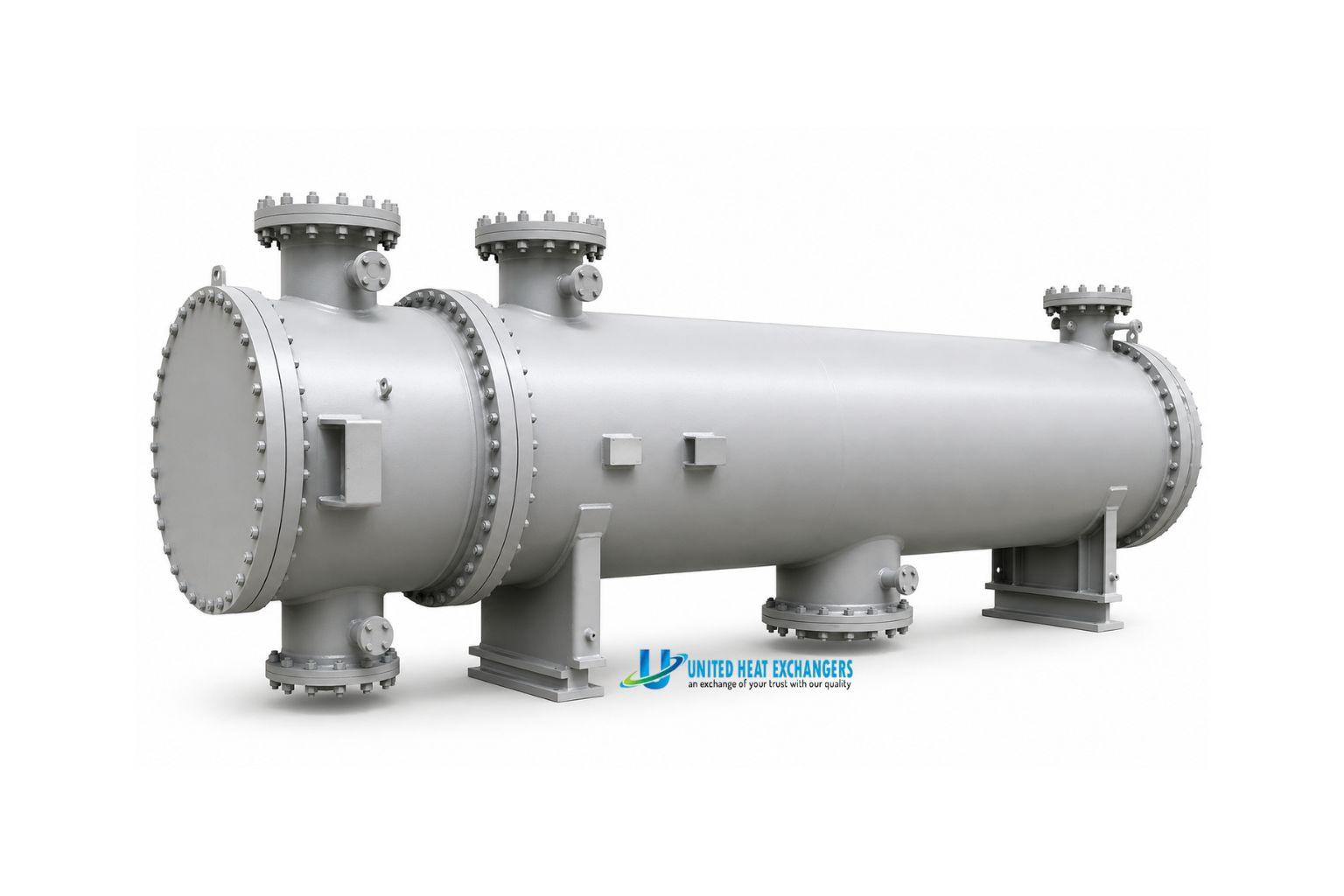
How Does a Shell and Tube Heat Exchanger Work?

Shell and tube heat exchangers are among the most widely used heat transfer systems in industries such as oil and gas, chemical processing, power generation, food manufacturing, pharmaceuticals, and HVAC. Their simple yet effective design allows them to transfer heat efficiently between two fluids without mixing them.
What Is a Shell and Tube Heat Exchanger?
A shell and tube heat exchanger consists of two main components:
- Shell: A cylindrical outer vessel that contains one of the fluids.
- Tube Bundle: A group of tubes through which the second fluid flows.
The two fluids remain separated by the tube walls while heat passes through the metal surface from the hotter fluid to the cooler one.
How Does It Work?
The working principle is based on heat transfer.
- A hot fluid enters either the shell side or the tube side.
- A cold fluid enters the opposite side.
- As both fluids flow through the heat exchanger, heat moves through the tube walls from the hotter fluid to the cooler fluid.
- The fluids never come into direct contact, preventing contamination.
- The heated or cooled fluids exit through separate outlets and continue to the next stage of the process.
This continuous heat exchange improves energy efficiency and helps maintain the required process temperatures.
Types of Flow Arrangement
Counterflow
The two fluids move in opposite directions. This design provides the highest heat transfer efficiency and is commonly used in industrial applications.
Parallel Flow
Both fluids move in the same direction. While simpler in design, it is generally less efficient than counterflow.
Crossflow
The fluids flow perpendicular to each other. This arrangement is used in certain specialized cooling and heating applications.
Main Components
A shell and tube heat exchanger typically includes:
- Shell
- Tube bundle
- Tubesheets
- Baffles
- Front and rear channel heads
- Inlet and outlet nozzles
- Gaskets and seals
- Support saddles
Each component is designed to improve heat transfer, control fluid flow, and ensure reliable operation.
Advantages
- High heat transfer efficiency
- Handles high pressures and temperatures
- Suitable for liquids, gases, steam, and chemicals
- Easy to inspect, clean, and maintain
- Long service life
- Available in a wide range of sizes and materials
- Customizable for different industrial processes
Common Applications
Shell and tube heat exchangers are widely used for:
- Oil and gas processing
- Petrochemical plants
- Power generation
- Chemical manufacturing
- Food and beverage processing
- Pharmaceutical production
- Marine systems
- HVAC installations
- Refineries
- Heat recovery systems
Choosing the Right Heat Exchanger
Selecting the correct shell and tube heat exchanger depends on several factors, including:
- Operating temperature
- Working pressure
- Flow rate
- Type of process fluid
- Corrosion resistance
- Heat duty
- Installation space
- Industry standards such as ASME, TEMA, and API
A properly engineered heat exchanger improves efficiency, minimizes maintenance, and reduces operating costs.
Why Choose United Heat Exchangers?
United Heat Exchangers designs and manufactures high-performance shell and tube heat exchangers for a wide range of industrial applications. With decades of engineering experience, customized designs, and compliance with international standards, we deliver reliable heat transfer solutions that maximize performance, durability, and energy efficiency.
Conclusion
A shell and tube heat exchanger works by transferring heat between two separate fluids through the walls of a tube bundle. Its robust construction, high efficiency, and ability to operate under demanding conditions make it one of the most reliable and versatile heat exchangers available. Whether your process requires heating, cooling, condensing, or heat recovery, shell and tube heat exchangers provide dependable performance for industries around the world.


