
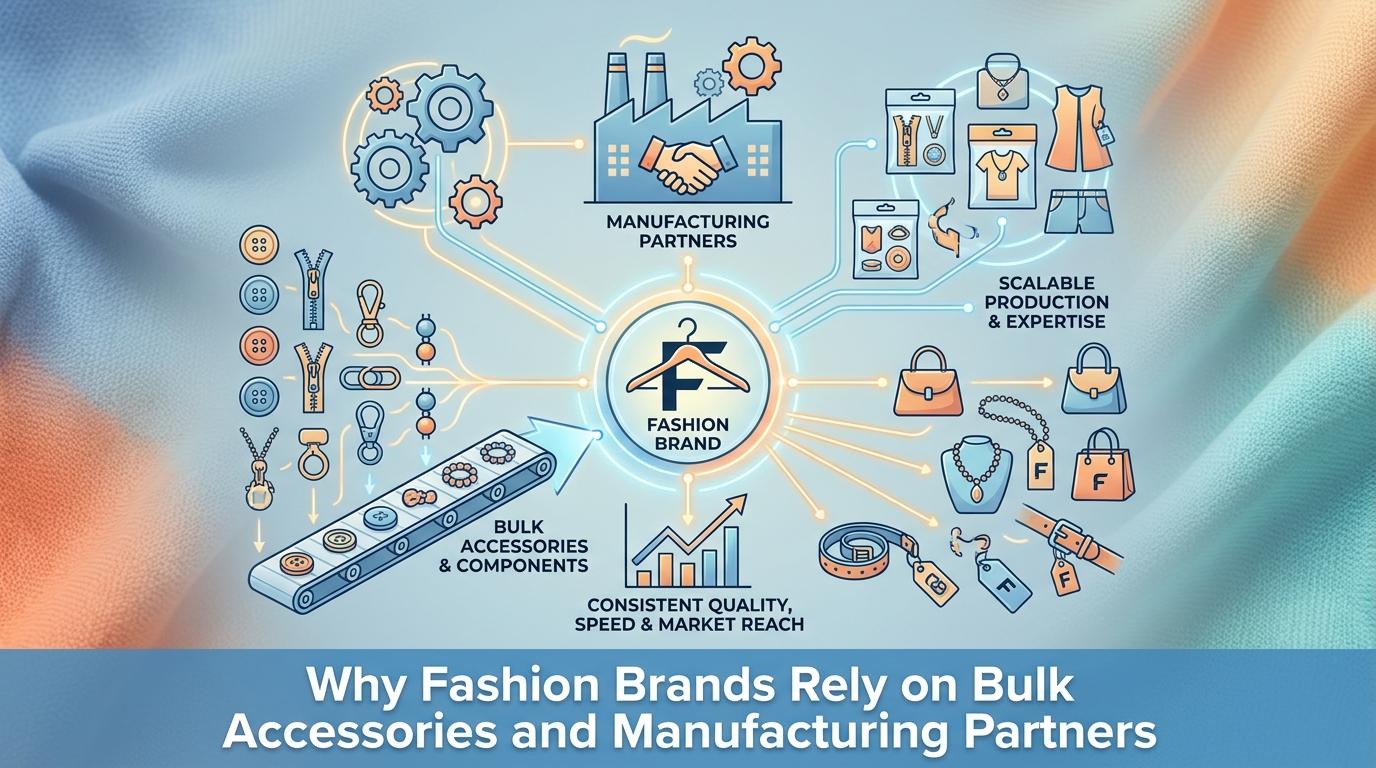
Why Fashion Brands Rely on Bulk Accessories and Manufacturing Partners

Building a fashion brand looks simple from the outside. A great logo, stylish products, and a strong social media presence can make success seem easy. But behind every growing fashion label is a system that keeps products moving, quality consistent, and customers happy.
One of the biggest reasons successful brands scale faster than competitors is their ability to work with trusted manufacturing partners. Fashion companies rarely handle everything themselves. Instead, they depend on experienced suppliers, production facilities, and accessory manufacturers that help them meet customer demand without sacrificing quality.
As competition grows across apparel and accessories, fashion brands are relying on bulk accessories and manufacturing partners more than ever. From bags and wallets to apparel production and private labeling, these partnerships help brands stay efficient, profitable, and ready for growth.
For startups, entrepreneurs, and established businesses, understanding why fashion brands depend on manufacturing partners can reveal valuable lessons about scaling operations and building a stronger brand.
The Growth Challenge Every Fashion Brand Faces
Most fashion businesses begin with a simple idea. A founder creates a product, builds an audience, and starts generating sales.
The challenge appears when demand increases.
Suddenly, producing products in small batches becomes expensive and time-consuming. Inventory shortages start affecting customer satisfaction. Shipping delays become common. Quality control becomes harder to maintain.
This is where manufacturing partners become critical.
Instead of trying to manage production internally, fashion brands often partner with experienced suppliers who already have the infrastructure, workforce, and production systems needed to handle larger volumes.
Why Bulk Accessories Matter for Fashion Brands
Accessories play a major role in modern fashion.
Consumers rarely purchase clothing alone. They often buy complementary products that complete an outfit, including bags, wallets, belts, keychains, and other essentials.
Offering accessories helps brands increase average order value while creating a stronger brand identity.
Buying accessories in bulk also helps companies reduce costs and improve profit margins.
Lower Production Costs
Manufacturing larger quantities usually lowers the cost per unit.
When fashion brands purchase accessories in bulk, they benefit from economies of scale. Materials, labor, and production expenses become more efficient, allowing brands to offer competitive pricing while protecting profitability.
Consistent Brand Experience
Consistency matters in fashion.
Customers expect the same quality every time they buy a product. Bulk production helps maintain uniformity across collections, ensuring that products meet the same standards regardless of order size.
This consistency builds trust and strengthens long-term customer relationships.
The Growing Demand for Bulk Bags
Bags have become one of the most profitable categories in fashion.
Unlike seasonal apparel, bags often remain relevant throughout the year. They serve both functional and fashion purposes, making them attractive products for brands looking to expand their collections.
Many businesses source bulk cross body bags because consumers value convenience, versatility, and modern styling. These bags work across multiple demographics and fit both casual and professional lifestyles.
Similarly, demand for bulk tote bags continues growing as consumers look for practical everyday carry options. Their large storage capacity and broad design flexibility make them popular among retailers and private label brands.
For professional markets, brands often invest in bulk laptop bags to meet the needs of business professionals, students, and remote workers. As hybrid work environments continue expanding, laptop bags remain a strong product category with consistent demand.
Why Manufacturing Partners Are Essential
Manufacturing partners provide much more than production capacity.
They bring expertise, efficiency, and industry knowledge that help brands avoid costly mistakes.
Access to Specialized Skills
Fashion production requires technical knowledge.
Pattern development, fabric sourcing, stitching techniques, quality testing, and finishing processes all require experience. Manufacturing partners already have trained teams capable of producing products at a professional level.
This allows brands to focus on sales, marketing, and customer growth instead of managing production complexities.
Faster Time to Market
Fashion trends move quickly.
Brands that take too long to launch products often miss opportunities.
Experienced manufacturing partners streamline production timelines, helping businesses bring new collections to market faster and respond quickly to changing consumer demand.
Scalability Without Massive Investment
Building a manufacturing facility requires significant capital.
Equipment, staff, quality systems, and operational expenses can quickly become overwhelming for growing businesses.
Manufacturing partnerships eliminate much of that burden by providing existing production infrastructure.
Brands gain the ability to scale without making major upfront investments.
The Role of Clothing Manufacturing Partners
While accessories play an important role, apparel remains the foundation of many fashion brands.
Finding reliable clothing line manufacturers is often one of the most important decisions a fashion business will make.
A trusted manufacturing partner helps maintain product quality, meet delivery deadlines, and support long-term growth goals.
The right partner can become an extension of the brand itself.
Private Label Opportunities
Many fashion businesses use private label production to create exclusive collections.
Manufacturing partners help brands customize products with unique branding, labels, packaging, and design elements.
This allows businesses to build a distinct identity without managing production internally.
Product Diversification
Fashion brands that rely on experienced manufacturers can expand product offerings more easily.
Adding jackets, hoodies, activewear, gloves, bags, or accessories becomes much simpler when production capabilities already exist.
This flexibility creates more opportunities for growth and customer retention.
What Fashion Brands Look for in Manufacturing Partners
Not every supplier is the right fit.
Successful brands carefully evaluate potential partners before committing to long-term relationships.
Quality Control Systems
Consistent quality remains one of the most important factors.
Reliable manufacturers have documented quality processes that help identify issues before products reach customers.
Transparent Communication
Strong communication prevents misunderstandings and production delays.
Brands need manufacturing partners who provide regular updates, realistic timelines, and clear expectations.
Production Capacity
A supplier should be capable of supporting future growth.
What works for a startup may not work for a brand processing thousands of orders each month.
Production capacity should align with long-term business goals.
Ethical Manufacturing Practices
Consumers increasingly care about how products are made.
Brands often seek manufacturing partners that follow responsible labor practices, workplace safety standards, and ethical sourcing policies.
Red Flags When Working With Overseas Manufacturers
Overseas production can offer cost advantages, but it also requires careful evaluation.
Fashion brands should watch for warning signs before entering agreements.
- Unclear pricing structures
- Poor communication response times
- Inconsistent product samples
- Lack of production transparency
- No quality assurance procedures
- Unrealistically low pricing
- Limited references or client history
Choosing the wrong manufacturing partner can create delays, quality issues, and financial losses.
Thorough supplier vetting remains essential for long-term success.
How Manufacturing Partnerships Support Brand Growth
Fashion brands that scale successfully rarely do it alone.
Manufacturing partners provide the foundation that supports growth across every stage of business development.
They help maintain inventory levels, improve production efficiency, reduce operational risk, and create consistency across product lines.
Most importantly, they allow business owners to focus on brand building rather than production management.
As customer expectations continue increasing, dependable manufacturing relationships become even more valuable.
Frequently Asked Questions
Why do fashion brands buy accessories in bulk?
Fashion brands purchase accessories in bulk to reduce production costs, improve profit margins, maintain quality consistency, and meet customer demand more efficiently.
What products are commonly sourced in bulk?
Common bulk products include bags, wallets, belts, keychains, apparel, gloves, and other fashion accessories that complement clothing collections.
Why are manufacturing partners important for fashion businesses?
Manufacturing partners provide production expertise, scalability, quality control, and operational efficiency that help brands grow without major infrastructure investments.
How do manufacturing partners help startups?
Startups gain access to established production systems, lower manufacturing costs, professional expertise, and faster product launches without building their own facilities.
What should brands look for in a manufacturing partner?
Brands should evaluate quality standards, communication practices, production capacity, ethical manufacturing policies, and long-term reliability before selecting a partner.
Partner With Rays Creations for Scalable Fashion Manufacturing
Whether you're launching a new fashion label or expanding an established brand, having the right manufacturing partner can make all the difference. Rays Creations helps businesses create premium apparel, bags, wallets, gloves, and accessories through dependable production, customization options, and bulk manufacturing solutions designed for growth. With quality craftsmanship and flexible production capabilities, brands can build stronger collections while staying focused on what matters most: serving customers and growing the business.


