
How Tile Adhesive in Nigeria Improves Tile Lifespan and Reduces Maintenance Costs
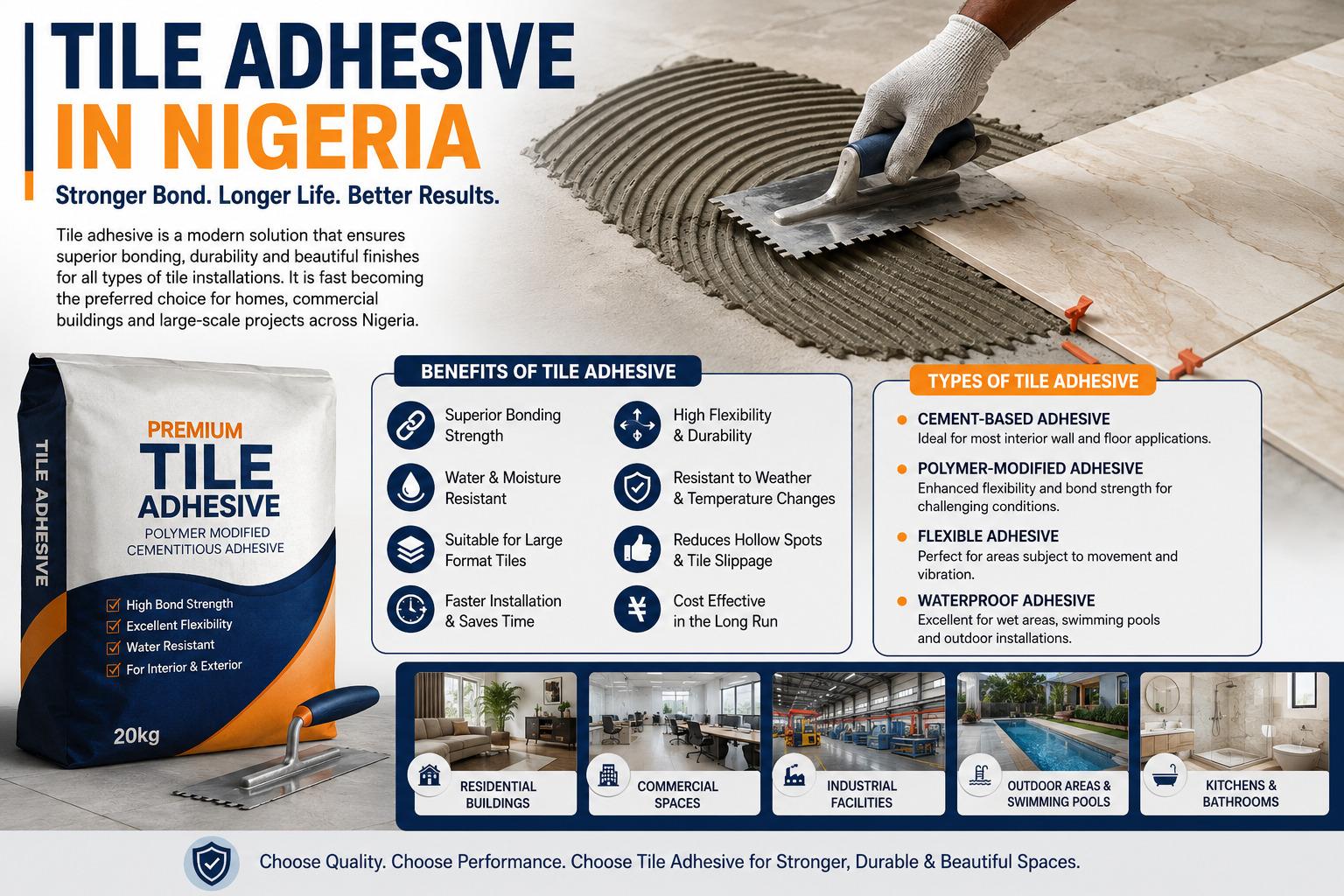
The durability and appearance of tiled surfaces depend on more than just the quality of the tiles themselves. The material used to bond the tiles to the substrate plays a critical role in determining how long the installation will last and how much maintenance it will require over time. As construction standards continue to improve, builders, contractors, and property owners are increasingly recognizing the value of using Tile Adhesive in Nigeria to achieve long-lasting and cost-effective tile installations.
For many years, traditional cement-sand mortar was the preferred method for fixing tiles. While this approach remains common in some areas, it often results in problems such as tile detachment, cracking, water damage, and costly repairs. Modern tile adhesive solutions have transformed the industry by providing stronger bonding, greater flexibility, and improved resistance to environmental conditions.
Whether used in residential homes, commercial buildings, hotels, shopping malls, or industrial facilities, tile adhesive helps maximize tile lifespan while significantly reducing maintenance expenses. This guide explores how tile adhesive contributes to durable installations and long-term cost savings.
Why Tile Lifespan Matters
Tiles represent a substantial investment in any construction project.
Property owners expect tiled surfaces to provide:
- Long-term durability
- Attractive appearance
- Low maintenance requirements
- Resistance to wear and tear
- Reliable performance
When tile installations fail prematurely, repairs can be expensive and disruptive.
Common consequences of tile failure include:
- Replacement costs
- Business interruptions
- Structural damage
- Reduced property value
- Increased maintenance expenses
Extending tile lifespan is therefore a major priority for builders and property owners.
Common Causes of Tile Failure
Understanding why tile installations fail helps highlight the importance of selecting the right adhesive.
Poor Bonding
Weak adhesion is one of the leading causes of tile detachment.
When tiles are not securely bonded, they may:
- Lift from the surface
- Crack under pressure
- Shift out of alignment
Moisture Damage
Water penetration can weaken bonding materials and damage substrates.
This often results in:
- Loose tiles
- Mold growth
- Structural deterioration
Temperature Fluctuations
Buildings naturally expand and contract due to temperature changes.
Rigid bonding materials may crack under these conditions.
Heavy Traffic
Commercial spaces often experience significant foot traffic.
Constant pressure can accelerate tile deterioration if bonding is inadequate.
Improper Installation
Poor workmanship and incorrect material selection frequently contribute to tile failures.
Tile adhesive helps address many of these challenges.
What Makes Tile Adhesive Different?
Tile adhesive is specifically engineered to create a strong and durable bond between tiles and substrates.
Unlike traditional mortar, tile adhesive contains:
- Cementitious materials
- Polymer modifiers
- Chemical additives
- Performance enhancers
These ingredients improve:
- Adhesion strength
- Flexibility
- Moisture resistance
- Durability
As a result, tile adhesive provides superior long-term performance.
Stronger Bonding for Longer Tile Life
One of the primary reasons tile adhesive extends tile lifespan is its exceptional bonding strength.
Traditional mortar often creates inconsistent contact between the tile and substrate.
Tile adhesive provides:
- Uniform coverage
- Better surface contact
- Strong chemical bonding
- Reduced air pockets
This stronger bond helps prevent tile movement and detachment.
Prevention of Hollow Tiles
Hollow sounding tiles are a common issue in many installations.
They occur when:
- Adhesive coverage is incomplete
- Air pockets become trapped beneath tiles
These hollow areas create weak points that may eventually crack or fail.
Tile adhesive helps eliminate this problem through consistent application and full tile support.
Improved Flexibility
Buildings are constantly subjected to movement caused by:
- Thermal expansion
- Structural settling
- Vibrations
- Environmental changes
Traditional mortar lacks flexibility and may crack under stress.
Tile adhesive contains polymers that allow it to flex slightly without losing bonding strength.
Benefits include:
- Reduced cracking
- Better movement accommodation
- Improved durability
- Longer installation lifespan
Enhanced Moisture Resistance
Moisture is one of the most destructive forces affecting tile installations.
Areas commonly exposed to water include:
- Bathrooms
- Kitchens
- Swimming pools
- Balconies
- Outdoor spaces
Tile adhesive provides superior moisture resistance compared to traditional mortar.
This helps:
- Prevent water infiltration
- Protect substrates
- Reduce mold formation
- Extend tile lifespan
Better Performance in Nigeria's Climate
Nigeria experiences diverse weather conditions, including:
- High temperatures
- Seasonal rainfall
- Humidity fluctuations
These environmental factors can place significant stress on construction materials.
Tile adhesive is designed to withstand these conditions while maintaining strong bonding performance.
This makes it an ideal solution for both indoor and outdoor applications.
Reduced Risk of Tile Cracking
Cracked tiles are among the most common maintenance issues faced by property owners.
Causes include:
- Weak bonding
- Structural movement
- Thermal stress
- Impact damage
Tile adhesive helps reduce cracking by:
- Providing flexible bonding
- Supporting tiles evenly
- Distributing loads effectively
As a result, tiled surfaces remain intact for longer periods.
Improved Load Distribution
Commercial and industrial environments often place significant loads on tiled floors.
Examples include:
- Heavy furniture
- Equipment
- Machinery
- High pedestrian traffic
Tile adhesive distributes these loads more evenly across the installation.
This reduces stress concentrations that can lead to tile damage.
Reduced Repair Costs
Frequent tile repairs can become expensive over time.
Common repair expenses include:
- Tile replacement
- Labor charges
- Surface preparation
- Business downtime
By improving installation quality and durability, tile adhesive helps minimize these costs.
Lower Maintenance Requirements
One of the biggest advantages of tile adhesive is its contribution to reduced maintenance.
Property owners experience fewer issues such as:
- Loose tiles
- Cracked surfaces
- Water damage
- Grout deterioration
This translates into significant long-term savings.
Faster and Easier Repairs When Needed
Even the best installations may occasionally require maintenance.
Tile adhesive simplifies repair work by:
- Improving tile stability
- Reducing widespread damage
- Limiting repair scope
This helps keep maintenance costs under control.
Long-Term Cost Savings
Although tile adhesive may cost more initially than traditional mortar, it often delivers greater value over time.
Savings come from:
- Reduced labor costs
- Lower maintenance expenses
- Fewer replacements
- Extended service life
When total ownership costs are considered, tile adhesive is often the more economical choice.
Benefits for Residential Properties
Homeowners benefit from tile adhesive through:
Better Appearance
Stable tiles maintain their alignment and appearance.
Reduced Repairs
Fewer maintenance issues mean lower expenses.
Increased Property Value
Durable finishes contribute to higher resale value.
Greater Peace of Mind
Homeowners enjoy confidence in the long-term performance of their tiled surfaces.
Benefits for Commercial Buildings
Commercial property owners face unique maintenance challenges.
Tile adhesive helps by:
- Improving durability
- Reducing downtime
- Lowering repair costs
- Enhancing customer experience
These benefits are especially important in:
- Hotels
- Shopping centers
- Offices
- Healthcare facilities
Large Format Tile Installations
Modern design trends increasingly favor large-format tiles.
These tiles require:
- Strong bonding
- Full support
- Consistent coverage
Tile adhesive provides the performance necessary to support large-format installations effectively.
This helps prevent cracking and detachment.
Waterproof Applications
Tile adhesive is particularly valuable in wet environments.
Applications include:
- Swimming pools
- Bathrooms
- Water features
- Commercial kitchens
Its moisture-resistant properties help protect installations from water-related damage.
Sustainability Benefits
Long-lasting tile installations contribute to sustainability by:
- Reducing waste
- Minimizing replacements
- Conserving resources
- Supporting efficient construction practices
Because tile adhesive extends installation lifespan, it contributes positively to environmental goals.
Best Practices for Maximizing Tile Lifespan
To achieve the best results:
Choose the Correct Adhesive
Different projects require different formulations.
Prepare Surfaces Properly
Clean, dry, and stable substrates improve adhesion.
Follow Installation Guidelines
Proper mixing and application are essential.
Ensure Complete Coverage
Full adhesive coverage eliminates weak points.
Allow Adequate Curing
Proper curing enhances strength and durability.
Future of Tile Installation in Nigeria
The Nigerian construction industry continues to adopt advanced materials and installation methods.
Future trends include:
- Higher-performance adhesives
- Eco-friendly products
- Enhanced waterproofing systems
- Improved installation technologies
As awareness increases, tile adhesive will continue to play a central role in improving construction quality.
Conclusion
The growing adoption of Tile Adhesive in Nigeria reflects its ability to improve tile lifespan while significantly reducing maintenance costs. Compared to traditional mortar, tile adhesive offers stronger bonding, better flexibility, enhanced moisture resistance, and superior durability. These benefits help prevent common installation failures such as cracking, debonding, and water damage.
Whether used in residential homes, commercial buildings, hotels, hospitals, or industrial facilities, tile adhesive delivers long-term value by extending the life of tiled surfaces and minimizing repair expenses. For builders, contractors, and property owners seeking durable and cost-effective construction solutions, tile adhesive remains one of the smartest investments available in modern construction.


