
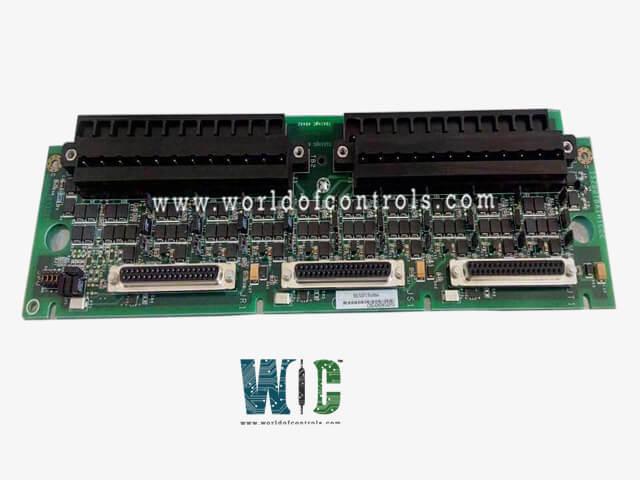
The Critical Role of Terminal Boards in GE Turbine Operations

Introduction
In modern power generation facilities, turbine control systems are responsible for maintaining safe, efficient, and reliable operations. Whether in gas turbines, steam turbines, or combined-cycle plants, these systems depend on seamless communication between field devices and control hardware. Among the many components that support this communication, terminal boards play a vital role. They serve as the connection point for electrical signals, ensuring that critical operational data is accurately transmitted throughout the turbine control network.
What Are Terminal Boards?
Terminal boards are interface components that connect field instruments, sensors, actuators, and other electrical devices to a turbine's control system. They provide organized wiring terminations that allow signals to travel efficiently between operational equipment and control processors.
In turbine applications, terminal boards help manage a wide range of inputs and outputs, including temperature measurements, pressure readings, vibration monitoring, speed control, and protection system signals. Their structured design simplifies wiring while supporting reliable system performance.
The Importance of Terminal Boards in GE Turbine Systems
GE turbine control systems are designed to operate in demanding industrial environments where reliability is essential. Terminal boards support these systems by ensuring accurate signal transmission and organized connectivity.
Reliable Signal Communication
Terminal boards provide secure pathways for electrical signals traveling between field devices and control equipment. This helps maintain signal integrity and enables accurate monitoring of turbine conditions.
Improved System Organization
Large turbine installations often involve thousands of wiring connections. Terminal boards simplify cable management by providing clearly defined connection points, reducing installation complexity and minimizing the risk of wiring errors.
Enhanced Equipment Reliability
Consistent signal transmission is critical for turbine performance. Terminal boards help reduce connection-related issues that could impact system operation, contributing to overall equipment reliability.
Easier Maintenance and Troubleshooting
When maintenance is required, organized wiring layouts allow technicians to identify and resolve issues more efficiently. This can significantly reduce troubleshooting time and minimize operational downtime.
Supporting Turbine Control and Protection Functions
Terminal boards play an essential role in both control and protection systems. They facilitate communication between field instruments and the controllers responsible for monitoring operational conditions.
For example, sensors continuously measure key parameters such as temperature, pressure, speed, and vibration. The data collected is transmitted through terminal boards to the control system, where it is analyzed to support operational decisions and protective actions.
By enabling fast and reliable data exchange, terminal boards help ensure that turbines respond appropriately to changing operating conditions.
Key Benefits for Power Generation Facilities
High-quality terminal boards provide several advantages for turbine operators:
Operational Efficiency
Accurate signal transmission supports better control performance, helping turbines operate at optimal efficiency levels.
Reduced Downtime
Reliable electrical connections reduce the likelihood of communication failures and simplify maintenance activities, contributing to greater equipment availability.
Improved Safety
Terminal boards help ensure that critical protection signals reach the control system without interruption, supporting safe turbine operation.
Scalability and Flexibility
As turbine facilities expand or modernize their control systems, terminal boards provide a structured framework that simplifies integration and future upgrades.
Conclusion
Although terminal boards may not receive the same attention as turbines, generators, or control processors, they are essential to the performance of modern turbine control systems. By enabling secure electrical connections, supporting accurate signal transmission, and simplifying maintenance activities, these components contribute directly to reliable and efficient turbine operations.
As power generation facilities continue to prioritize reliability, efficiency, and safety, terminal boards will remain a critical element in the infrastructure that supports successful turbine performance.


