
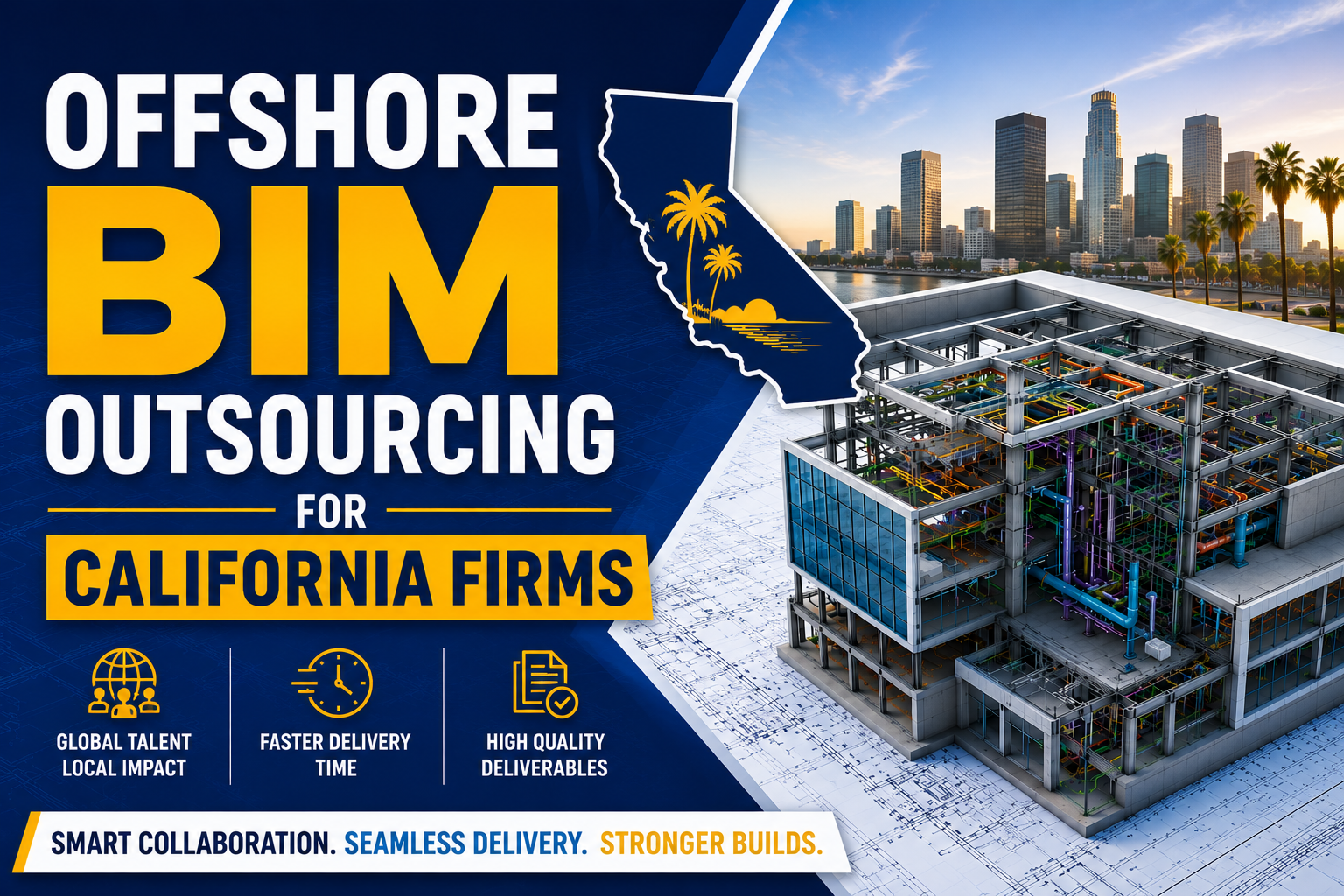
Offshore BIM Outsourcing for California Firms: A Guide

Building Information Modeling (BIM) has completely reshaped the architecture, engineering, and construction industries. It allows teams to create detailed 3D models, coordinate complex systems, and spot physical clashes long before construction begins. Offshore outsourcing involves hiring external teams located in different countries to handle these intensive modeling tasks.
Right now, a growing number of architecture and construction companies on the West Coast are adopting this model. California’s strict building codes, high labor costs, and fast-moving real estate market put immense pressure on local teams. By sending BIM tasks overseas, companies can relieve this pressure and keep projects moving efficiently.
If your firm is struggling to keep up with modeling demands, you might be looking for a new approach. Offshore BIM outsourcing for California firms offers significant advantages, from lowering operational costs to speeding up project delivery.
Why California Firms Should Consider Offshore BIM Outsourcing
Handling all your BIM requirements in-house can drain your resources. Partnering with an offshore team provides several clear benefits that directly impact your bottom line.
Cost-effectiveness and Reduced Overheads
Hiring full-time BIM managers and coordinators in California is expensive. You have to account for high salaries, software licenses, office space, and employee benefits. Offshore outsourcing relies on labor arbitrage. You can work with highly skilled professionals in regions with a lower cost of living, drastically reducing your overhead expenses.
Access to Specialized Global Talent
Finding specialized BIM experts locally can be a frustrating process. The global talent pool is vast. Offshore providers dedicate their entire business to mastering BIM software like Revit, Navisworks, and AutoCAD. This gives your firm immediate access to niche expertise without a lengthy recruitment process.
Time Zone Advantages
Working with a team on the other side of the world creates a 24-hour work cycle. Your California team can finish their day, hand the project off to the offshore team, and wake up to completed models the next morning. This continuous workflow leads to significantly faster project completion times.
Scalability and Flexibility
Project workloads fluctuate. Sometimes you have three major developments happening at once, and other times your pipeline is quiet. Offshore outsourcing allows you to scale your team up or down based on your current project needs. You never have to worry about laying off staff during slow periods or scrambling to hire during a rush.
Focus on Core Competencies
BIM modeling is essential, but it is also tedious and time-consuming. When you outsource the heavy lifting of 3D modeling and clash detection, you free up your in-house resources. Your local team can then focus on what they do best: creative design, client relations, and high-level project management.
Key Considerations for Successful Offshore BIM Outsourcing
While the benefits are clear, success requires careful planning. You need to set clear expectations and protect your firm's assets.
Vendor Selection
Choosing the right partner is the most critical step. Look closely at a vendor's experience, their portfolio of past projects, and testimonials from other Western clients. A reliable partner like Chudasama Outsourcing will have a proven track record of delivering high-quality BIM models specifically tailored to US building standards.
Communication Strategies
Seamless collaboration requires great communication. Set up weekly video calls and use project management tools to track progress. Establish clear guidelines on how to share feedback and ask questions.
Quality Control
High standards are non-negotiable. Request a detailed explanation of the vendor's quality assurance process. They should have multiple layers of checking before any model is sent back to your team.
Data Security and Confidentiality
BIM models contain sensitive, proprietary information. Ensure your offshore partner uses secure file transfer protocols. Always sign a Non-Disclosure Agreement (NDA) before sharing any project details.
Legal and Contractual Aspects
Draft a clear Service Level Agreement (SLA). This document should outline delivery timelines, payment terms, and intellectual property protection. Make sure you retain full ownership of all models and data produced during the partnership.
The Offshore BIM Outsourcing Process
Transitioning to an offshore model does not happen overnight. Following a structured process ensures a smooth integration with your current team.
Initial Assessment and Needs Analysis
Start by identifying which specific tasks you want to outsource. Are you looking for basic 3D modeling, or do you need complex MEP clash detection? Define your goals and document your internal drafting standards.
Pilot Project and Onboarding
Never hand over your biggest project right away. Start with a small pilot project. This allows you to test the offshore team's technical skills, communication style, and adherence to your firm's standards.
Project Management and Monitoring
Once the main projects begin, maintain active oversight. Assign a local project manager to act as the main point of contact. Use cloud-based collaboration tools so both teams can view the models in real-time.
Feedback and Continuous Improvement
Provide constructive feedback after every milestone. The offshore team needs to know what they did well and where they need to adjust. Over time, they will learn your preferences and require less direct supervision.
Success Stories from the West Coast
Many California firms are already reaping the rewards of offshore BIM. For example, a mid-sized architectural firm in San Francisco recently struggled to meet deadlines for a large commercial complex. By partnering with an offshore BIM provider, they utilized a 24-hour work cycle. They delivered the final coordinated models three weeks ahead of schedule and saved 30% on their projected drafting budget.
Similarly, a Los Angeles-based MEP contractor used offshore teams to handle all their clash detection. This allowed their local engineers to focus purely on system design and installation strategies, drastically reducing errors on the construction site.
Potential Challenges and How to Overcome Them
Outsourcing comes with its own set of hurdles. Being prepared helps you avoid common pitfalls.
Cultural Differences
Different work cultures can lead to misunderstandings regarding deadlines or feedback. Overcome this by fostering an open environment. Encourage the offshore team to ask questions if instructions are unclear, and respect their local holidays.
Communication Barriers
Language differences and time zone gaps can slow down coordination. Mitigate this by overlapping your schedules for at least one hour a day to hold a live sync. Use visual aids like marked-up screenshots rather than relying solely on text-based emails.
Quality Concerns
If the final models do not meet your standards, the cost savings disappear. Prevent this by providing comprehensive BIM execution plans upfront. Ensure the pilot project proves their capability before signing long-term contracts.
Elevate Your Next Building Project
Adopting a global approach to drafting and modeling provides a massive competitive advantage. You can lower costs, access top-tier talent, and speed up your delivery timelines. As building requirements in California become increasingly complex, leveraging external expertise is a smart strategic move. By choosing the right partner, setting clear communication guidelines, and starting with a pilot project, your firm can seamlessly integrate offshore BIM into your daily operations.


