
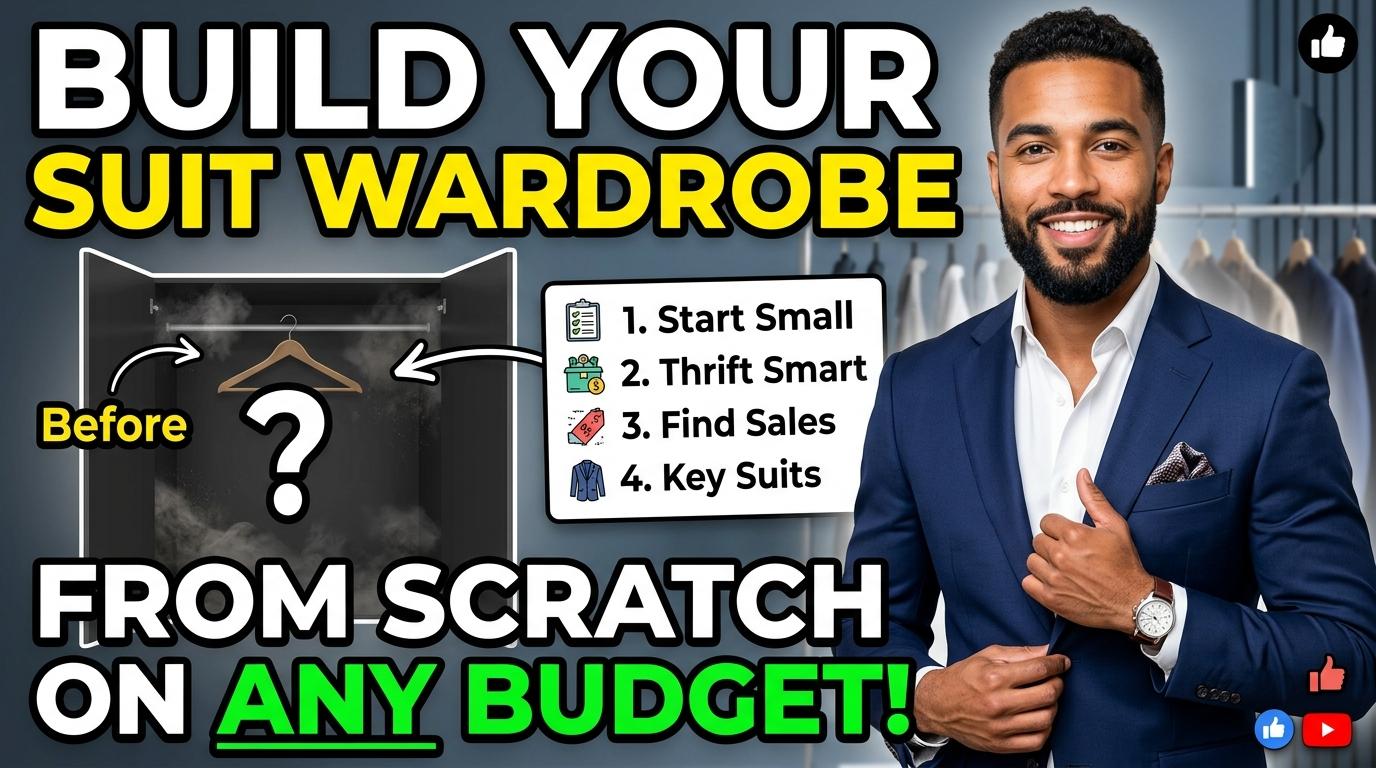
How to Build a Suit Wardrobe from Scratch on Any Budget

Building a suit wardrobe from scratch sounds intimidating — especially if you're staring at your closet wondering where to even begin. Whether you're a recent grad stepping into the professional world, a guy finally deciding to elevate his style, or someone who just wants to look sharp without going broke, this guide is built for you. The good news? A strong suit wardrobe doesn't require unlimited spending. It requires smart decisions, the right sequence, and knowing what actually matters.
Let's break this down the right way.
Understanding What a "Complete" Suit Wardrobe Actually Means
Before spending a single dollar, you need to understand what you're building toward. A complete wardrobe for men doesn't mean owning 20 suits. It means owning the right suits for the occasions in your life. Think about how often you attend formal events, work in an office, go on dates, or attend weddings. These lifestyle factors determine your priorities.
A well-rounded suit wardrobe typically includes:
- A versatile navy or charcoal business suit
- A casual sport coat or blazer for smart-casual occasions
- A formal option — either a black suit or a tuxedo for black-tie events
- Seasonal alternatives based on where you live
For most men, three to five well-chosen suits covers nearly every situation they'll face in a year.
The Foundation Piece: Your First Suit Should Do the Most Work
If you're building from nothing, your first purchase should be a navy blue suit. Navy is the most universally flattering color for suits for men. It works in business meetings, weddings, funerals, dinner dates, and casual gatherings depending on how you style it. It pairs with almost every shirt color, tie pattern, and shoe type.
The second piece should be a charcoal gray suit. Charcoal reads more serious and authoritative than navy and works better in formal corporate environments. Together, navy and charcoal give you coverage across 80% of situations before you even think about a third suit.
Once these two are in your closet, you can start expanding into lighter tones like medium gray, tan, or even subtle patterns like pinstripes and windowpane checks.
Budget Tiers: What to Expect at Every Price Point
Under $200 — Entry Level
At this price point, you're working with off-the-rack suits from department stores or fast fashion brands. Fit will be the biggest challenge here, and you'll likely need tailoring adjustments that cost an additional $50–$100. The fabric won't be luxurious, but a well-fitted cheap suit always beats a poorly fitted expensive one. Focus on solid colors, avoid trendy cuts, and always budget for alterations.
$200–$600 — Mid-Range
This is where most men should aim to start. Brands in this range offer better construction, improved fabrics (often wool blends), and more consistent sizing. You'll find options with half-canvas or full-canvas construction, which significantly improves how the suit drapes and ages over time. Brands at this level often carry structured fits that work well for a wide range of body types.
$600–$1,500 — Premium Ready-to-Wear
At this level, you're entering the territory of genuine wool, superior lining, and more thoughtful construction. Suits in this price bracket hold their shape better, breathe better, and look noticeably more refined. Many men in professional fields find this range to be the sweet spot for quality-to-value ratio.
$1,500 and Up — Custom Suits for Men
Custom suits for men represent the pinnacle of personal dressing. Everything from the fabric to the lapel width, button placement, pocket style, and lining is chosen by you. The fit is unmatched because it's built specifically for your measurements. If you're serious about your appearance and want a suit that truly represents who you are, this is where the conversation gets interesting.
The Capsule Wardrobe Strategy: Quality Over Quantity, Always
One mistake men make is buying multiple cheap suits instead of investing in fewer, better ones. Three excellent suits will always outperform six forgettable ones. Apply the capsule wardrobe philosophy — every piece should earn its space by being versatile, well-made, and genuinely flattering on your body.
When shopping, prioritize:
Fabric — Pure wool is the gold standard. It breathes, drapes well, and resists wrinkles better than polyester blends. For summer, look for lightweight wool or linen blends. For winter, heavier wool or flannel works beautifully.
Fit — The single most important factor in how a suit looks on you. Shoulders must sit perfectly. The chest should button without pulling. Trouser breaks should be minimal to moderate. If something doesn't fit well off the rack, budget for alterations before assuming the suit won't work.
Construction Full-canvas construction means the suit has a layer of canvas between the outer fabric and lining that molds to your body over time. Fused suits use glue and degrade faster. For anything you plan to wear regularly, canvas construction is worth seeking out.
Building Smart: The Order of Purchases That Makes Sense
Here's the sequence that gives most men the best results:
- Navy suit — Your workhorse
- Charcoal gray suit — Your power piece
- A versatile blazer or sport coat — For smart-casual settings
- A black tuxedo or formal suit — For weddings, galas, and black-tie events
- A seasonal suit — Light tan or cream for summer, heavy wool for winter
Don't skip to step four before owning steps one and two. Too many men buy a tuxedo before they have a reliable everyday suit, and then wonder why they feel underdressed at work.
Accessories That Multiply the Value of Every Suit You Own
Your wardrobe investment multiplies when you pair each suit with the right accessories. A single navy suit can look like three different outfits depending on what you pair it with. Invest in:
- White dress shirts — Always have at least two
- Light blue dress shirts — Universally flattering, slightly less formal
- Two or three ties — Solid colors and subtle patterns are safest
- Brown leather Oxford shoes — The most versatile dress shoe for suits
- Black Oxford shoes — For formal occasions
- Pocket squares — They add personality without adding cost
- A leather belt — Match the color to your shoes
These items dramatically extend your wardrobe without requiring you to buy new suits.
The Long Game: Caring for Your Suits to Protect Your Investment
Suits last longer when treated properly. Always hang them on wide, shaped hangers — wire hangers distort the shoulders. Use a garment bag when storing. Brush the fabric after each wear with a soft clothes brush to remove surface dirt and keep the fibers fresh. Dry clean sparingly — over-cleaning breaks down fabric. Spot-clean when possible, and steam rather than iron to remove wrinkles.
Rotating between suits is essential. Wearing the same suit every day doesn't allow the fabric to rest and recover its shape. This is another reason having at least two suits from the start is more practical than owning just one.
Where Alberto Nardoni Fits Into Your Suit Journey
Once you've understood what you need and you're ready to invest in quality that lasts, Alberto Nardoni is a brand worth knowing. Known for offering custom suits for men that don't require a luxury-tier budget to access, Alberto Nardoni combines detailed craftsmanship with a wide variety of stylesfrom classic business suits to statement pieces that turn heads. Whether you're looking for your foundational navy suit or something more distinct that speaks to your personal identity, their range gives you options at multiple price points without ever sacrificing the quality of fit or construction. For men building a wardrobe with intention, Alberto Nardoni is the kind of brand that grows with you.


