
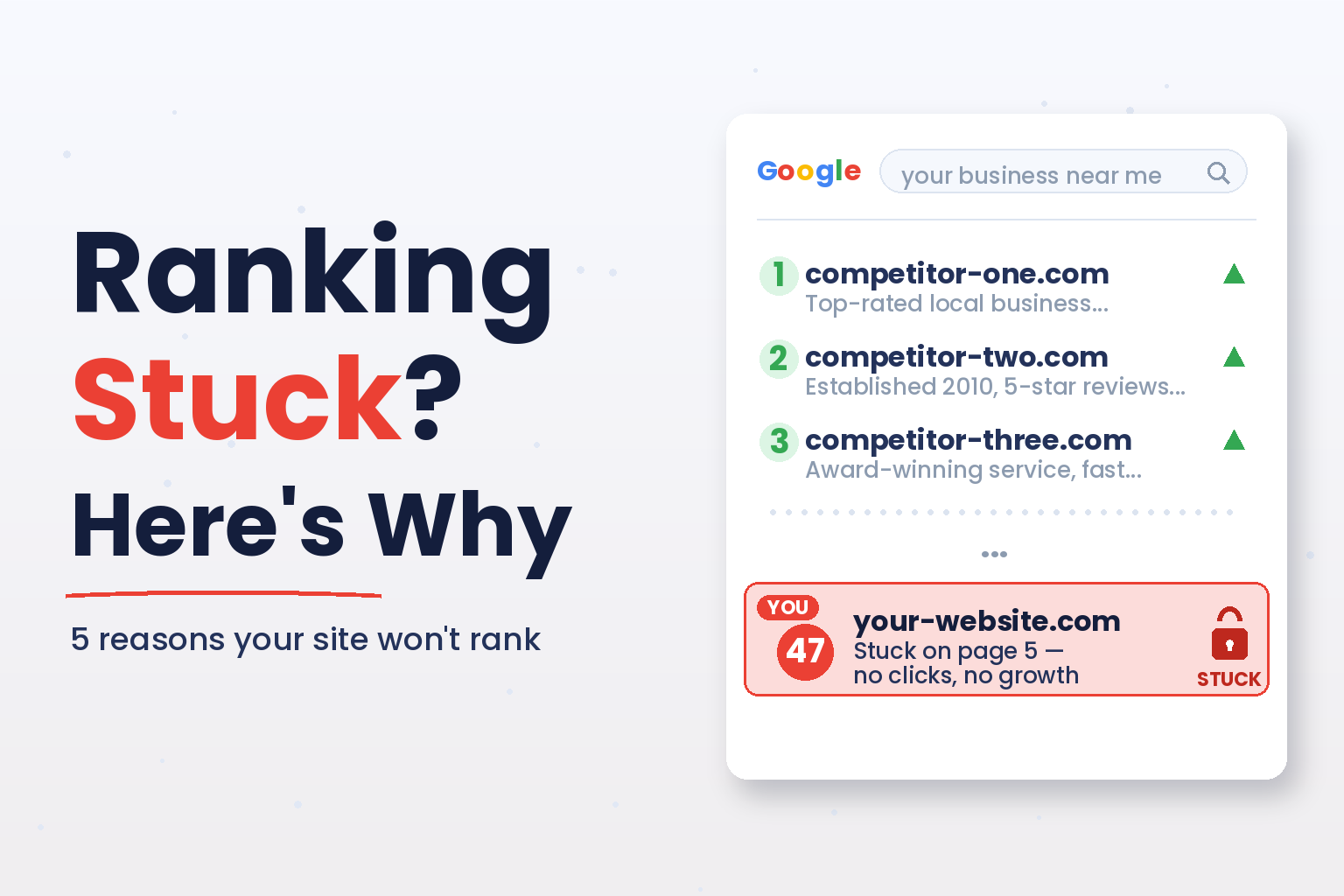
Common SEO Mistakes That Stop Your Website from Ranking Higher on Google

Achieving higher rankings on Google requires a combination of strategy, consistency, and proper execution. Many websites put effort into SEO but still experience limited visibility due to common mistakes that affect performance.
Search engines evaluate websites based on content quality, technical efficiency, user experience, and authority. When any of these areas need improvement, rankings can remain lower than expected.
Understanding these SEO gaps and improving them helps create a strong foundation for better visibility and long-term growth.
Keyword Strategy That Needs Improvement
A well-planned keyword strategy connects your website with the right audience. When keywords lack clarity or proper intent alignment, visibility becomes limited.
Focusing only on broad keywords reduces the chances of reaching users who are searching for specific solutions. Long-tail keywords provide better targeting and improve engagement.
Improving keyword research and aligning it with user intent helps attract more relevant traffic and strengthens overall SEO performance.
Content That Needs More Depth and Value
Content plays a central role in SEO success. Informative and well-structured content performs better in search results and keeps users engaged.
Limited topic coverage and outdated information reduce the effectiveness of your content. Users prefer detailed answers that solve their queries clearly.
Creating comprehensive content with updated insights, examples, and structured formatting improves readability and increases engagement, which supports higher rankings.
On-Page SEO That Needs Strengthening
On-page SEO helps search engines understand your content clearly. Proper optimization improves both visibility and user experience.
Missing or weak meta titles, descriptions, and heading structures can affect performance. Well-organized content with clear hierarchy improves readability and ranking potential.
Using keywords naturally in headings and content, along with optimized meta tags, enhances your website’s ability to perform better in search results.
Website Speed and Performance
Website speed plays a significant role in user experience and search rankings. Faster websites encourage users to explore more pages and stay longer.
Large images, heavy scripts, and hosting quality can impact loading speed. Improving these elements enhances performance and user satisfaction.
Optimizing images, reducing unnecessary scripts, and using reliable hosting solutions help create a faster and more efficient website.
Mobile Experience Optimization
Mobile usability has become an essential factor in SEO. A responsive and user-friendly design ensures better performance across all devices.
A smooth mobile experience increases engagement and supports higher rankings. Easy navigation and fast loading improve user satisfaction.
Designing your website to adapt to different screen sizes and improving mobile speed strengthens your overall SEO performance.
Backlink Quality and Authority
Backlinks act as trust signals that improve your website’s credibility. High-quality links from relevant sources strengthen your authority.
A consistent backlink strategy helps build trust and improves ranking potential. Quality matters more than quantity when it comes to backlinks.
Focusing on content marketing, partnerships, and business listings helps build strong backlinks and supports long-term SEO growth.
Technical SEO Performance
Technical SEO ensures your website functions smoothly and remains accessible to search engines. A strong technical foundation supports better rankings.
Factors such as secure connections, clean URLs, and proper site structure contribute to improved performance. Regular audits help identify areas for improvement.
Maintaining technical efficiency enhances visibility and ensures a better user experience.
User Experience and Engagement
User experience influences how visitors interact with your website. Engaging websites attract more users and encourage longer visits.
Clear layouts, structured content, and easy navigation improve usability. Adding visuals and improving readability increases engagement levels.
Better user experience leads to stronger performance in search results and supports long-term growth.
Consistent SEO Strategy
SEO works best with continuous improvement. Regular updates help maintain relevance and improve rankings over time.
Updating content, tracking performance, and refining strategies ensure steady growth. Consistency plays a key role in achieving long-term success.
Professional SEO Support for Better Results
A well-structured SEO strategy helps improve performance and accelerate growth. Expert guidance ensures better execution and stronger results.
To enhance your website rankings and improve visibility, explore advanced SEO solutions at https://www.fly-social.com/ designed to attract targeted traffic and support business growth.
Conclusion
Improving website rankings on Google requires attention to multiple factors, including content quality, technical performance, and user experience. When these elements work together, visibility improves, and traffic increases steadily.
A strong and consistent SEO strategy helps attract the right audience, build credibility, and support long-term business growth. With the right improvements, your website can achieve better rankings and stronger performance.


